Beyond The Ordinary
Li
Beyond the ordinary
The Lakeview Hotel is a central, iconic location in Silent Hill 2 (the video game), serving as the final, ruined destination for protagonist James Sunderland. It features heavily in both the original and 2024 remake, characterized by its eerie, abandoned atmosphere, the pivotal Room 312, and a Otherworld version that represents the character's subconscious, often drawing comparisons to the Stanley Hotel from The Shining.
Location/Context:
Located on West Sandford St. near Toluca Lake in Paleville, it served as a primary tourist destination.
Key Areas:
Features a lobby with a fireplace, Café Toluca, a conservatory, and various guest rooms, with the main objective being Room 312.
Key Items & Puzzles.
Players must locate the videotape, Room 312 key, and solve the music box puzzle (collecting the Cinderella, Little Mermaid, and Snow White figurines).
Atmosphere:
The hotel is often encountered in a ruined, water-damaged state, representing the character's guilt and repressed memories.
Real-world inspiration:
The design is often associated with the Stanley Hotel in Colorado.
Beyond the ordinary
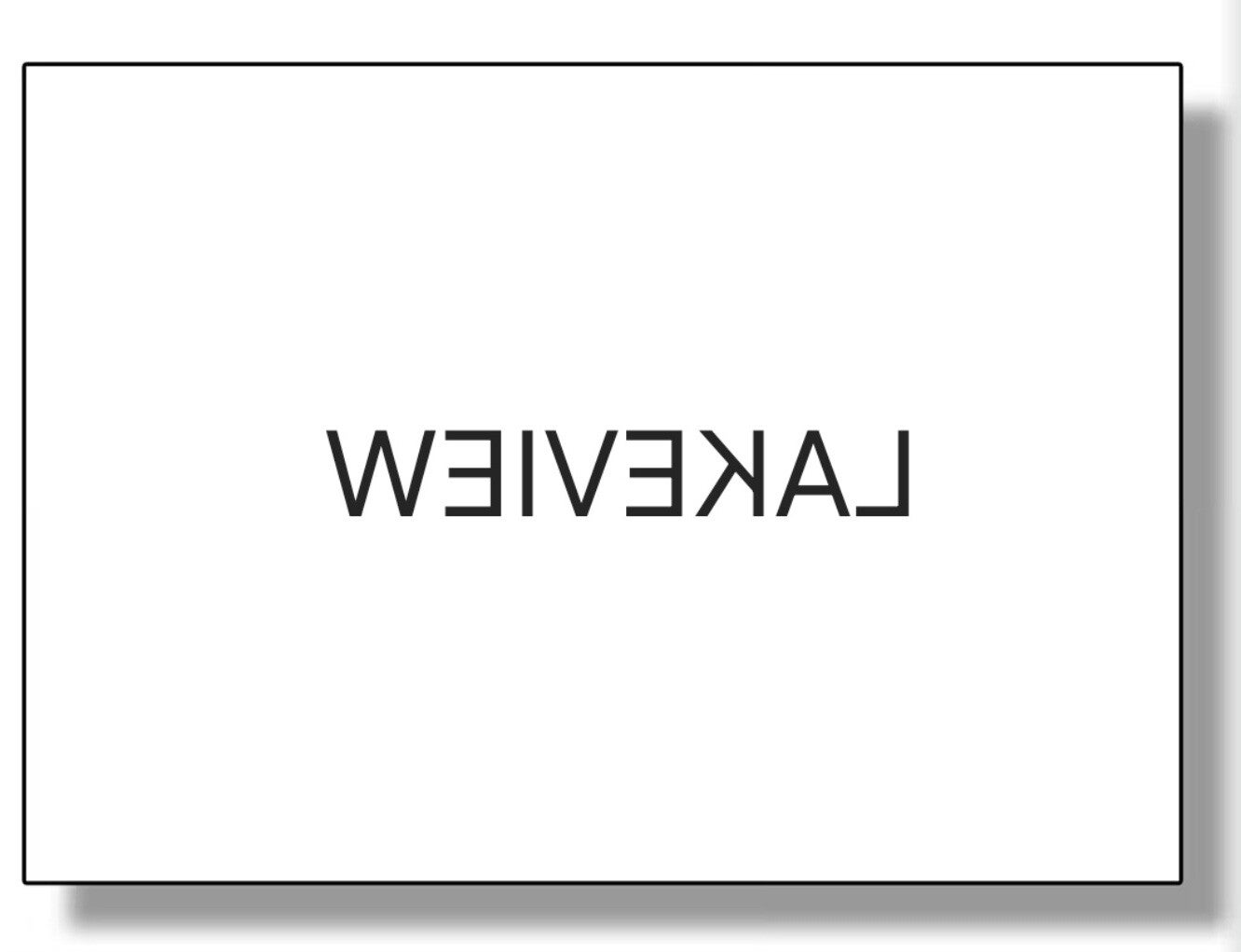
THEY ARE EVIL
– WE AK EVIL
Beyond The Ordinary
To get R for AR (for ARE with silent E dropped), simply fit the en dash to the K. This can be thought of as a form of negation ie. (here) bar K = R or K –ᐓ R.
Any red player, z-red, can, quite often if not always, display an extreme form of NPD. Arrogant, self-important, egotistical, egomaniacal, narcissistic and so on, a given red player very often wants to play blue players down. One response is to indulge z-red with a sense of humour.
With the above, we note that 'WE AK EVIL' gives, with removal of one space, the phrase 'WEAK EVIL'. We can then take z-red evil to be strong.
If by strong, someone means evil that involves being as nasty as possible with perverse, obnoxious conduct, then z-red evil is indeed strong. In comparison, weak evil is lacking in perverse, obnoxious quality and therefore the preferred one for me.
When Weakness Is Strength
The weak nuclear force (or weak interaction) is one of the four fundamental forces of nature, responsible for particle decay and flavor changes in quarks. It mediates radioactive beta decay, converting neutrons to protons (and vice versa).
Crucially, it enables nuclear fusion in stars and operates only over very short subatomic distances.
Key Characteristics.
Role in Decay:
The weak force changes the "flavor" of quarks (e.g., changing a down quark to an up quark), allowing a neutron to turn into a proton, emitting an electron and an antineutrino.
Range and Strength:
It is the second weakest force after gravity, with an extremely short range (< 10^-18 meters), even shorter than the strong nuclear force.
Mediator Particles:
It is transmitted by heavy gauge bosons: the W^+, W^- and Z^0 particles.
Fundamental Role:
It plays a vital role in nuclear fusion (generating solar energy) and nucleosynthesis, which creates elements in the universe.
Unique Properties:
Unlike other forces, the weak force does not conserve parity—meaning it differentiates between left- and right-handed particles.
Weak Force vs. Other Fundamental Forces.
Strong Force:
Holds atomic nuclei together; the weak force breaks them apart.
Electromagnetism:
Acts on charged particles; the weak force acts on all fermions (matter particles).
Unified Theory:
At high energies, the weak force and electromagnetism combine into a single force, known as the electroweak force.
Examples in Physics.
Beta-minus decay:
A neutron decays into a proton, emitting an electron and an electron antineutrino.
Hydrogen fusion:
The initial, slow step of turning protons into deuterium in the sun.
Particle decays:
Almost all particles decay through the weak force, such as the decay of muons or heavy quarks.
More On Silent Hill 2 And The Lakeview Hotel
The Lakeview Hotel is a central location in two main Silent Hill games: the original Silent Hill 2 (2001) and its 2024 remake. It serves as the final, pivotal area of the game where the protagonist, James Sunderland, confronts the truth about his journey.
Silent Hill 2 (2001): The original appearance, featuring both fog and Otherworld versions.
Silent Hill 2 Remake (2024): A modernized, expanded version of the same final area, including the Lakeshore Restaurant and Room 312.
While it is iconic to Silent Hill 2, the Lakeview Hotel is generally considered a unique, non-recurring location in the series' main canon, not appearing in other numbered entries.
If you are a fan of the series, I can provide more details on:
-
The differences in the hotel's design between the 2001 and 2024 versions.
-
Other iconic locations in the series, such as Brookhaven Hospital or Toluca Prison.
-
The meaning of the hotel in the context of Silent Hill 2's story.
Beyond The Ordinary
Nation Radio North East is based in Sunderland, specifically operating from studios at the North East Business and Innovation Centre (BIC) in Wearfield, Sunderland Enterprise Park. Owned by Nation Broadcasting, it serves the region on FM and DAB, having replaced Sun FM in May 2024.
Location:
North East BIC, Wearfield, Sunderland, SR5 2TA.
Coverage:
Covers Sunderland, Tyne and Wear, County Durham, Teesside, and parts of North Yorkshire.
Rebrand:
The station was formerly known as Sun FM before rebranding to Nation Radio North East.
A True Fact
The third, and last, time I was in hospital (3rd November 2021 - 21st March 2023), I spent most of my time lying on my bed. The only entertainment I had was a radio. I used it to listen to Radio Sunderland (as I've now come to call Sun FM) from early in the morning till late at night. I now sometimes call myself William Sunderland.
Certain songs would repeat. I used to wait for the following favourite songs to come around:
BEYONCE: Halo.
NATALIE IMBRUGLIA: Torn.
PAUL JOHNSON: Get Get Down.
PINK: All I Know So Far.
SALT n PEPA: Push It.
And others.