Skip to main content
ESD (electro static discharge) is the transfer of an electrical charge between two electrically charged objects or
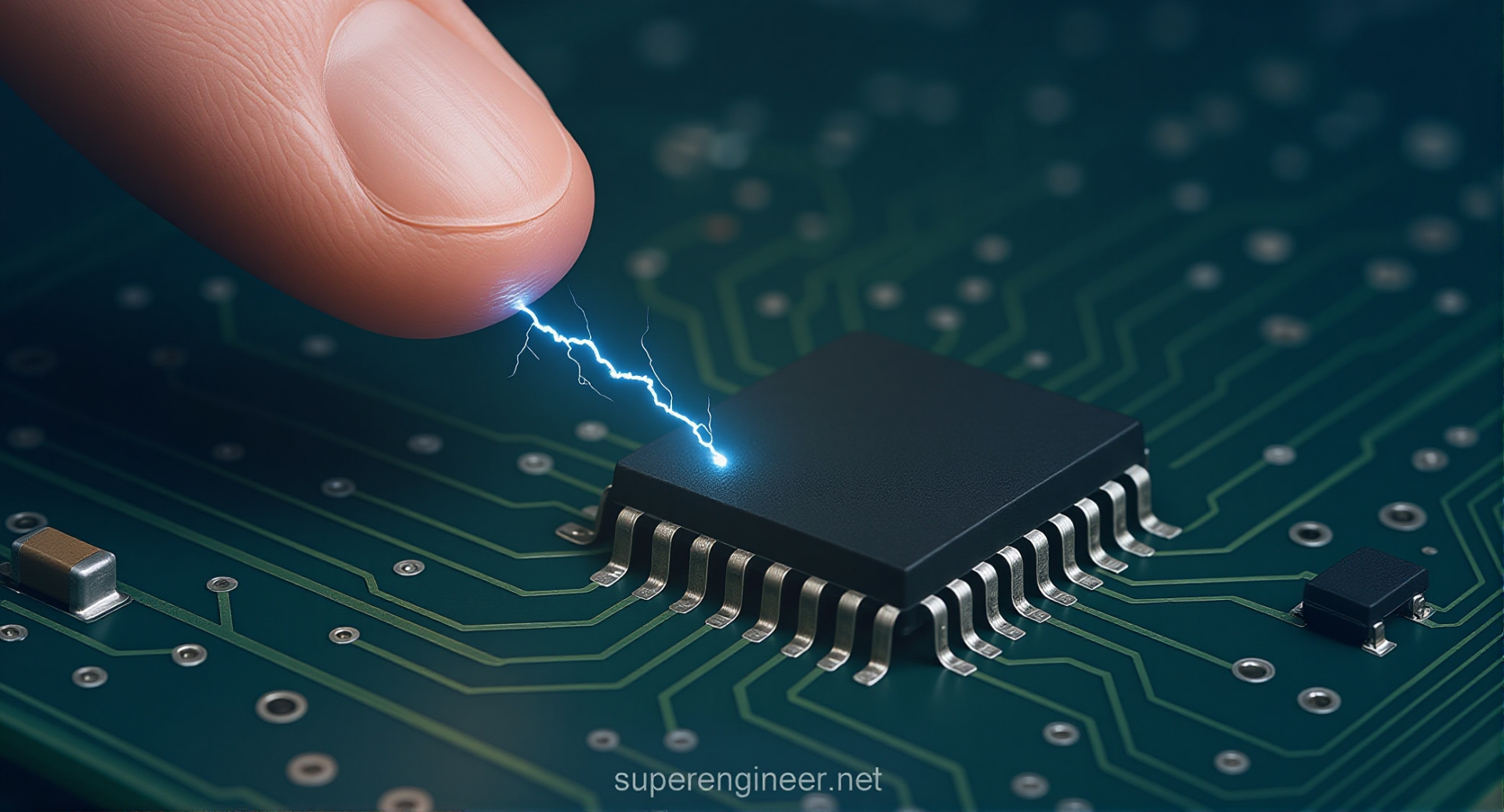
ESD (Electrostatic Discharge) is the sudden flow of electricity between two charged objects
commonly experienced as a static shock. It happens when static electricity builds up and releases, potentially damaging sensitive electronics, triggering industrial fires, or causing manufacturing failures.
Key Aspects of ESD:
• Definition: The rapid, spontaneous transfer of electrostatic charge
.
• Examples: Shock from touching a metal door handle after walking on carpet, or a tiny spark damaging a microchip.
• Causes: Walking across carpet, handling plastic materials, or separating synthetic materials.
• Effects: Damage to electronic components, ESD-sensitive devices (components that can be damaged by static), or igniting flammable environments.
• Mitigation: Using grounding wrist straps, anti-static mats, controlled humidity, and specialized packaging.
Other Meanings/Synonyms:
• ESD (Medical): Endoscopic Submucosal Dissection, a procedure to remove gastrointestinal growths.
• ESD (General): Electrostatic dissipative, relating to materials that allow static to disperse slowly.
• Esdras (Literature): Books of the Apocrypha.