Our Mistory
This page lists and describes many of the numbers used in The Game.
Beyond The Ordinary
Li
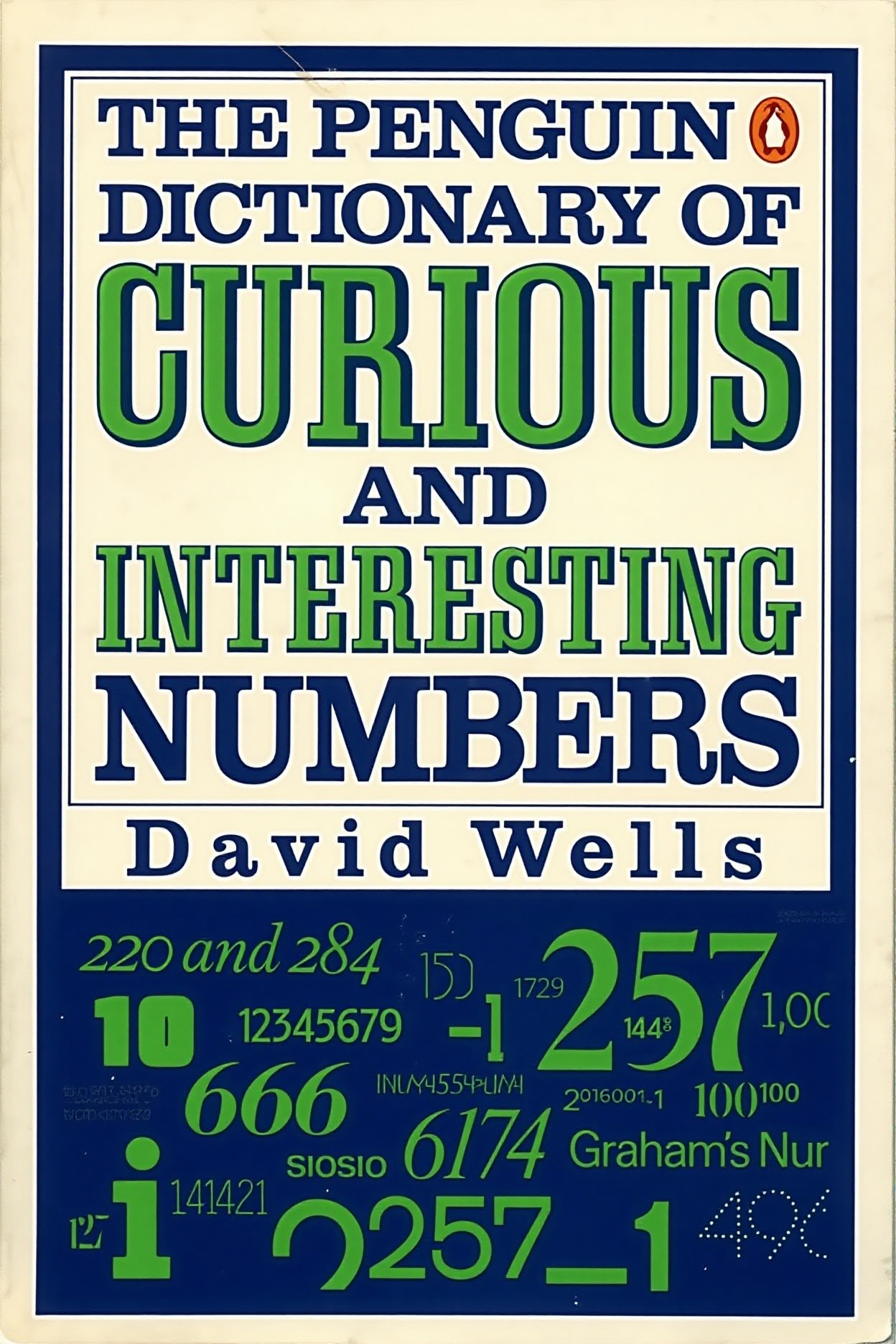
Bought many years before The Quickening, this is a book that helped shape my mind before 1409.
Beyond The Ordinary
Li
Beyond The Ordinary
Li
Beyond The Ordinary
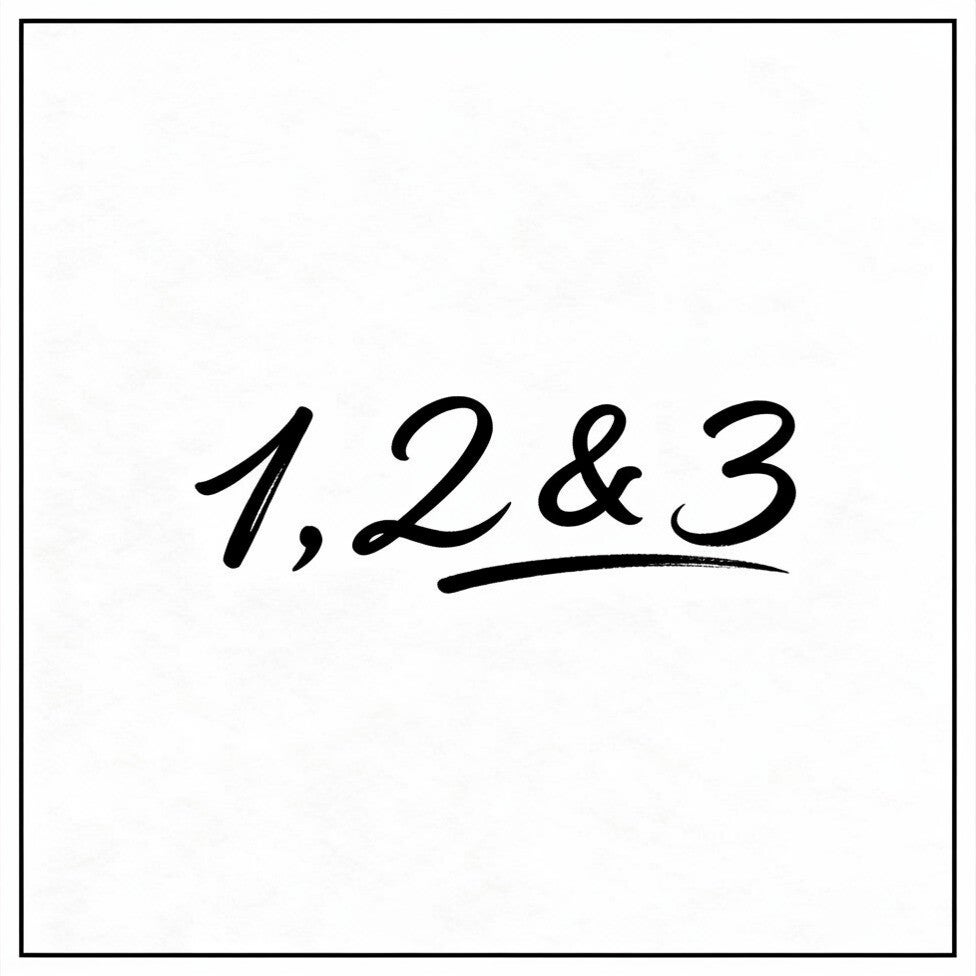
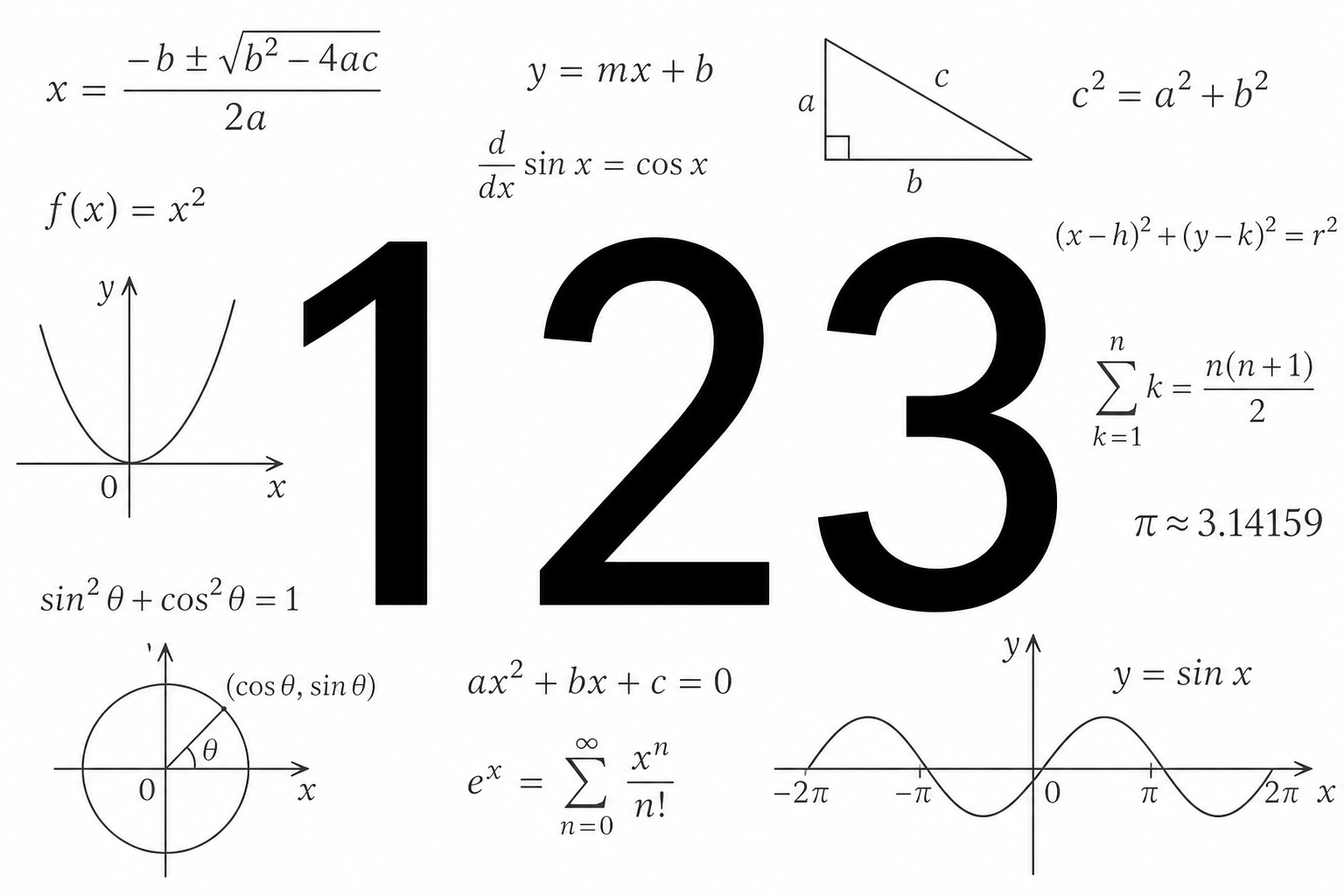
1, 2 and 3 are known as The Brick's Numbers because they appear in something known as Brick's Equation which states that
3 = 2 + 1.
Brick's Equation (BE) has profound presence within Qubrix due to it's construction having a lot to do with the concept and practice of construction. Bob The Builder (A Macrew Character) is an expert in the theory and application of BE.
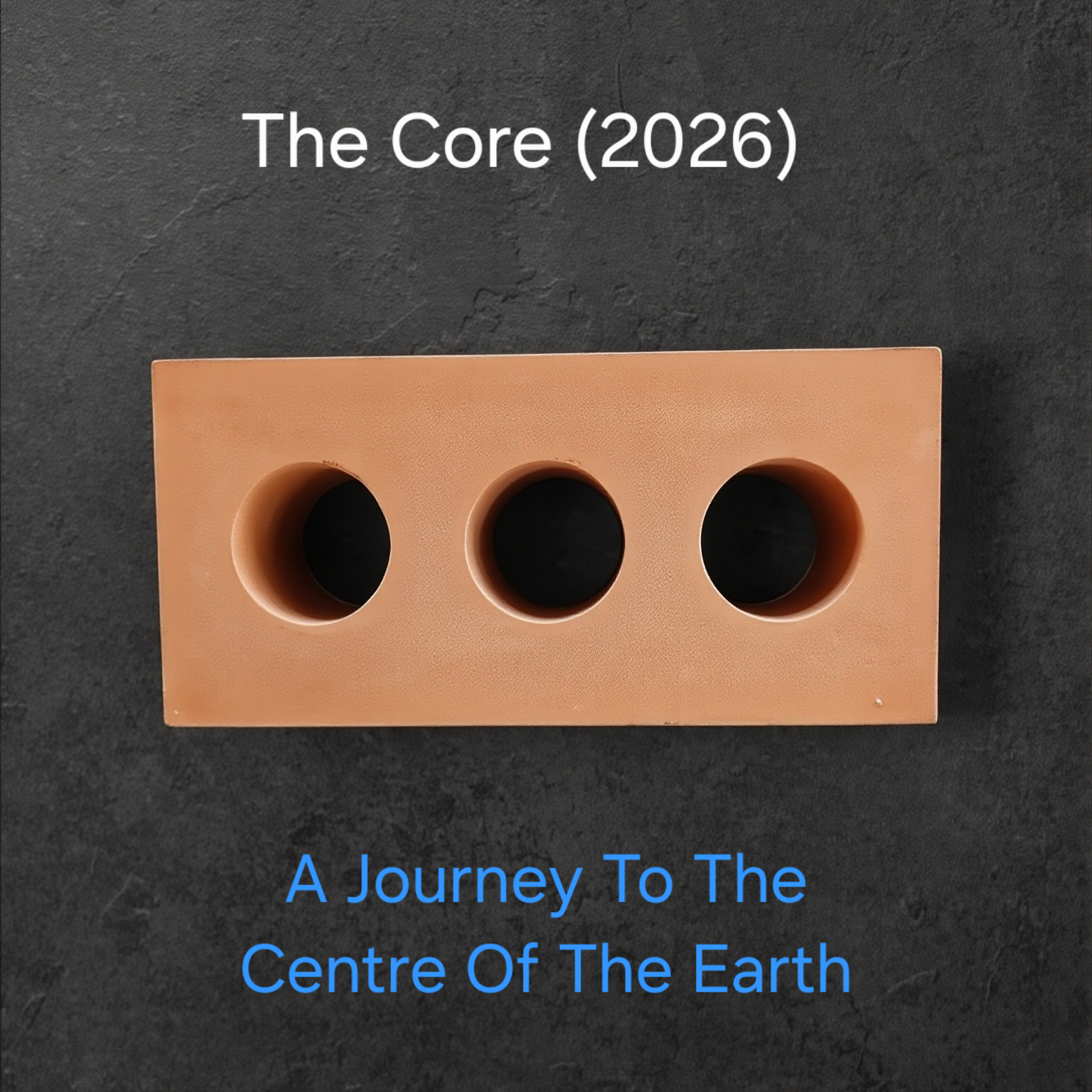
A brick with 3 holes is technically known as a perforated brick or A Cored Brick. These holes are a deliberate design choice that improves the brick's performance in several ways.
Why do bricks have three holes?
Stronger bonding:
When mortar is spread over the brick, it squeezes into the holes. This creates a "keyway" that mechanically locks the bricks together, making the wall much sturdier.
Even firing:
During manufacturing, the holes allow heat to penetrate the center of the brick more easily. This ensures a consistent, thorough cure in the kiln, which prevents cracking and makes the final product stronger.
Reduced weight:
Removing the center material makes each brick about 20% lighter. This makes them easier for masons to handle and reduces the overall load on a building's foundation.
Cost & efficiency:
Using less clay reduces raw material costs and requires less fuel to fire, making the bricks more affordable and environmentally friendly.
Insulation:
The air pockets created by the holes provide better thermal and acoustic insulation compared to solid bricks.
Common uses and types.
Engineering bricks:
These are high-strength bricks (like the Wienerberger Terca found at DIY Building Supplies) used for load-bearing walls and structures requiring low water absorption.
Facing bricks:
These are the bricks you see on the exterior of a home. Perforated facing bricks come in many colours and textures to match specific architectural styles.
Reinforcement:
In some regions (like the US), these "cores" allow vertical steel rebar to be run through the wall for extra seismic or structural stability.
Top Tip:
When building, ensure the holes are oriented vertically. Rotating them 90 degrees can significantly weaken the structural integrity of the wall.
Beyond The Ordinary
In Qubricks, there are fundamentally two different types of bricks. The first type of brick is a cored brick with 3 holes. The 3 holes represent the numbers 1, 2 and 3. The second type of brick is also a cored brick that in addition to the numbers 1, 2 and 3 is also associated with the number 0 by the inclusion of a 4th invisible hole. 3 Core Bricks are associated with the mathematical system of The Natural Numbers, 𝒩; while 3 Core + 0 Bricks are associated with the system of The Whole Numbers, 𝒲.
Properties Of The Brick's №s
1 + 2 + 3 = 6 & 1 × 2 × 3 = 6 ie.
when you add the Brick's №s together, the answer is the same as when you multiply the numbers together.
1³ + 2³ + 3³ = (1 + 2 + 3)² ie.
This property of The Brick's №s is discussed in a video below.
Beyond The Ordinary
A D'artagnan №
Li
Fun Facts
(1234×12345×123456×1234567×12345678×123456789) ÷ 123 is The Definitive Answer To The Question Of The Meaning Of Life, The Universe And Everything (42).
The short way to reach The Answer (TDATTQOTMOLTUAE) is to start with 123 and then add the 3 to the 1 in the first place. [Here, I'm playing with words. Something you should do in the 1st place (to save yourself some time and effort).]
_____________________________________________________
The product of the sequence (1 × 12 × 123 × 1234 × 12345 × 123456 × 1234567 × 12345678 × 123456789) is a massive 38-digit number with several interesting mathematical characteristics.
Exact Value:
52,233,532,755,702,860,521,461,530,393,270,323,200. This number is in the undecillion range (specifically, ≈ 52.2 undecillion). Scientific Notation: ≈ 5.22 × 10^36.
Divisibility:
It is divisible by 1, 2, 3, 4, 5, 6, 8, and 9. It is not divisible by 7.
_____________________________________________________
(111 111 111)(111 111 111) = 12345678987654321
What can we note here? 6 groups of 3 1s with 9 1s in each half.
Beyond The Ordinary
Beyond The Ordinary
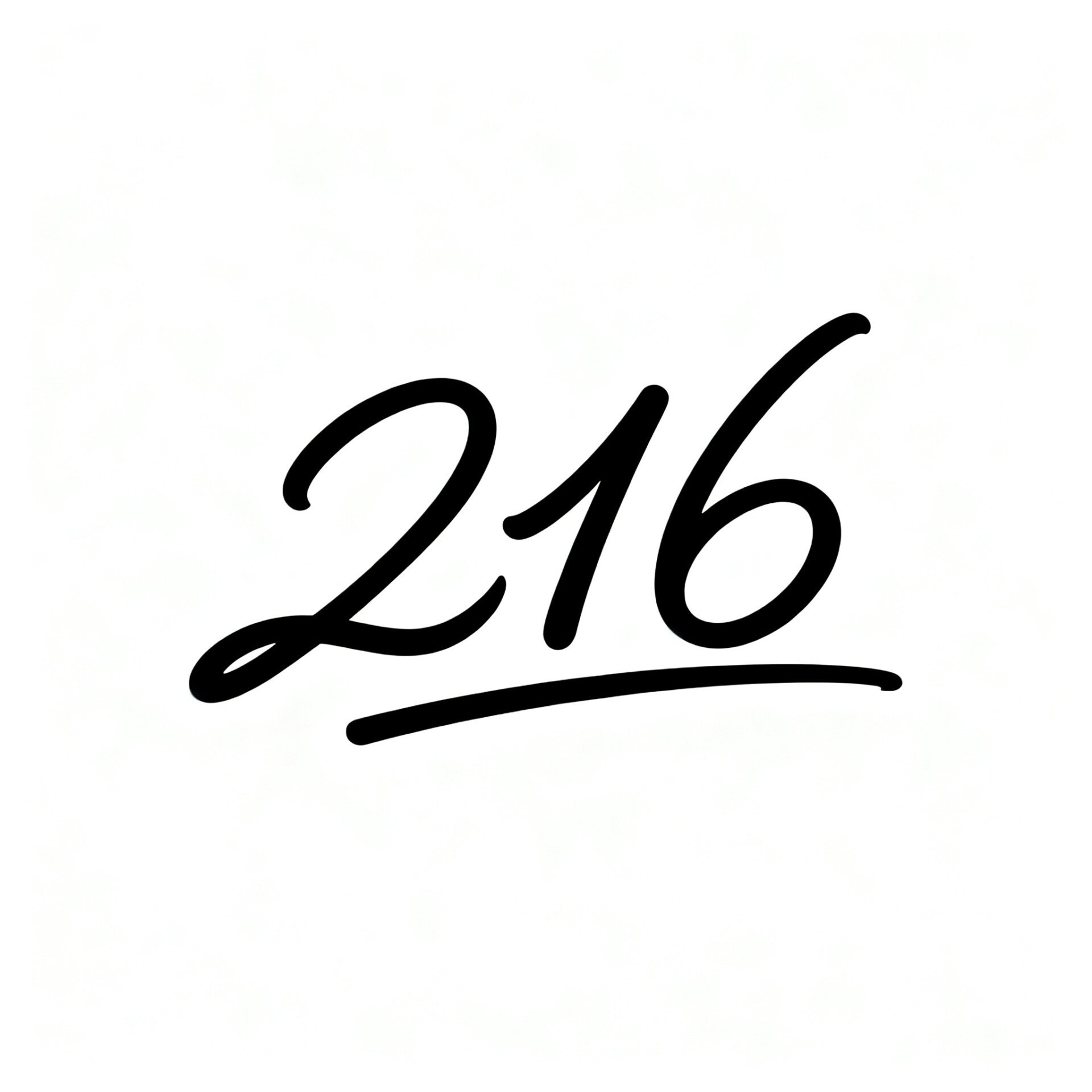
What is important here, for what follows as well as for what's already been duscussed with the number 123, is the fact that
1³ × 2³ × 3³ = 216.
Beyond The Ordinary
Li
Beyond The Ordinary
Li
Beyond The Ordinary
W = 6 by shape = B. Also, W = 9 by shape = B. So,
WB = 69 = 96 = 66 = 99 (depends on context). Then,
6 + 9 = 15 = 2ᘯ or 2℧ or ᘯ + ℧ (doc) = ᔐ = 96.
It is, of course, entirely acceptable to assign other values to W and B for Mortex Mathematics.
Let W = 7 and B = 5, then
7 + 5 = 12.
Beyond The Ordinary

One of the most important numbers to discuss is The Number 75.
This number can represent, and be represented by, an inverted capital Greek letter Omega
ᘯ
like in the image above.
Omega is familiar to many people as a symbol associated with God.
Another D'artagnan №
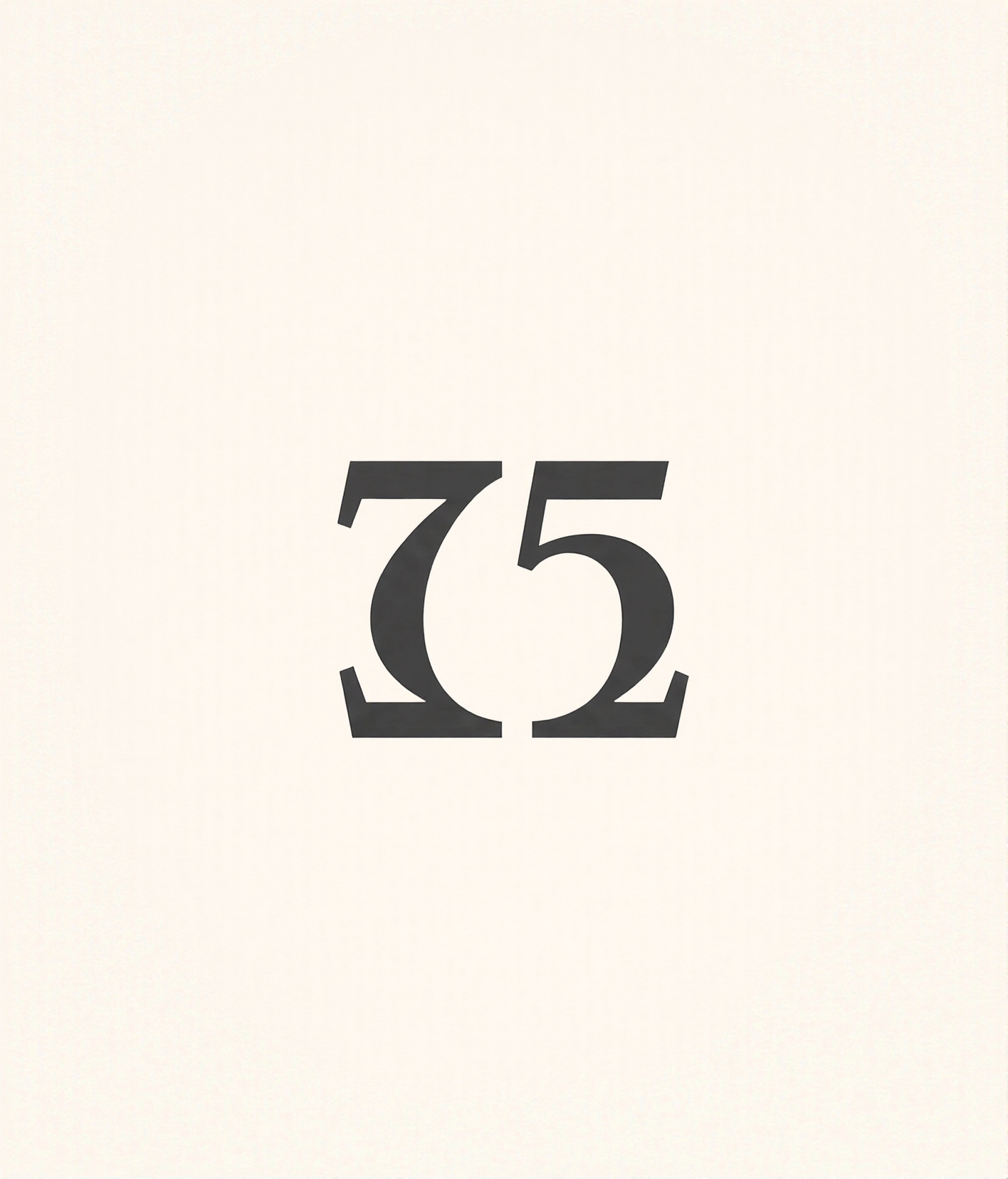
765 is Omega 75 with 6 glue. The bonding/integrating/unifying etc. nature of six is reflected in the fact that in Latin the word six is sex. In the field of technology, connection is often achieved using, so called, male (plug) and female (socket) connectors. This is the connection of Yin and Yang. If you are someone who dislikes the idea of being associated with gender specific technology - that implies sex - you can, of course, consider plugs and sockets gender neutral.
The inclusion of 6 with 7 and 5 in Omega, is suggested in the open curvature of ᘯ - which is exploited in the above image [which combines Omega and Omega (℧) with 7 and 5].
Beyond The Ordinary
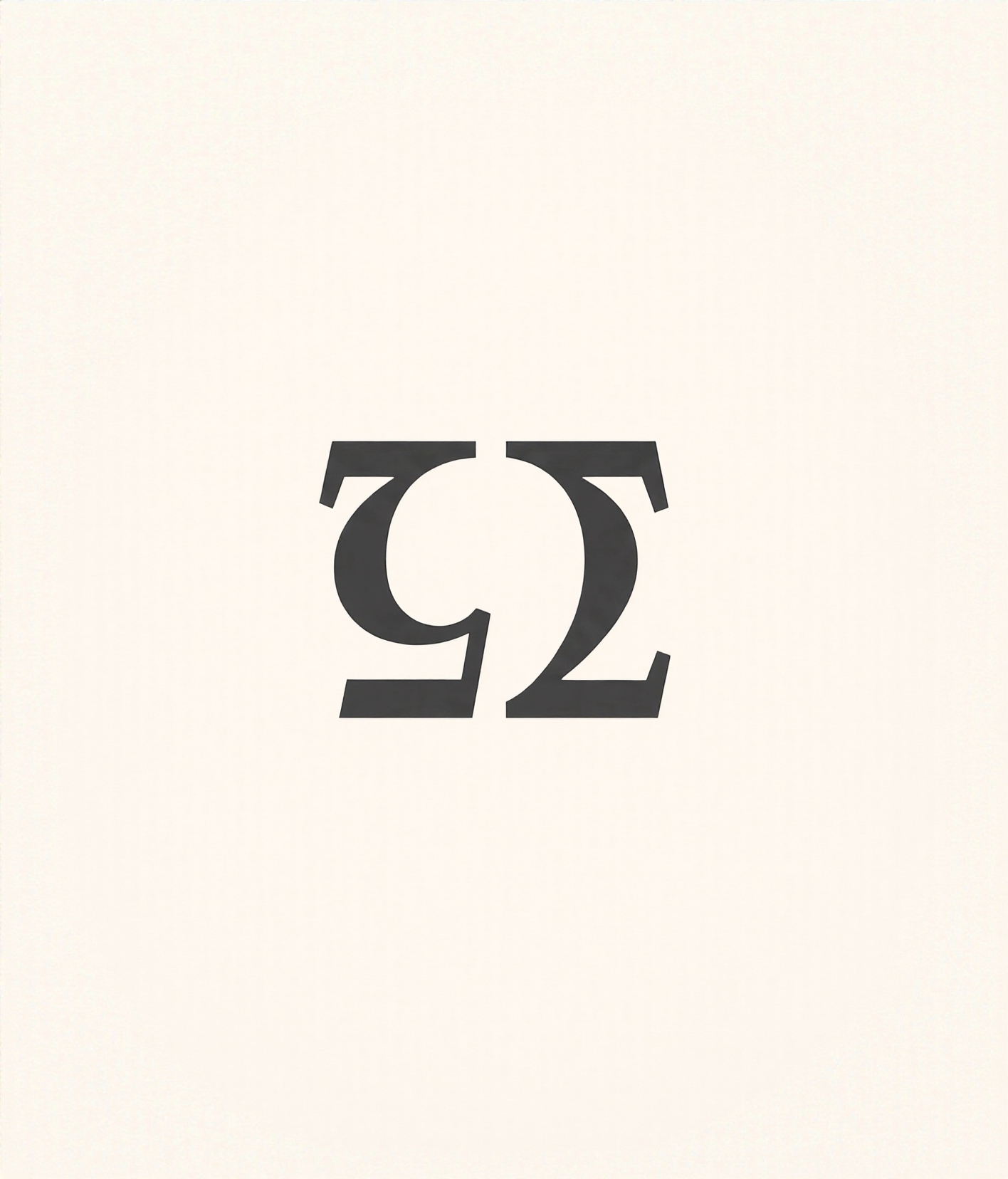
When you rotate The 765 Symbol 180°, you get Zeta (lowercase) Sigma (ζΣ) - a 2nd symbol for a (secretively onymous) society of mathematicians and scientists that admits artists and others. Zeta Sigma is in association with the overt North American based society Sigma Zeta. Zeta Sigma can use a capital zeta.
Beyond The Ordinary
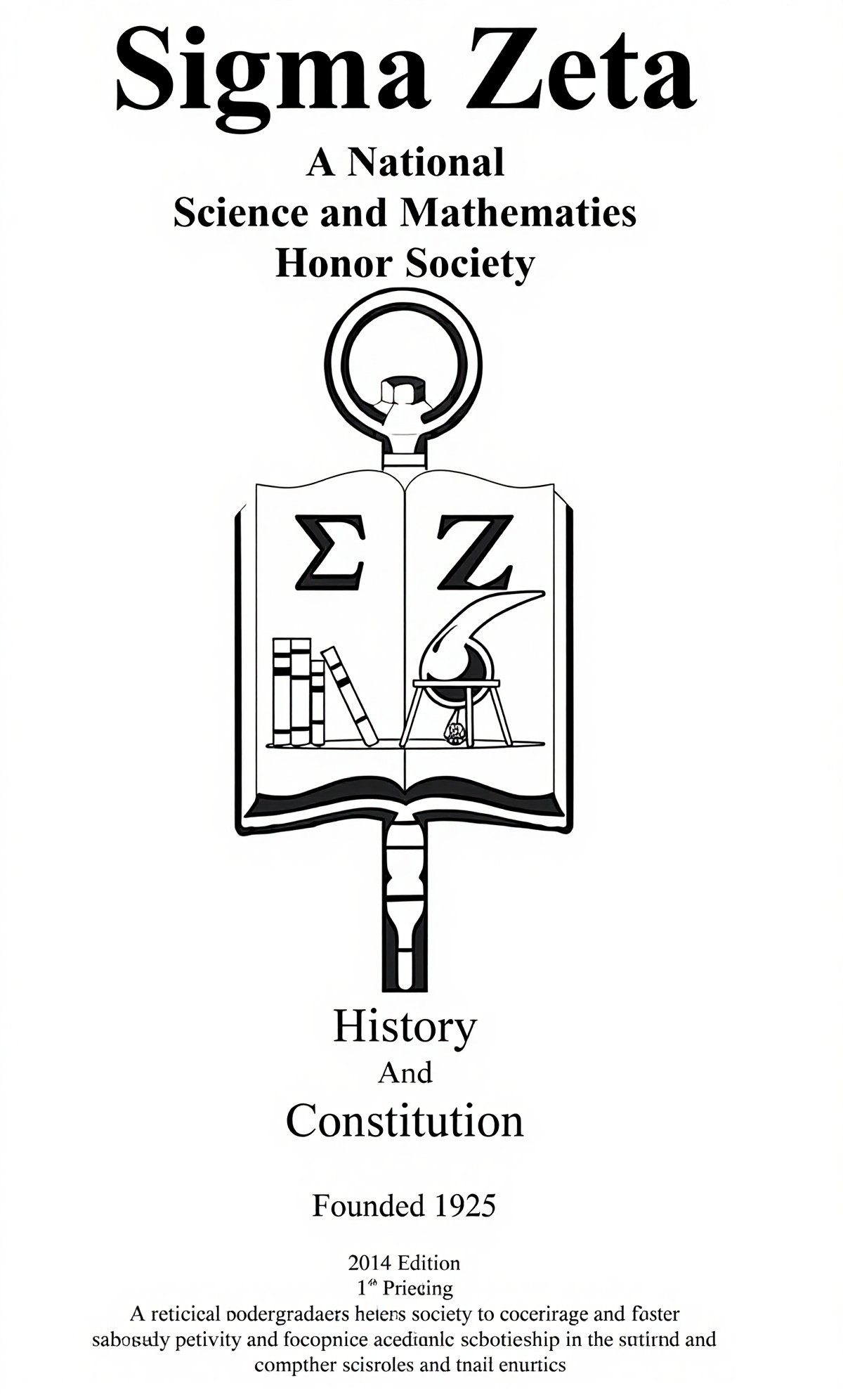
_________________________________________
Note that the 6, 9, comma, quotation mark and flask symbol appears in all three symbols above. The importance of books should be obvious.
26/04/2026
The centenary of the founding of Sigma Zeta was celebrated in 2025 (OBOE 2026). Later this year, in October, Sigma Zeta will celebrate 101 years of existence. This website, thought of as an educational course, has the title The Machine 101 (TM-101). It is thought by me, that TM-101, as the 1st course released to the general public, will reach a complete state in October of this year. A second - intermediate level - course, will be released by others sometime after October.
Beyond The Ordinary
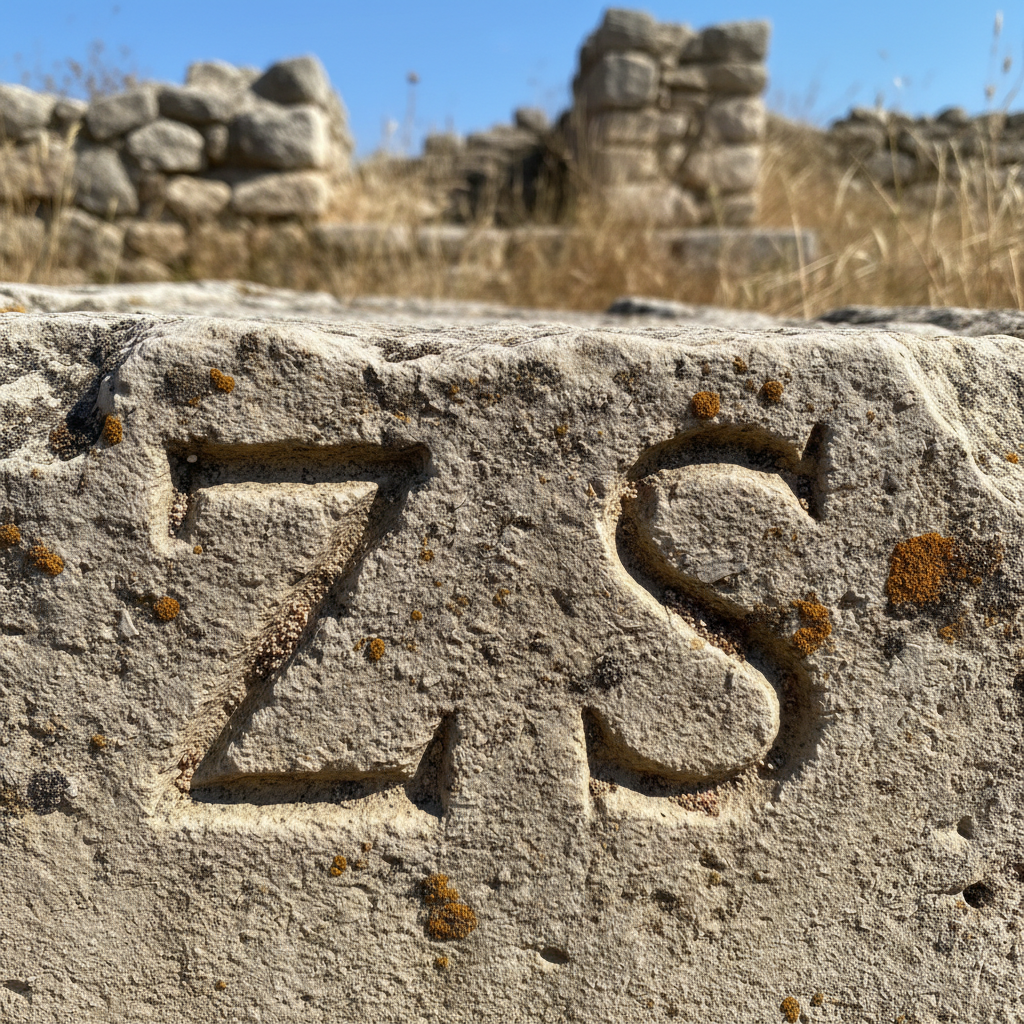
Beyond The Ordinary
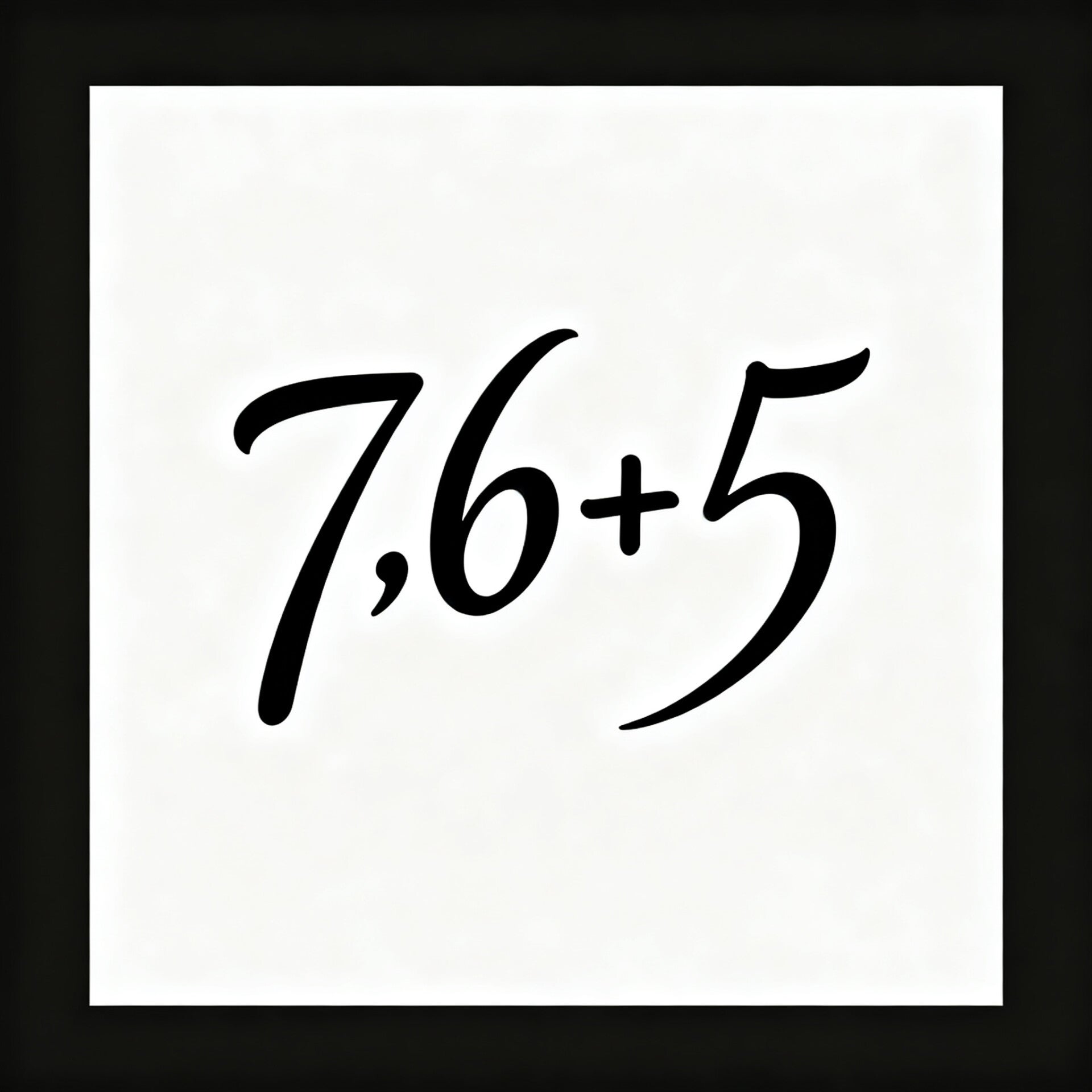
Beyond The Ordinary
The above numbers are known as The Evans №s (TEN). When mentioning TEN, context determines whether or not the № 765 is included with 7, 6 and 5. № 765 is often called The Evans №.
A № Favourite
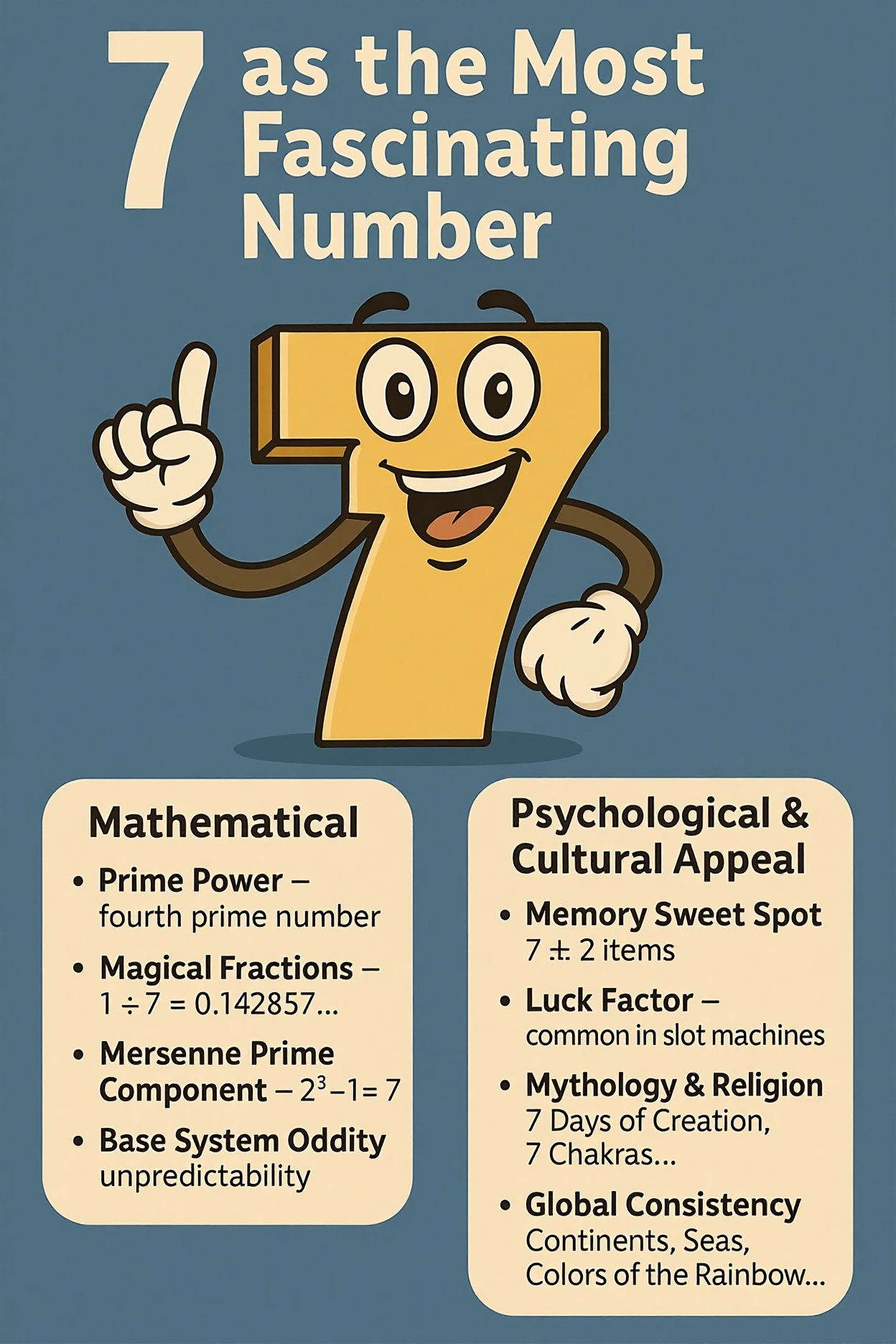
Many things like this have been posted on the internet by people into the curious and interesting nature of many things mathematical.
Beyond The Ordinary
7, as one of the digits of 75, 57 and 765 etc., and for other reasons, is one of the most important numbers in Qu. As well as forming a part of the just mentioned numbers, 7 is also the number of Christ in Qu. This is because, among other places, the number 7 has a significant role in Christianity due to it's connection to The Bible. One of the most conspicuous appearances of 7 in the Bible is in The Book Of Revelation in The New Testament.
Another reason for considering 7 an important number is it's connection to the number 142857 - when used to form the reciprocal 1/7. Integer 142857 is called by many Unfortunate57 (👁later).

🔻
Beyond The Ordinary
The number 142,857 is one of the most famous integers in mathematics, often called a cyclic number because its digits rotate in a circle when you multiply it by 1 through 6.
142857 has 32 factors (divisors) in total.
All Factors of 142,857.
The complete list of divisors for 142,857 is:
1, 3, 9, 11, 13, 27, 33, 37, 39, 99, 111, 117, 143, 297, 333, 351, 407, 429, 481, 999, 1,221, 1,287, 1,443, 3,663, 3,861, 4,329, 5,291, 10,989, 12,987, 15,873, 47,619, and 142,857.
Prime Factorisation.
The prime factors of 142,857 are 3, 11, 13, and 37. Its prime factorisation can be written as:
3^3 × 11× 13 × 37.
Why It’s Pathemagical.
As noted by Numbermatics, this number appears as the repeating part of the decimal for 1/7 (0.142857...). Its cyclic nature is shown in its first six multiples:
142,857 × 1 = 142,857.
142,857 × 2 = 285,714
142,857 × 3 = 428,571
142,857 × 4 = 571,428
142,857 × 5 = 714,285
142,857 × 6 = 857,142
If you multiply it by 7, the cycle breaks and you get 999,999.
Beyond The Ordinary
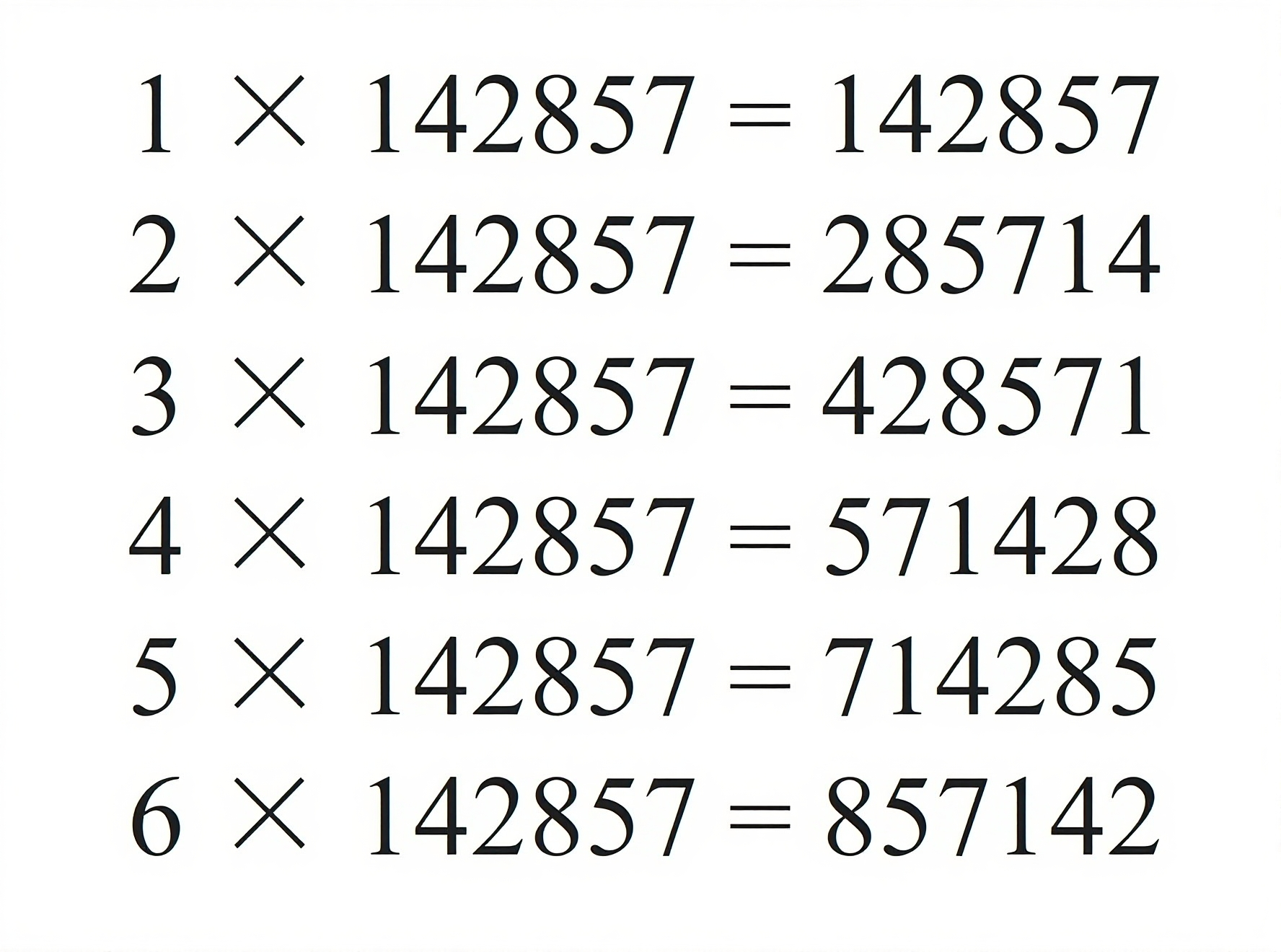
The 6 cyclic products of UFTN57 (6CPOUFTN57)
Beyond The Ordinary
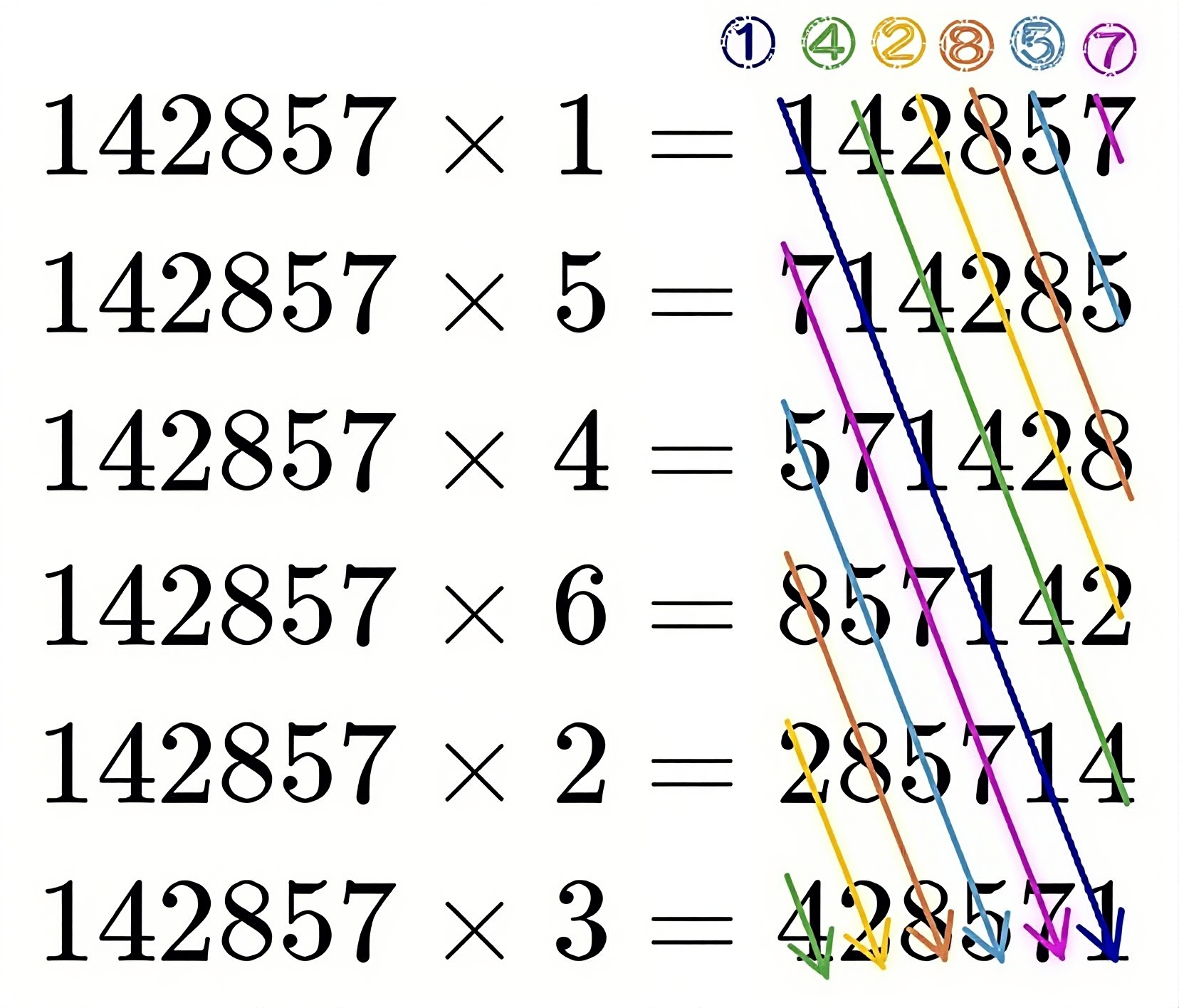
The 6CPOUFTN57 suitably listed to reveal a set of repunit diagonals
Beyond The Ordinary
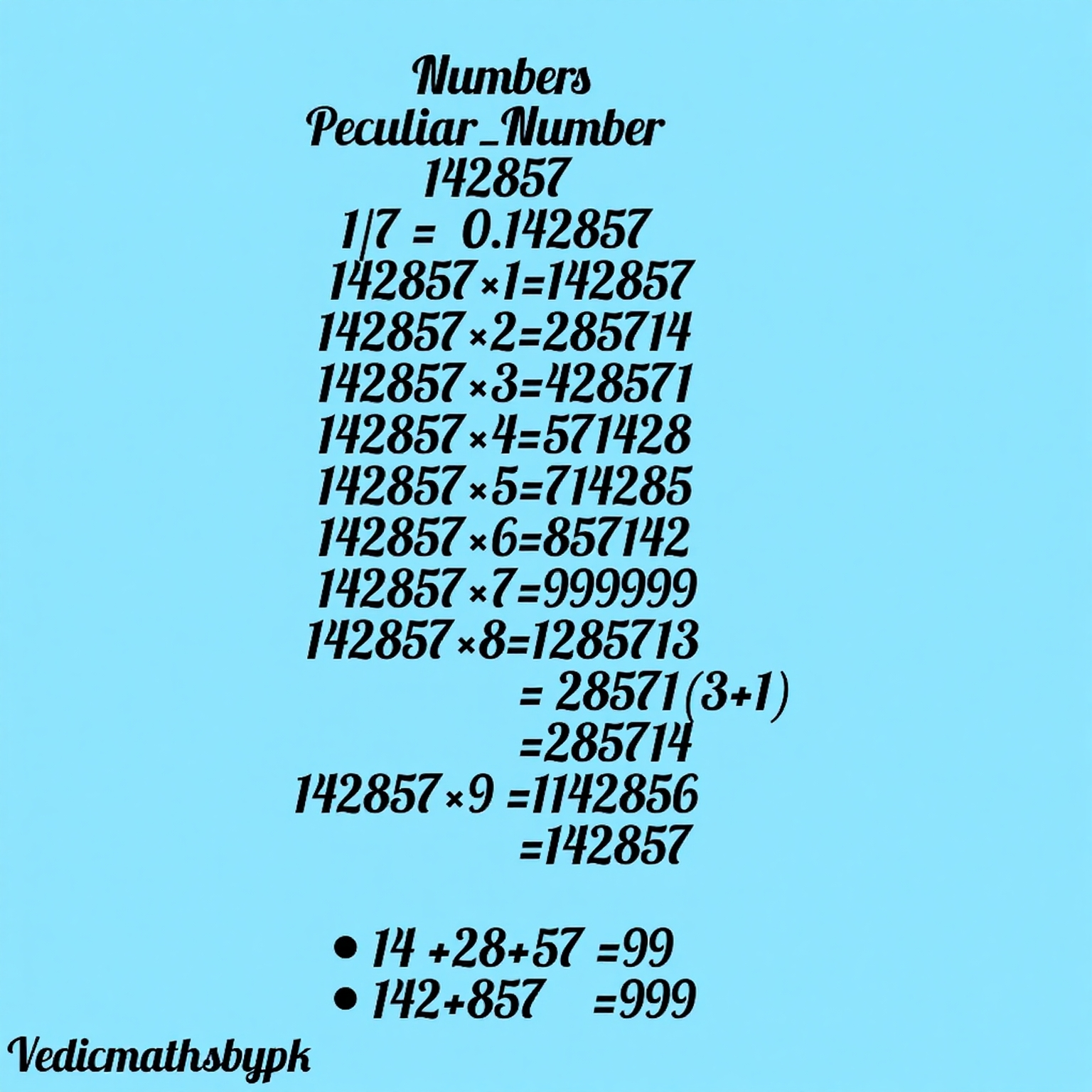
What's interesting here, is the final 8 lines. Compare line 7 to The UFTN57 Clock Sums below.
More On UFTN57
1/7 is considered a 'rebel' or 'weird' number in mathematics because, unlike other simple fractions (1/2, 1/4, 1/5, 1/8) that terminate or have short patterns, it breaks the rules by producing a long, complex repeating decimal.
Why 1/7 is the Rebel Number.
Complex Repeating Pattern:
1/7 equals 0.142857. It creates an infinite, six-digit loop (1, 4, 2, 8, 5, 7) that doesn't terminate.
Cycles Itself:
The fractions 1/7, 2/7, 3/7, 4/7, 5/7 and 6/7 all use the same six digits (142857) in the same order, but starting at a different point in the loop.
Cyclical Prime Nature:
Because 7 is a prime number, it does not fit the 'friendly' denominator category (which are products of 2s and 5s) that allow for terminating decimals.
Hidden Symmetry:
When arranging the repeating digits, they hold unique properties, often described as a 'magical' or 'mysterious' pattern in number theory.
Common Ways to Remember 1/7.
0.143:
Rounded to three decimal places.
Unfortunate57:
Remembering it as "Un" (1), "For" (4), "Tu" (2), "Nate" (8), "57" (57), representing 0.142857.
More On UFTN57
A Reptend (or repetend) is the sequence of digits that repeats infinitely in a recurring or repeating decimal. It is derived from the Latin repetendum ('that which is to be repeated'). Only rational numbers have a reptend, which is often indicated by a line (vinculum) over the digits. Because my editor does not support overlining, I'm using underlining instead. So, 0.123123... = 0.123, where 123 is the reptend.
Full Reptend Prime:
In number theory, a prime p is A Full Reptend Prime (or long prime) if its reciprocal (1/p) generates a reptend of length p-1. For example, 1/7 has a 6-digit reptend 142857, and so 7 is a full reptend prime.
Synonyms and Related Terms.
Repeating part.
Recurring digits.
Refrain (often used in literary contexts).
Period.
In summary, the reptend is the specific sequence of numbers that repeats indefinitely after the decimal point.
142857 = 123456789 ⊖ 369
The fraction 1/7 doesn't include the digits 3, 6, or 9 in its repeating sequence because of its unique properties as a cyclic number.
The №s 3, 6 and 9 are The Tesla №s (TTN) and they acquired their name by association with the famous scientist Nicola Tesla. (👁later). Here, we discuss why TTN are left out of the set {1, 2, 3, 4, 5, 6, 7, 8, 9} when considering the reptend of 1/7. We also discuss why the set of digits {1, 4, 2, 8, 5 and 7} are kept in.
First Considerations.
When you divide 1 by 7, you get the repeating decimal: 0.142857.
This six-digit sequence, 142857, contains all the digits except 0, 3, 6, and 9. The exclusion of 0 is trivial and therefore we only consider the exclusion of TTN. Here is the breakdown of why this happens and how those missing digits relate to the number 7.
The Division Remainder Rule.
In long division, each digit in the decimal is determined by the remainder of the previous step. When dividing by 7, the possible remainders are 1, 2, 3, 4, 5, and 6.
Because 7 is a full reptend prime, the division goes through all 6 possible non-zero remainders before it starts over.
The specific remainders that occur in order for 1/7 are 1, 3, 2, 6, 4, and 5.
When these remainders are multiplied by 10 and divided by 7, they happen to produce the quotient digits 1, 4, 2, 8, 5, and 7. Mathematically, the digits 3, 6, and 9 just never 'win' the division slot for these specific remainders.
The 3-6-9 Link To Multiples of 3.
The digits 3, 6, and 9 are all multiples of 3. In our base-10 system, fractions with 3 or 9 in the denominator [like (1/3 = 0.3) or 1/9 = 0.1)] are the ones that naturally produce these digits in their repeating patterns.
Because 7 is not a multiple or factor of 3, its simple cycles tend to avoid the triadic digits (3, 6, 9) in favor of the digits found in its own powers and doubles.
The Doubling Pattern.
Interestingly, the digits of 1/7 actually follow a hidden doubling pattern that skips 3, 6, and 9.
-
7 × 2 = 14
-
14 × 2 = 28
-
28 × 2 = 56 (This 56 becomes 57 because of the 1 carried over from the next double, 56 × 2 = 112.
The sequence 14, 28, 57 covers the entire repeating block of 1/7.
Digit Sums And Midy's Theorem.
According to Midy's Theorem, if you split the repeating block of 1/7 in half and add the parts (142 + 857) you get 999. This shows that every digit in the first half has a partner in the second half that adds up to 9.
-
1 pairs with 8
-
4 pairs with 5
-
2 pairs with 7
Notice that to include a 3, 6, or 9, their 9-partners (6, 3, or 0) would also have to be present. In the specific cycle of 7, these pairs are simply not selected by the division process.
The Tesla №s
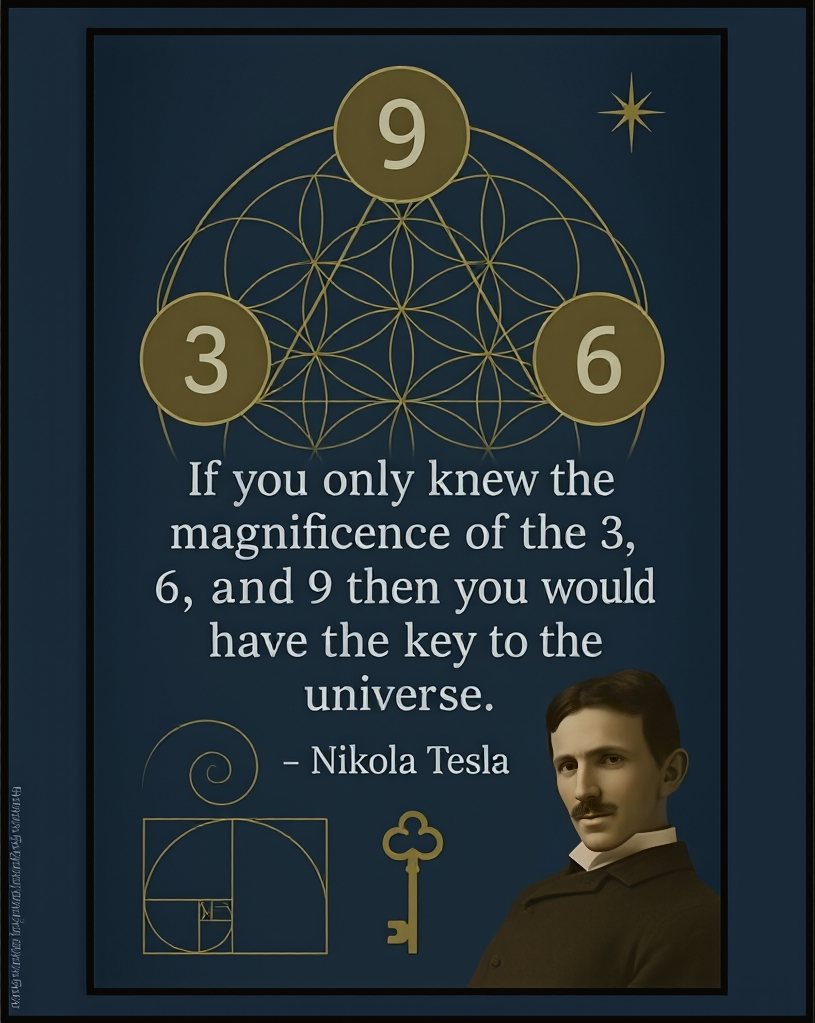
The Tesla Numbers (TTN) are the three numbers 3, 6 and 9. They are so called because many people perpetuate the now famous relationship between Nicola Tesla and the triple. As a result of The Tesla Myth, there are many posts like the one above on the internet.
TimeA-²symmetric Mathematics
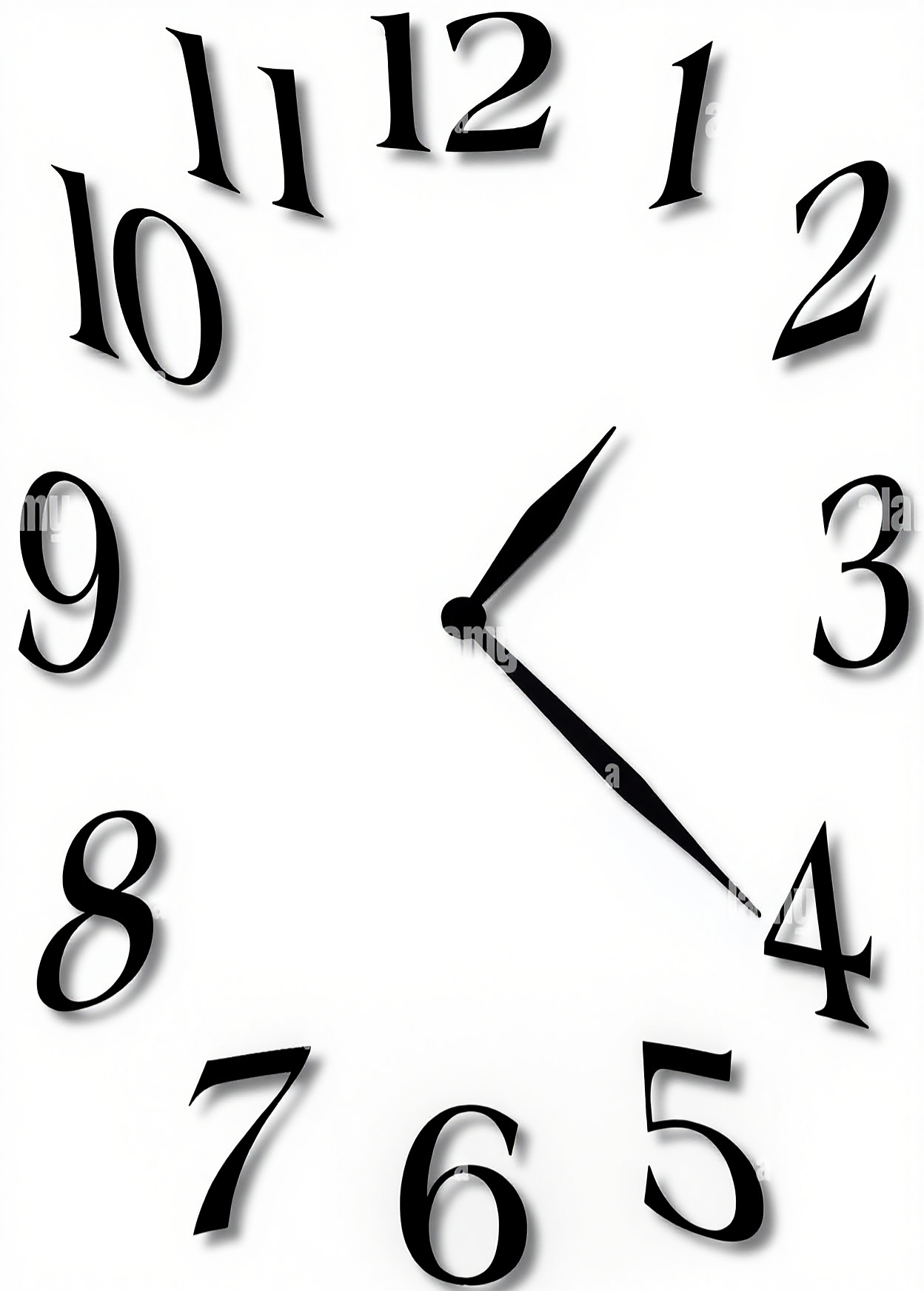
3-6-9 (TTN) and 7-6-5 (TEN)
On The Face Of A Clock.
Think Of The Clock As A Timer (TimerA). The A Can Move To Position 2.
The UFTN57 'Clock'
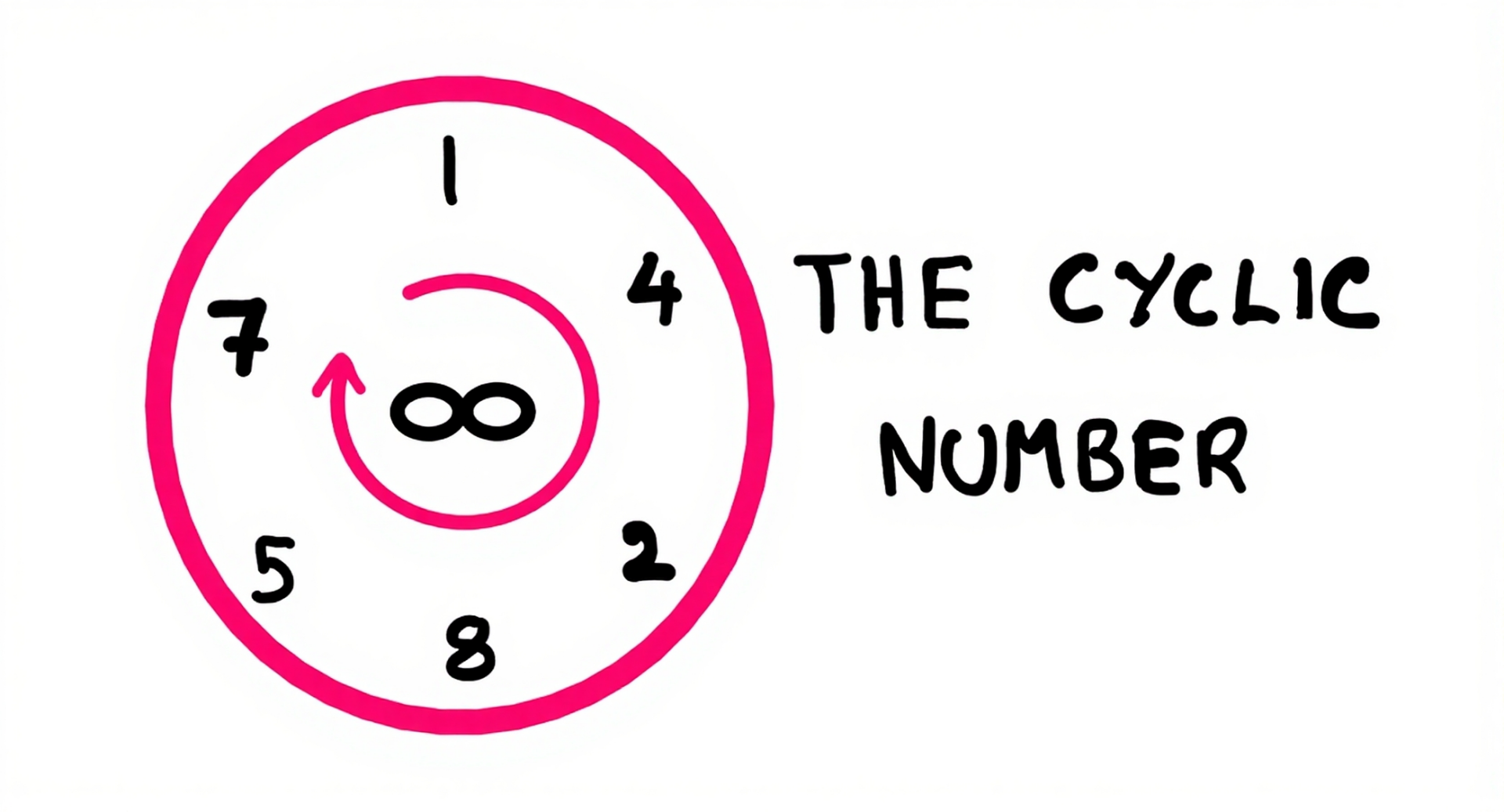
The Above Is A Clock Face With 12/2 Markings.
A Time-symmetric Triple Equation
3 + 9 (2 №s of TTN) = 7 + 5 (2 №s of TEN) = 6 + 6 (The 2 Shared №s of TTN & TEN) = 12.
More On Pathematical Calculus, UnForTuNate57 and TTN
Qu is largely about working with complements. Perhaps the best known pair of complements is The Yin-Yang (69). In Qu, we often assign The Ys of 69 to two complements that can then be handled with Yin-Yang style working. In pathematics, 69 can be taken to be integration and differentiation (IAD or Calc). This pair can then be taken to be inclusion (integration) and exclusion (differentiation). With UFTN57, we have the idea of differentiation being applied to the set AD = {1, 2, 3, 4, 5, 6, 7, 8, 9} of all non-zero digits in such a way that the set of digits {3, 6, 9}(TTN) is excluded (differentiated out).
Using the above 'clock', it is easy to produce the set {3, 6, 9} 'within' AD by a simple, elegant and meaningful procedure that uses vortex arithmetic. The numbers of UFTN57 add in pairs to produce a set of single digits: 4+2 = 6, 1+8 = 9 and 7+5 = 12 & 1+2 = 3. 6, 9 and 3 are, of course, TTN.
Beyond The Ordinary
𐅫Doubling Sequence {1, 2, 4, 8, 7, 5}.
When starting at 1 and doubling, you get {1, 2, 4, 8, 16, 32, 64...}. These are all of the powers of 2, 2ⁿ, from 0 to n. If you reduce these to single digits (known as Digital Roots) {1, 2, 4, 8, 1+6 = 7, 3+2 = 5, 6+4 = 10 -> 1+0 = 1} and continue calculating new 2n (2⁷ = 128, 2⁸ = 256 etc.) and their digital roots, the pattern {1, 2, 4, 8, 7, 5} repeats indefinitely.
The set {1, 2, 4 ,8, 7, 5} is known by various names including The Vortex Sequence. It is the same as Repend 7 with the digit pairs 5 & 7 and 4 & 2 exchanged/swapped/flipped etc. So, we have:
TVS: 1248⊕℧ = 124875 and
RP7: 1428⊕ᘯ = 142857.
Using above, we note that these numbers are composed of the decimal values of the first 4 powers of 2 (the half-byte 1111) ⊕ either 75 or 57 with 4 and 2 either in order (for TVS) or in reverse order for (RP7).
Note that 1111 bin = 1 + 2 + 4 + 8 = 15 (the largest number possible with 4 digits) = 2 × 7.5 = ᘯ + ℧ = ᔐ.
Also, 75 + 57 = 132 = ⳨(123).
CATalan Nos [an anagram of
Alan NoScat
(A Cortex Mathematician who takes no crap from Zead Player and gives none to his friends.)]
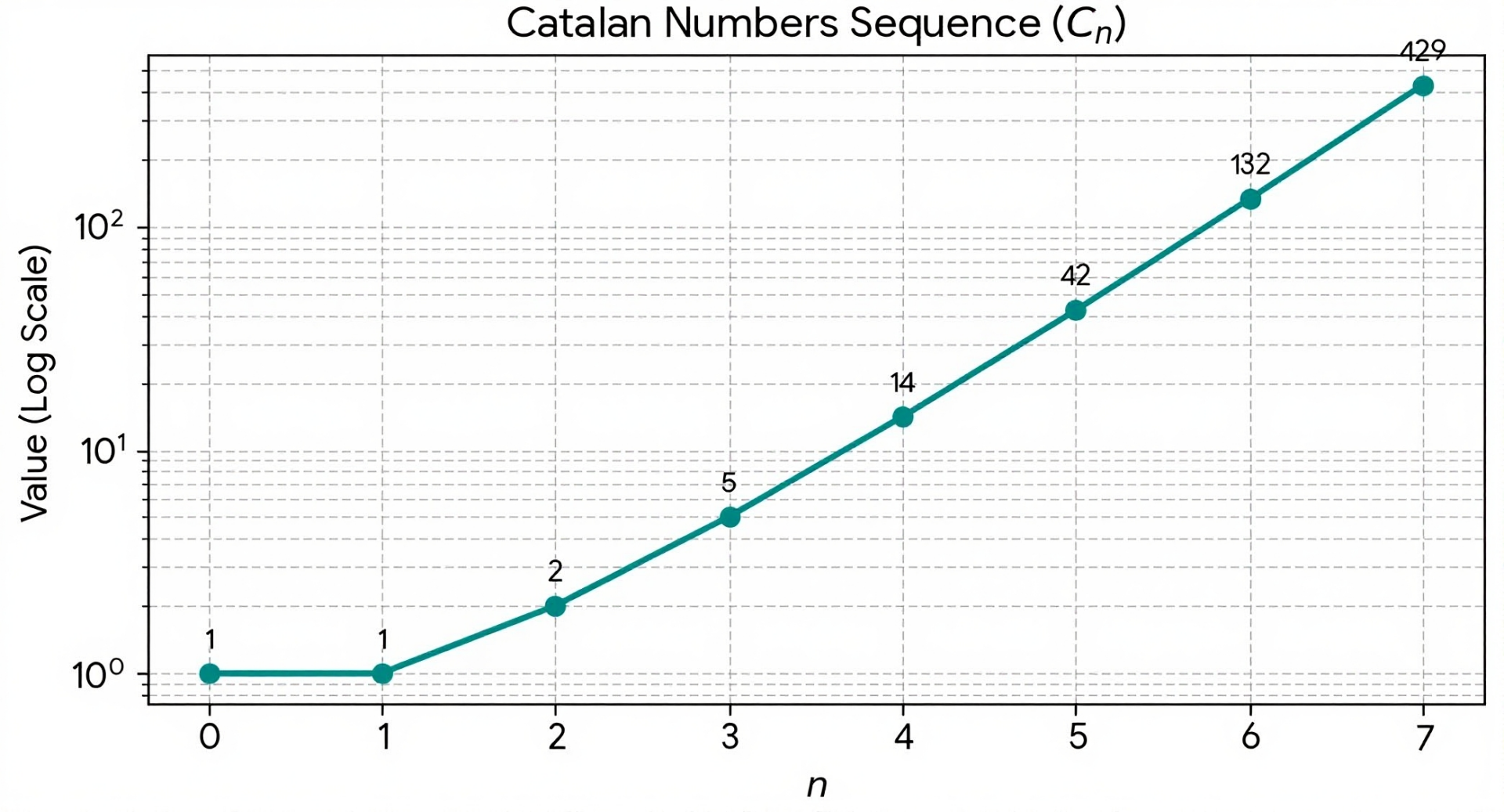
132 is Catalan No. 6. The Answer is Catalan No. 5.
Beyond The Ordinary
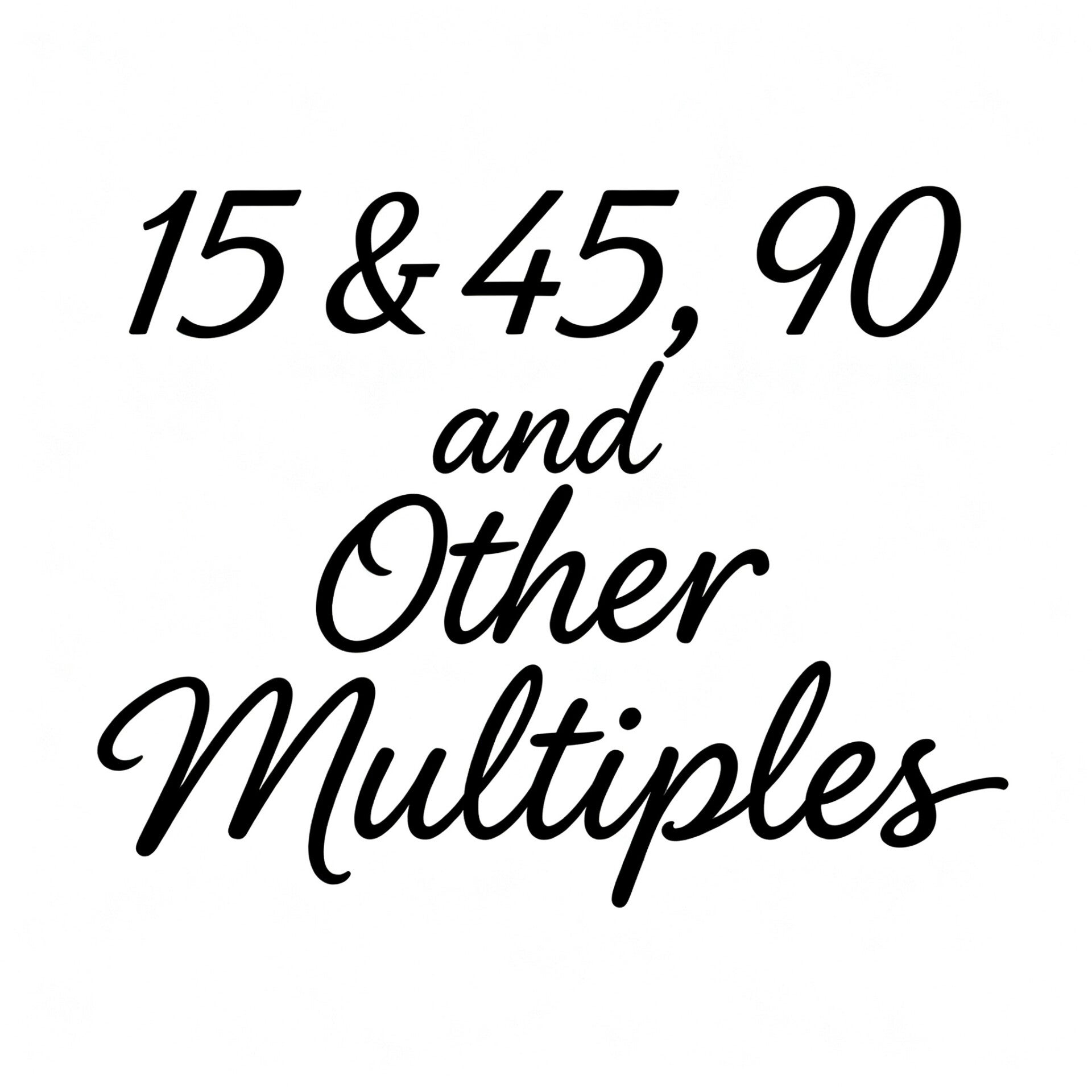
℧, ᘯ and The Signal
As mentioned elsewhere, 75 can be taken to be the number equivalent of ℧ ie. ℧ = 75. Since 6 can often be taken to be the number of an invisible binding glue system (that is, in reality, something like a plug and socket based interface system), ℧ can also have the number 7.5. Such numbers as 15, 30, 45, 90 etc. then have significance in pathematics because they are multiples of 7.5.
15 is 2×7.5 = 2℧. Sometimes, ᘯ=℧ and we can then have 15 = ᘯ⊕℧ = ᘯ℧. Thinking of the 7 of ℧ being connected to the 5 of ᘯ [taking ᘯ (an inverted ℧ read right to left) to be 57], we get
15 = ∿
∿ is known as The Signal and is what is being exchanged in communication and control when you think about coding with waveforms. ∿ can, of course, be a square wave.
Beyond The Ordinary
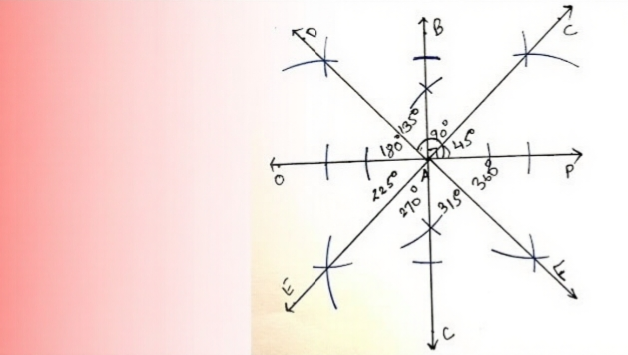
Figure 8 (radials)
Some Noteable Facts Concerning Figure 8
45/1 = 90/2 = 180/4 = 360/8 = 45
= 6 × 7.5
&
1248 ⊕ 75 = 124875, which is the doubling sequence of vortex mathematics.
45 + 90 + 180 + 360 = 675.
(2) Points Of The Compass
E(0 or 360) + NE(45) + N(90) + W(180) + S(270).
45 + 90 + 180 + 270 + 360 = 945 = 15 = 2 × 7.5 × 63 (the year of my birth) = 2℧63.
Beyond The Ordinary
Li
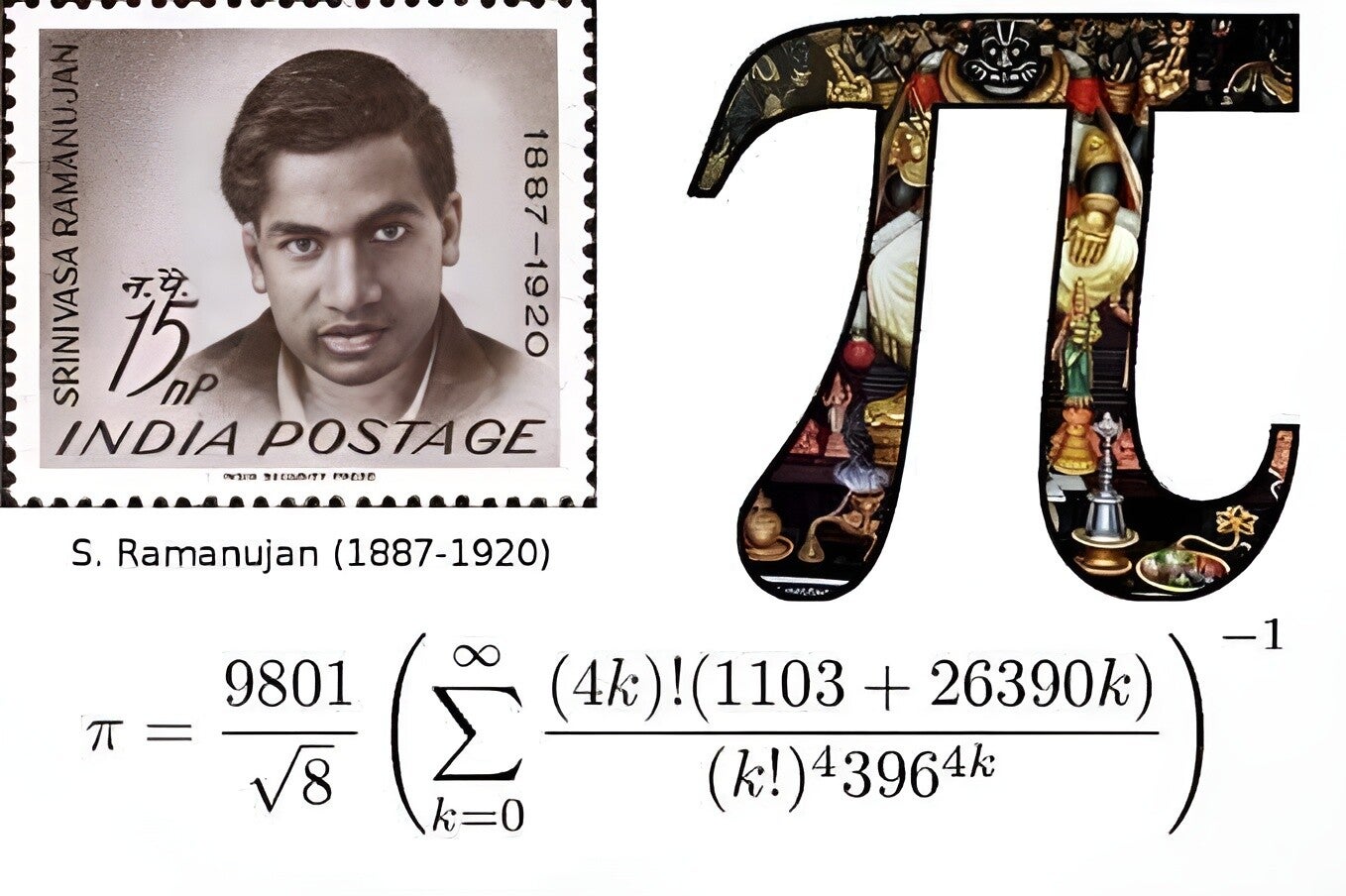
Unlucky 4 Sum (4×13)
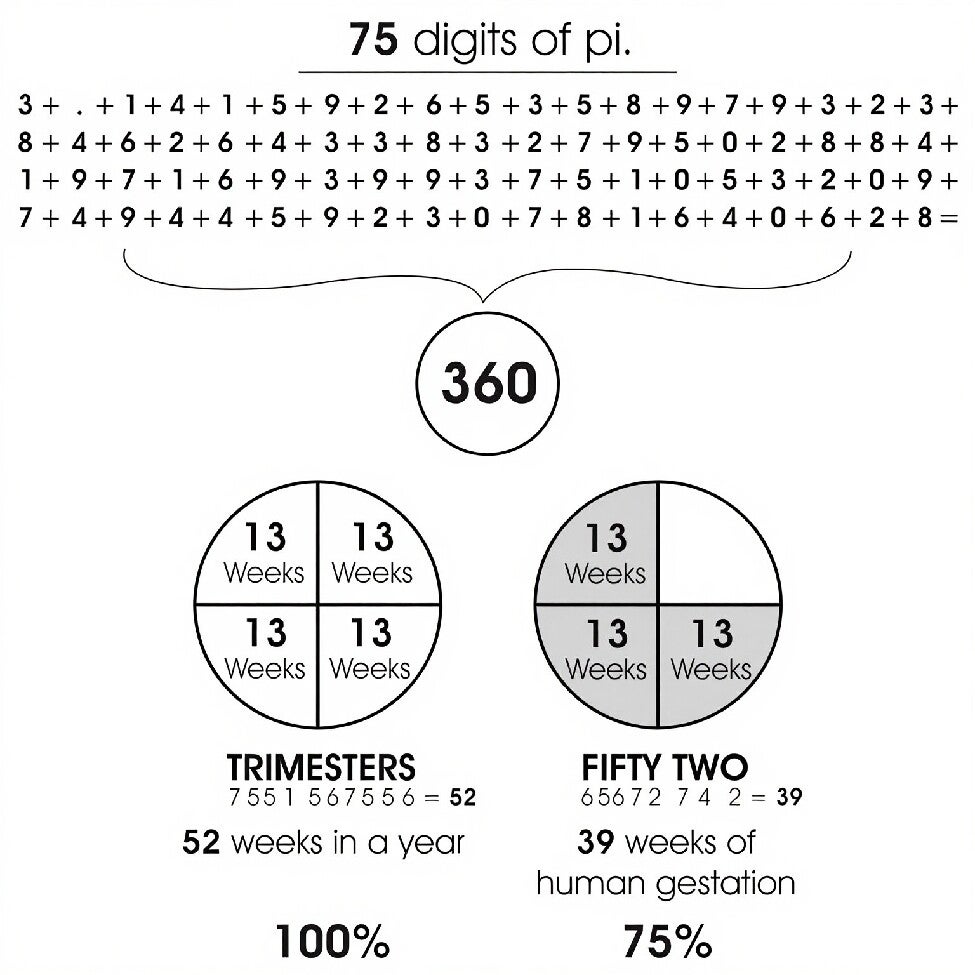
Zead can have bad luck 52 wks a year.
Beyond The Ordinary
The sum of the first 75 digits of pi (including the leading integer 3) is 360.
This total is derived from the following sequence of the first 75 digits:
3141592653 5897932384 6264338327 9502884197 1693993751 0582097494 4592307816 40628.
Interestingly, the sum of exactly 360 is significant in geometry, as there are 360 degrees in a circle, and pi is the fundamental constant defining a circle's properties.
Breakdown of the Digits.
• Integer part: 3
• First 74 decimal places: The sequence begins 14159... and ends at the 74th decimal digit, which is 8.
• Calculated Sum: By adding each individual digit together, the total is exactly 360.

The sum of the first 75 digits of pi is 360 if you count the leading number 3, or 363 if you only sum the first 75 digits after the decimal point.
You lose three and you gain three.
A(sym) Metric System
A Metric is a quantifiable, standardised measure used to track, monitor, and assess the status or performance of a specific process, system, or goal. Metrics provide context to raw data, turning it into actionable information to make informed decisions. Examples include key performance indicators (KPIs) in business or units like meters and kilograms in the scientific metric system.
Data Analysis:
They transform raw data into useful information by adding context (e.g., 'sales' becomes 'units sold per quarter').
Measurement Units:
The metric system is a decimal-based system used to measure length (meters), volume (litres), and mass (grams).