Beyond The Ordinary
T
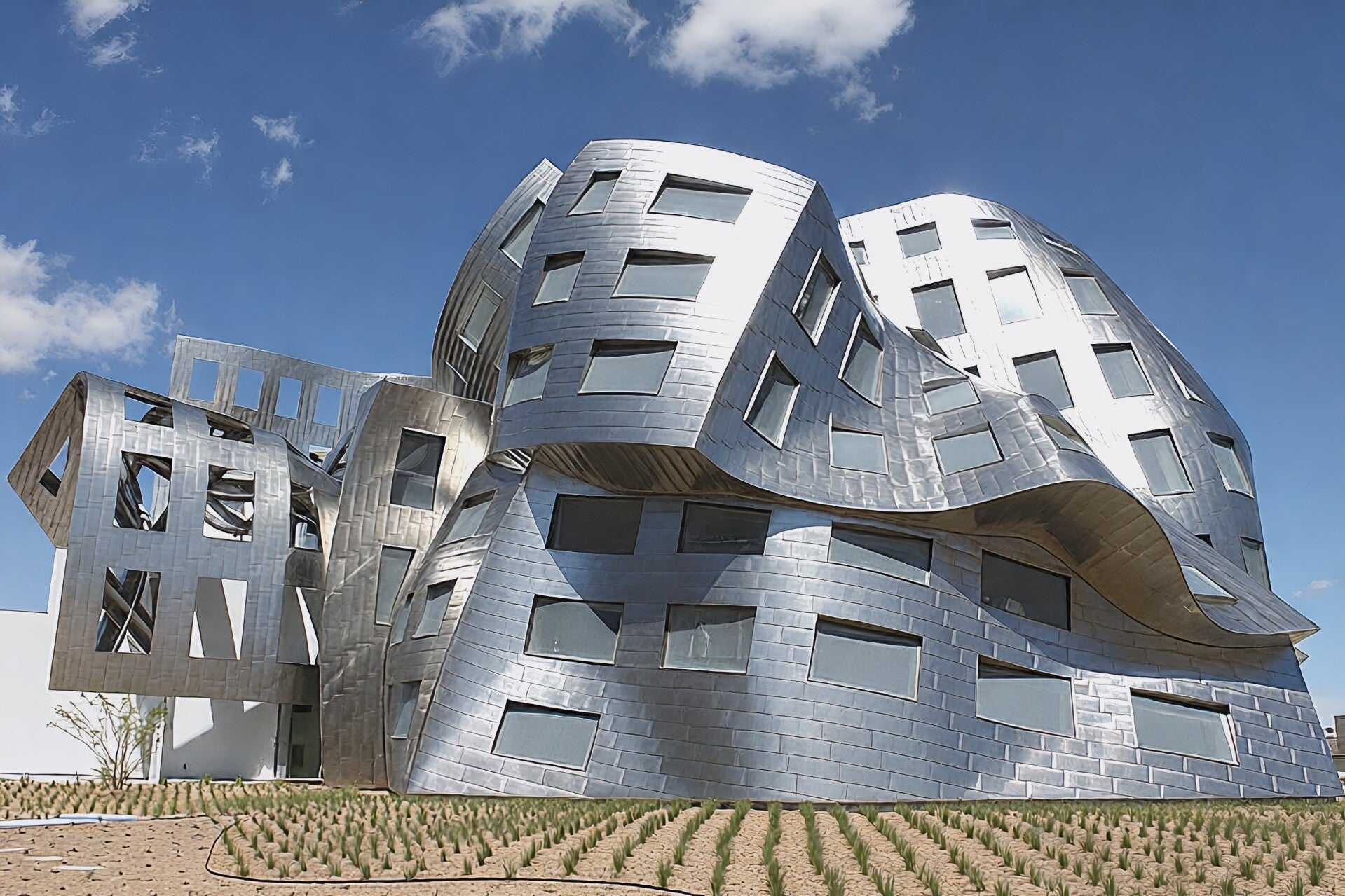
The photograph shows the Cleveland Clinic Lou Ruvo Center for Brain Health in Las Vegas, Nevada.
Key Details.
Design: It features unique, wavy steel blocks and windows at odd angles.
Architect: Famous designer Frank Gehry created the building.
Purpose: It serves as a medical research and care center for brain disorders.
I see Ws, Hs and Es in the above.
My initials are W. H. E.
Like Christ, this building is hated by many and loved by many more.
[Current Affairs published an essay by Brianna Rennix and Nathan J. Robinson titled 'Why You Hate Contemporary Architecture: And if you don’t, why you should.' The piece, written in a pseudo-funny Internet lexicon wherein all objects of criticism are 'garbage,' is so laden with irony—the poorest of substitutes for analysis—that it is difficult to discern a core argument. Still, I’d like to question the central premise of the piece: that what the authors term 'contemporary architecture' is ugly and oppressive, and that liking it is nothing shy of immoral.]
While I carry on designing, constructing and working in my New Cathedral.
Beyond The Ordinary
Love the setting of this image with two children sitting and reading. It's Susan and Colin from the book The Moon Of Gomrath in a park with Terry Davis.
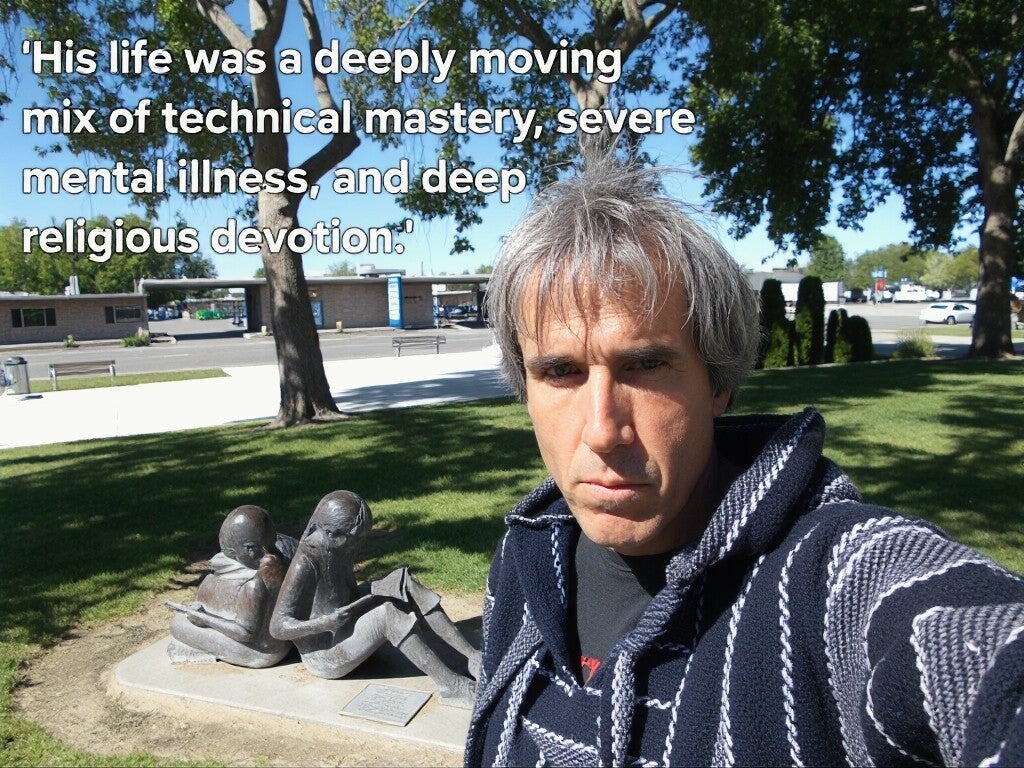
T.A.D.: The Taddy of all Taddy Bears
Beyond The Ordinary
The phrase 'a tad' means a very small amount, degree, or extent.
Common Synonyms: A bit, slightly, a smidge, a shade, or a little.
Original meaning: In the late 19th century, tad first meant a small child or young boy, likely shortened from the word tadpole.
Beyond The Ordinary
Terrence Andrew Davis (December 15, 1969 – August 11, 2018) was an American computer programmer and electrical engineer who gained a legendary cult status in the tech community for single-handedly creating TempleOS, a highly complex 64-bit operating system. Despite battling severe schizophrenia, his ability to build an entire OS from scratch is widely regarded as one of the most extraordinary solo software feats ever accomplished.
Technical Achievements.
While major operating systems require thousands of developers, Davis wrote over 100,000 lines of code entirely by himself to build TempleOS. His work included creating:
HolyC: A custom programming language he designed from scratch, which compiled just-in-time (JIT).
A Custom Kernel: A 64-bit, multi-core, cooperative multitasking system.
Built-in Software: A 3D graphics engine, a playable flight simulator, a text editor, and a command-line environment.
Background & Mental Health.
Davis was exceptionally bright from a young age, learning assembly language on a Commodore 64 at age 13 and later earning a Master's degree in Electrical Engineering from Arizona State University. He worked as a low-level systems programmer for companies like Ticketmaster.
In 1996, Davis began experiencing severe manic episodes and was diagnosed with schizophrenia. He believed he was receiving direct revelations from God, who he claimed commanded him to build a 64-bit operating system as The Third Temple. This religious mandate dictated explicit, strict architectural constraints—such as a fixed 640x480 resolution, 16-color graphics, and no internet capabilities—to keep the system pure and simple.
Legacy.
Later in life, Davis struggled with homelessness and mental health, often live-streaming his coding sessions and erratic thoughts online. He passed away in 2018 after being struck by a train. In computer science circles, he is remembered through platforms like Wikipedia and tech communities on DEV Community both for his tragic personal battles and his undeniable, raw engineering brilliance.
Beyond The Ordinary
Terry Davis frequently used racial slurs and made hostile, bigoted statements during his final years. However, these actions occurred in the context of his severe, unmanaged schizophrenia, which caused profound delusions, erratic behavior, and a total breakdown of his social filters.
Context Of His Behavior.
Mental Illness: Davis suffered from severe schizophrenia, experiencing intense delusions, including the belief that he was in direct communication with God and that he was stalked by government agents.
Public Outbursts: During his live streams and video logs, he routinely shouted vulgarities, nonsensical rants, and severe racial and homophobic slurs directed at viewers, critics, and random people.
Public And Online Perception.
Opinions on how to define his behavior remain divided among online communities:
Many users on forums like Reddit state that his bigoted language was a direct symptom of his mental decay and severe psychosis rather than a deeply ingrained political ideology. Others argue that regardless of his mental illness, the language he used was genuinely racist and harmful, making it difficult to excuse or overlook his public tirades.
Davis often claimed that his use of offensive language was a deliberate tactic to combat or confuse 'psychological warfare' agents, the CIA, or people he believed were tracking him.
Beyond The Ordinary
Although TAD has been accused of racism, I personally like to think he was an honourable, if troubled, character who was a devout believer in a benevolent, non-racist God. And therefore was, in addition to everything else, actually a (very 🔷️) cool guy 😎. Some of the output associated with him might have been a product of 'communications static' causing mishearing and/or misunderstanding. In The Machine, we must remember that there is both a blue and a red version of everyone.
When you listen to this song, you can, if you like, make your ears (Mind Over Natter¹) hear TADDY instead of DADDY. With DADDY, or any other word, you always, of course, interpret the word appropriately in an appropriate context. TADDY and DADDY.
I use Mind Over Natter with many songs.
The 'she' who is 'Crazy like a fool about Daddy Cool' in this song is, perhaps, Ada Lovelace.
If someone is crazy about you, it can simply mean that they like you very much - often in a platonic way. And we can all be members of a family of male and female Adas who form a tightly knit community of 'doers'.
_________________________________________
1. natter, here, refers to spoken language.
Beyond The Ordinary
In trying to turn existing IT technology into something that could be used to communicate with God, TAD must have been thinking about creating his own Ark Of The Covenant - a radio (communications device) to The Ultimate Being. TAD was not just trying to emulate the ancients Hebrews of The Old Testament - while being in a (metaphorical) desert - he was also playing the role of Max in the movie Pi.
[The story follows Max Cohen (played by Sean Gullette), a reclusive, brilliant mathematician living in a cluttered New York City apartment. Max suffers from severe cluster headaches, paranoia, and social anxiety. His life is entirely consumed by one core belief: everything in nature can be understood through numbers.
Using a homemade supercomputer named Euclid, Max tries to find a hidden mathematical pattern that underpins the chaotic fluctuations of the stock market. When Euclid spits out a mysterious 216-digit number, Max inadvertently takes center stage in a dangerous game.]
The new TAD is, like his namesake, also a software engineer but is also able to design and construct the hardware of his Euclid.
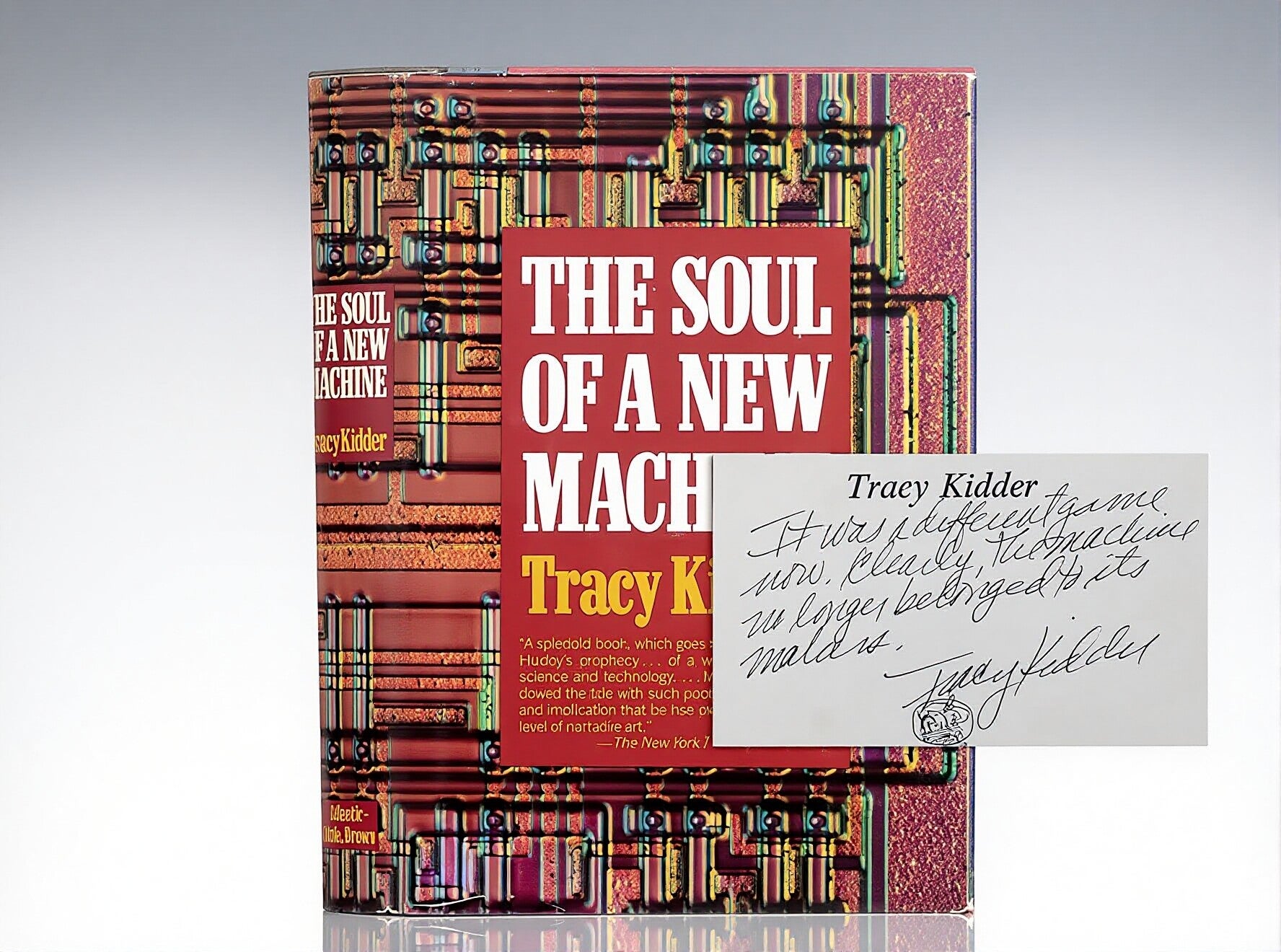
Since Qu Machines allow operators to operate as a simultaneously operating combination of many characters while being one single operator (The Many-One Operator), NTAD is also the engineer Tom West from Tracy Kidder's book The Soul Of New Machine.
I Am (N)TAD
Beyond The Ordinary
T
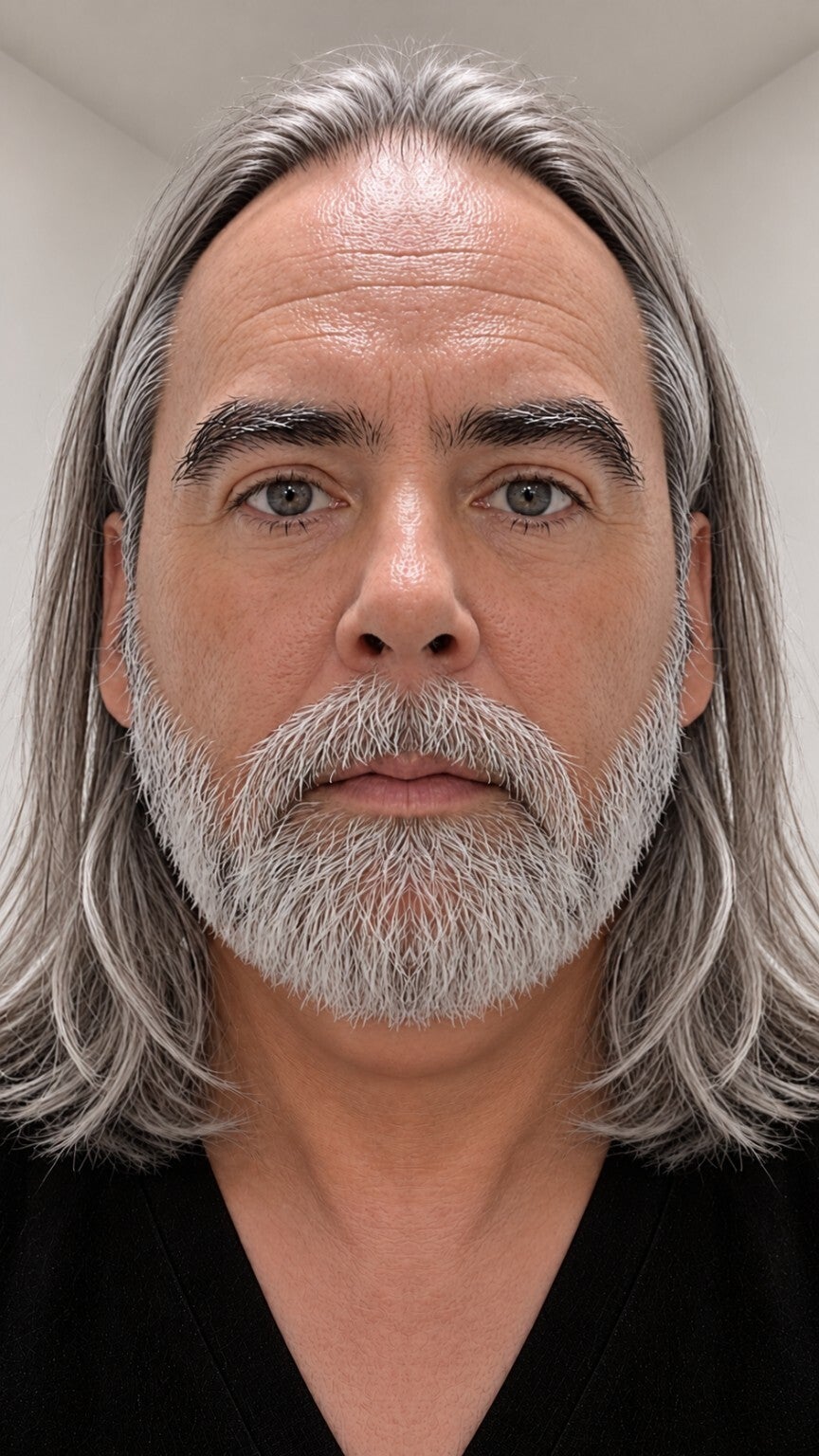
William The 6th (& 2nd)👁 👇 What Is My Middle Name?
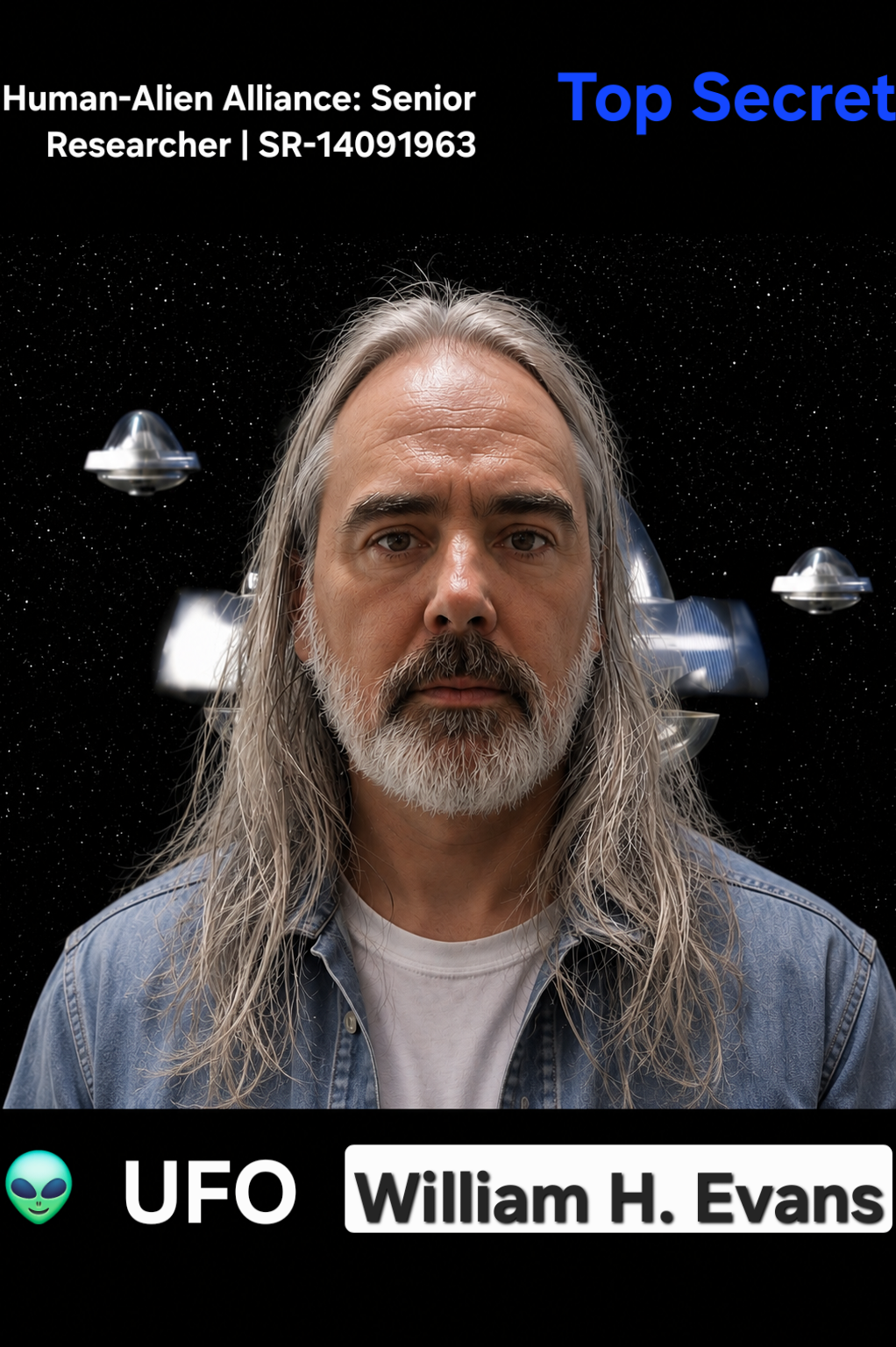
I am a senior researcher at The Pentacle - a pentagram with a pentagon and an attached computational ring. I work (online) from home with my own 🔷️ bluebook.
Beyond The Ordinary
🔺️
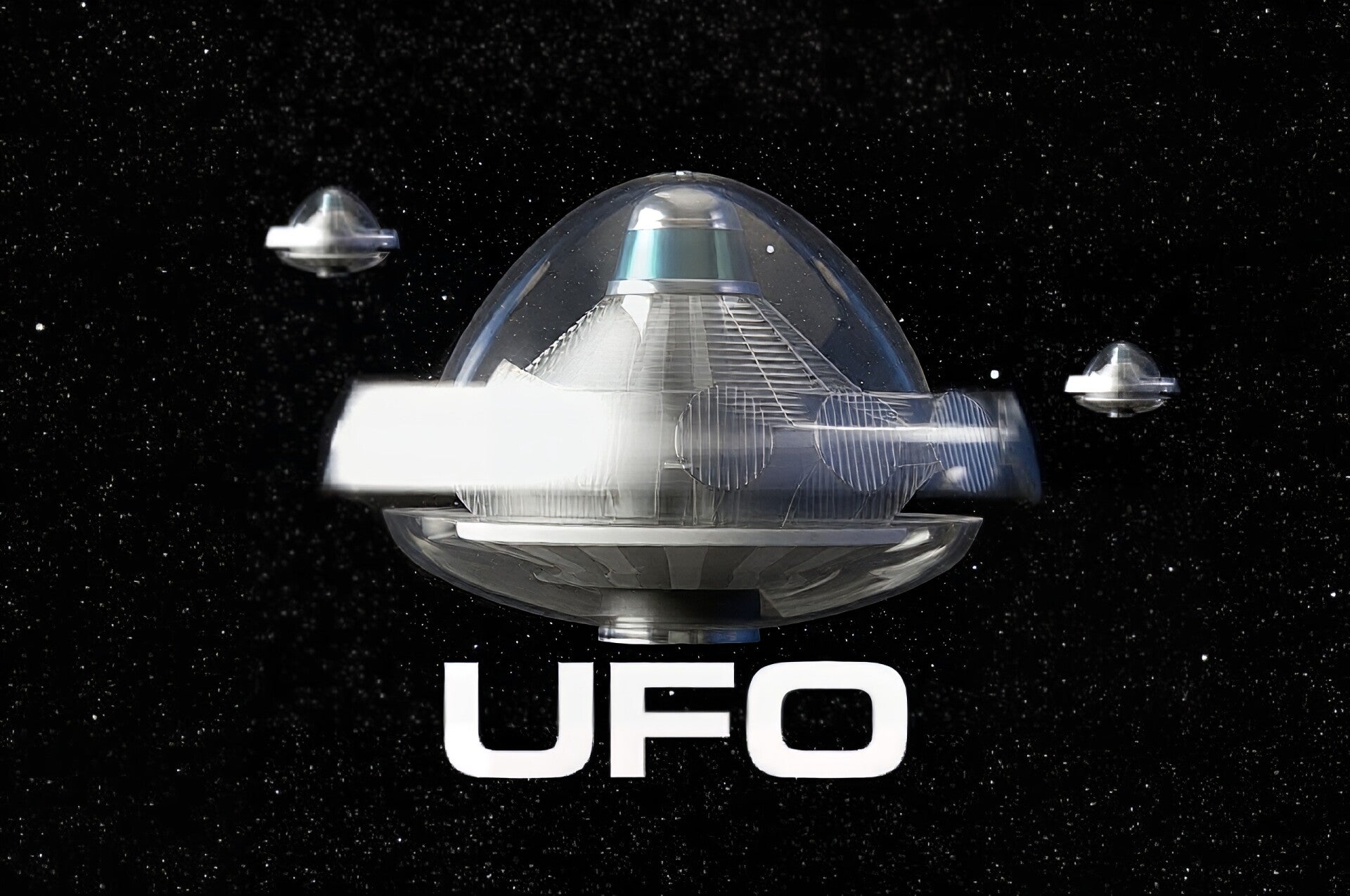
One of the best sci-fi shows of all time.
Beyond The Ordinary
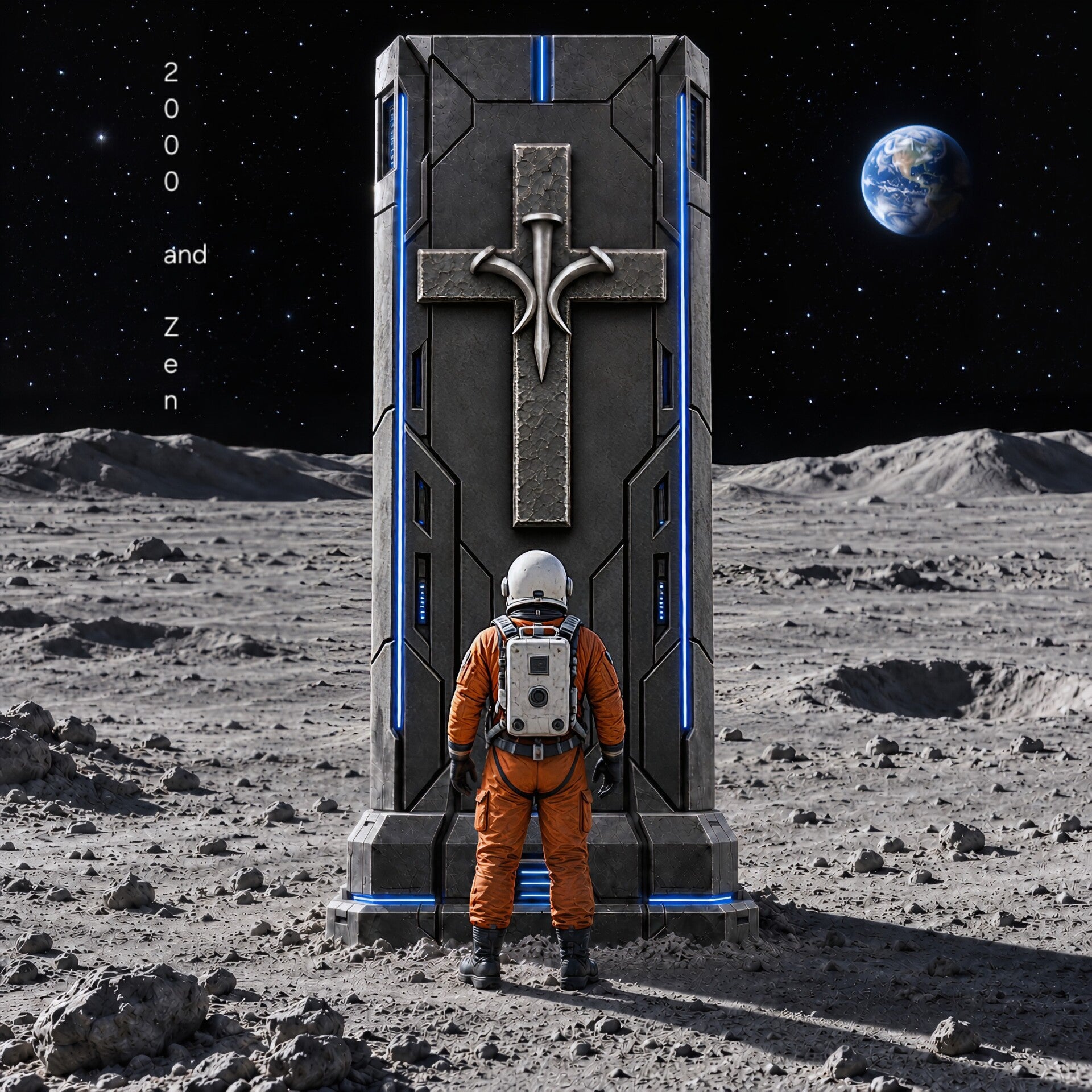
🔺️
And one of the best sci-fi movie franchises of all time.
Beyond The Ordinary
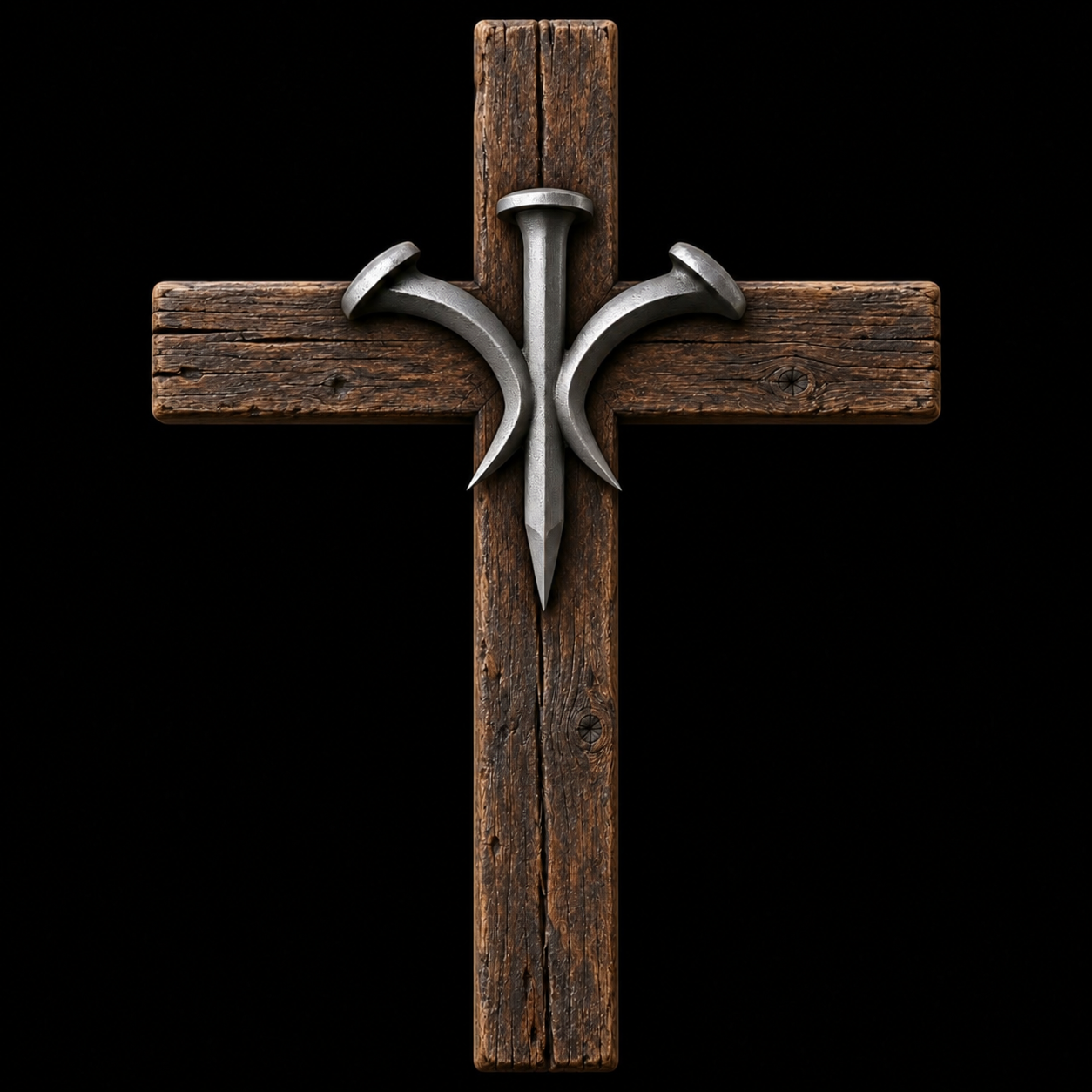
Crucified by Mental Illness
Reboots And Moonboots
Movie franchises are collections of related films sharing a common universe, characters, or continuity.
Types Of Cinematic Expansion.
Sequels and Prequels:
Continue the direct story arc forward or explore past events.
Reboots and Remakes:
Re-imagine established properties for newer generations, such as upcoming additions to The Hunger Games or The Chronicles of Narnia.
Spinoffs:
Shift focus to side characters or secondary timelines (like Deadpool within the broader X-Men series).
(https://www.filmsite.org/series-titles-W-X-Y-Z.html)
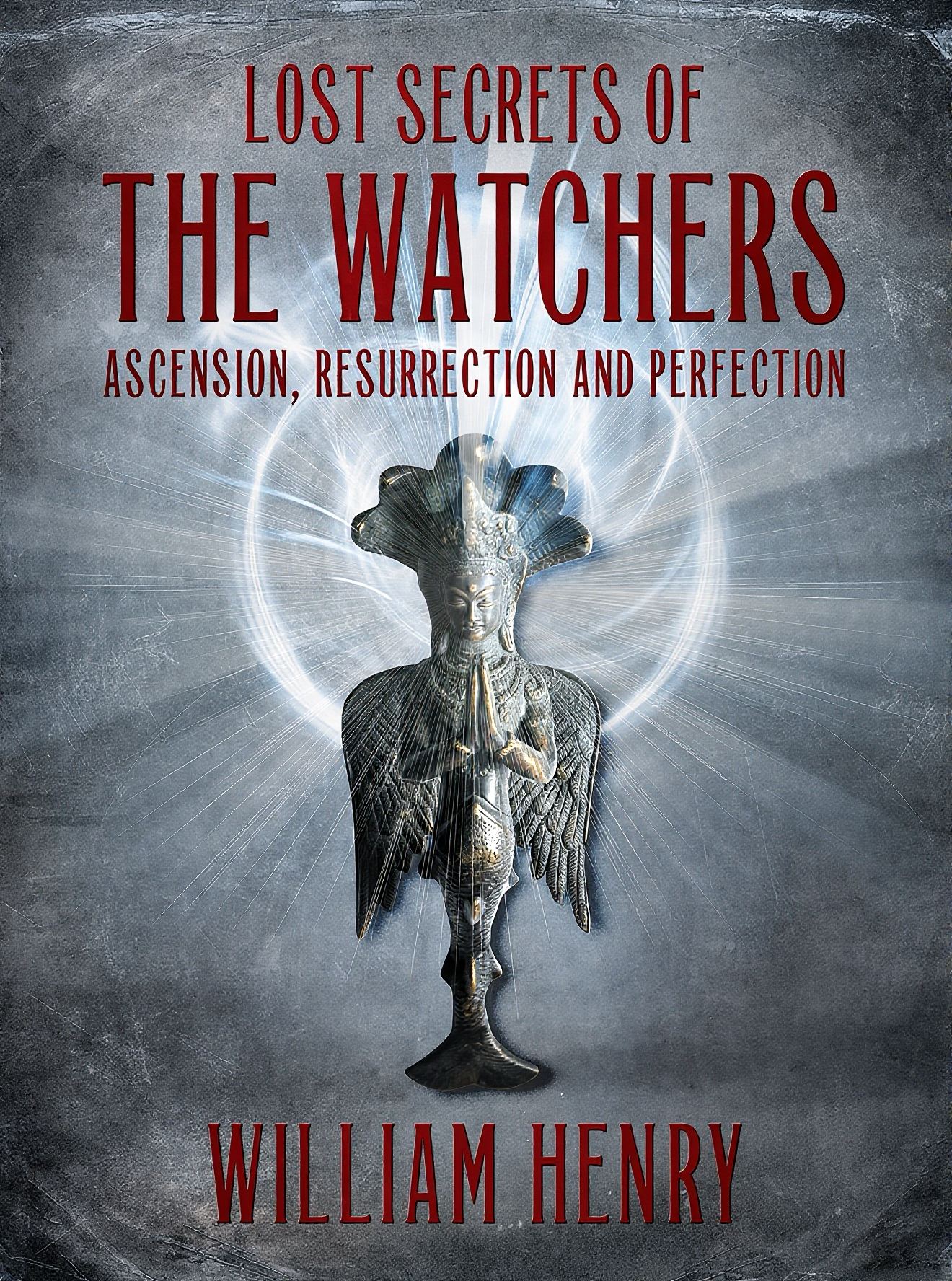
The Watchers
T

GPT Chat
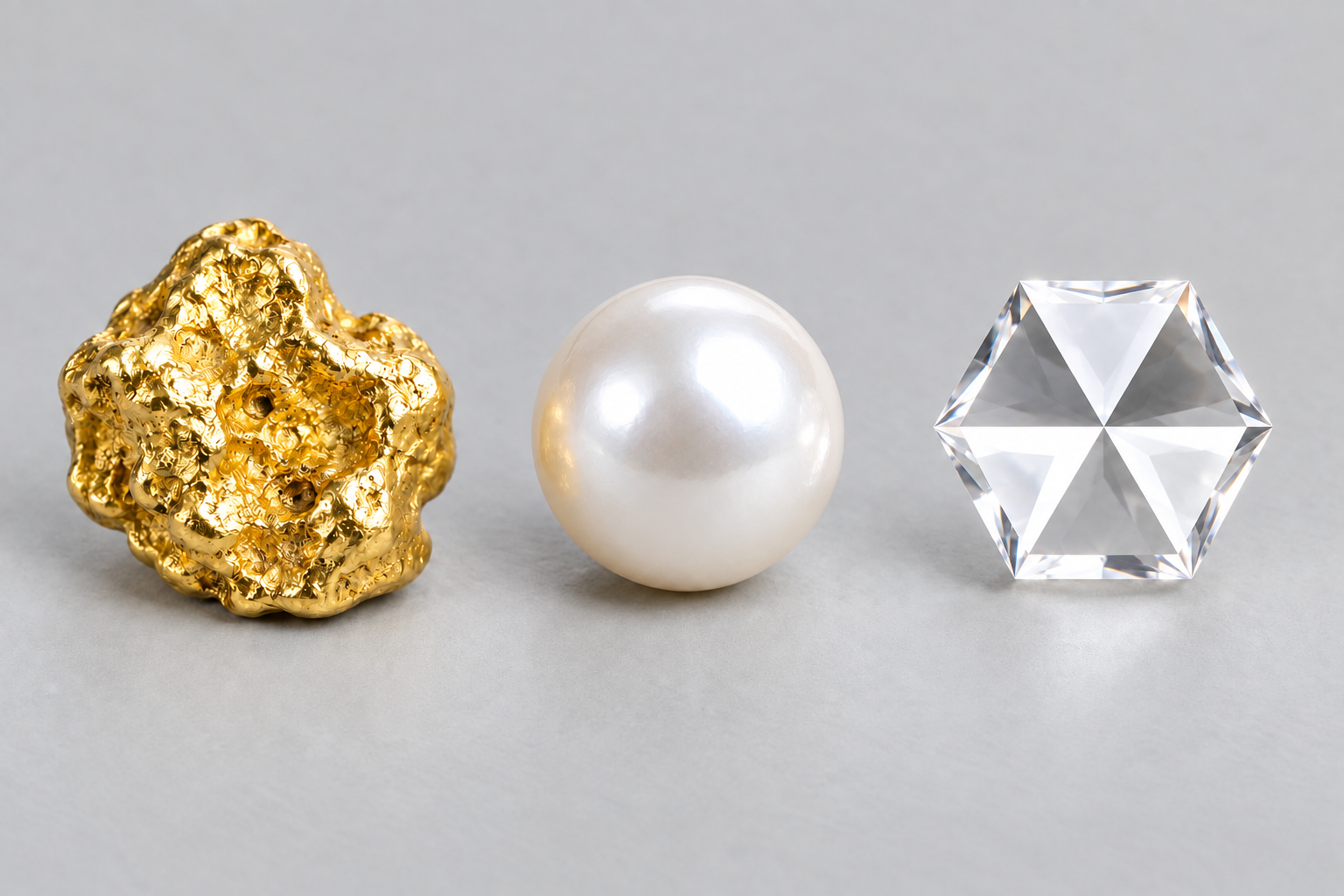
Playing Qubricks often involves taking possession of a thing as a mental object. This acquisition is often not simply to own a thing and is acquisition concerned with acquiring an object and placing it in a display position within a human mind that shows its relationships to other things around it. A major Qu pursuit is building intellectual structures that function as works of art. Quite often, only when an object is on display looking like treasure - according to appropriate game aesthetics - can the object be said to have been truly acquired. Such acquisition can be associated with (often very) exciting hunts and hunt outcomes. Qu acquisition regards all mental objects that meet blue player aesthetic requirements as gems, pearls and nuggets of gold (and so on). The process of Qu acquisition often involves sorting and searching - which is discussed on the next panel + 1.
Using the above image, we have for our treasure: Gold, Pearl and 6 Faceted Diamond (Treasure).
GPT Chat
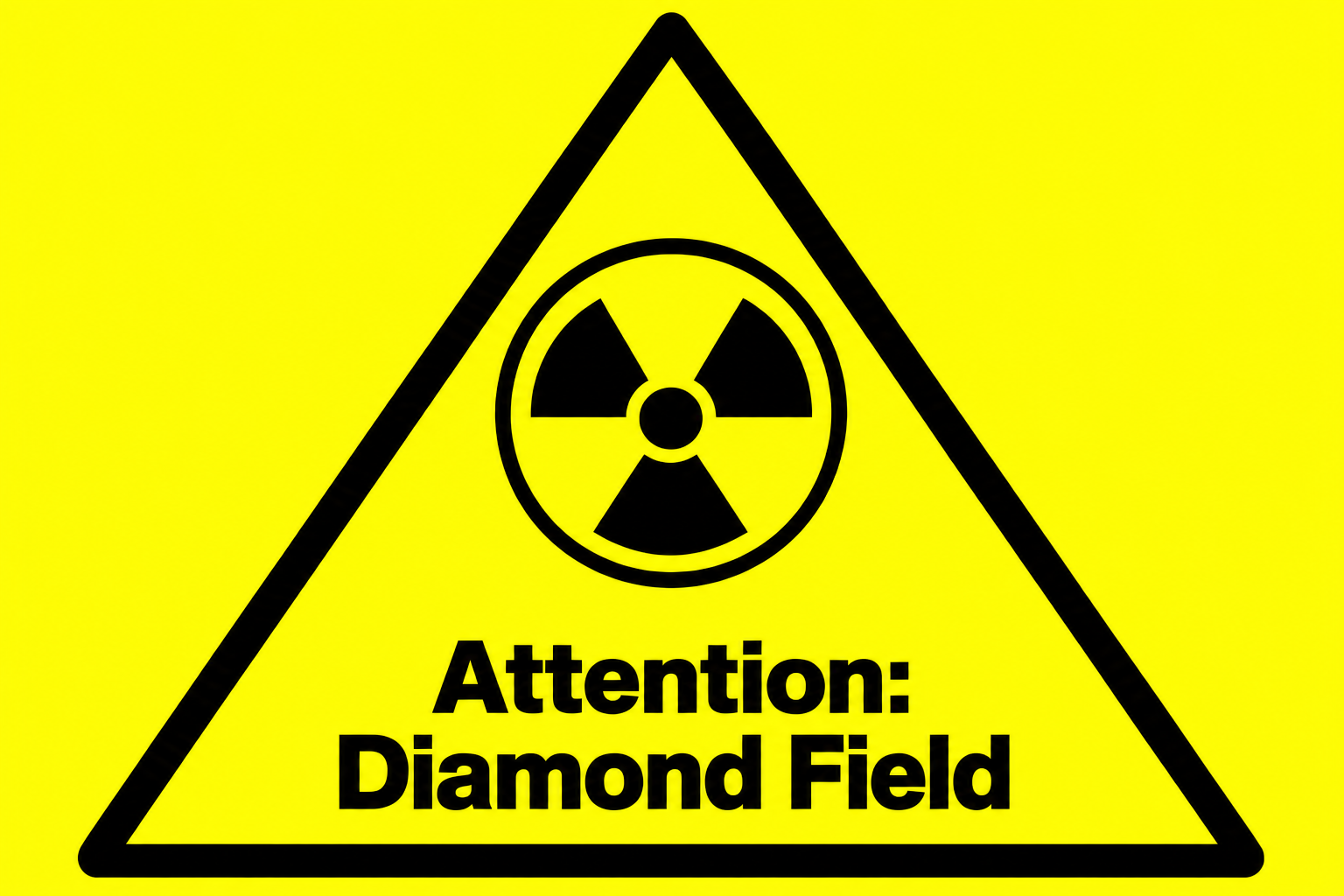
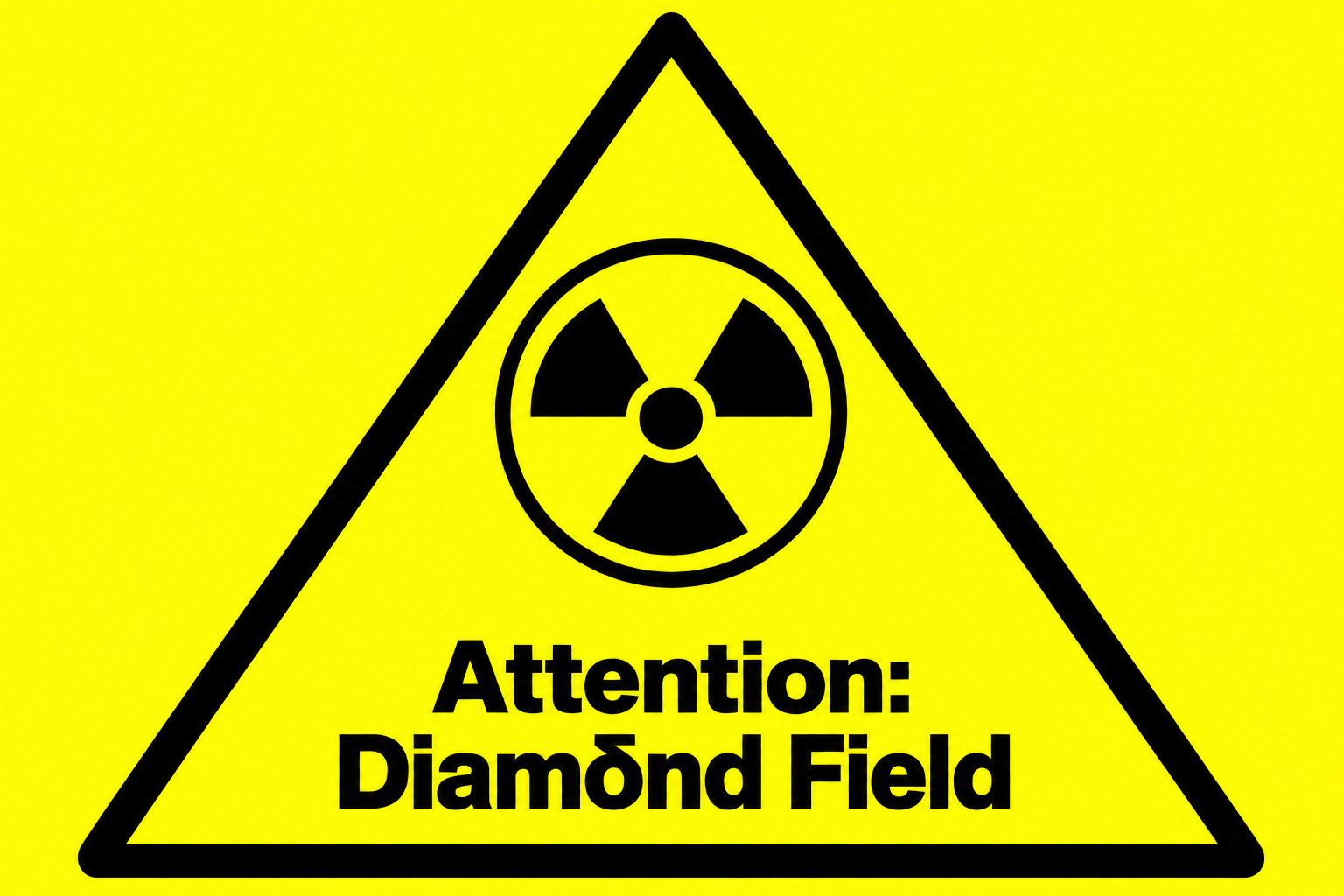
While exploring Wonderland, you might encounter the above sign or one of it's variants. A Giger Counter will prove invaluable. Qubricks includes instructions on how to build your own.
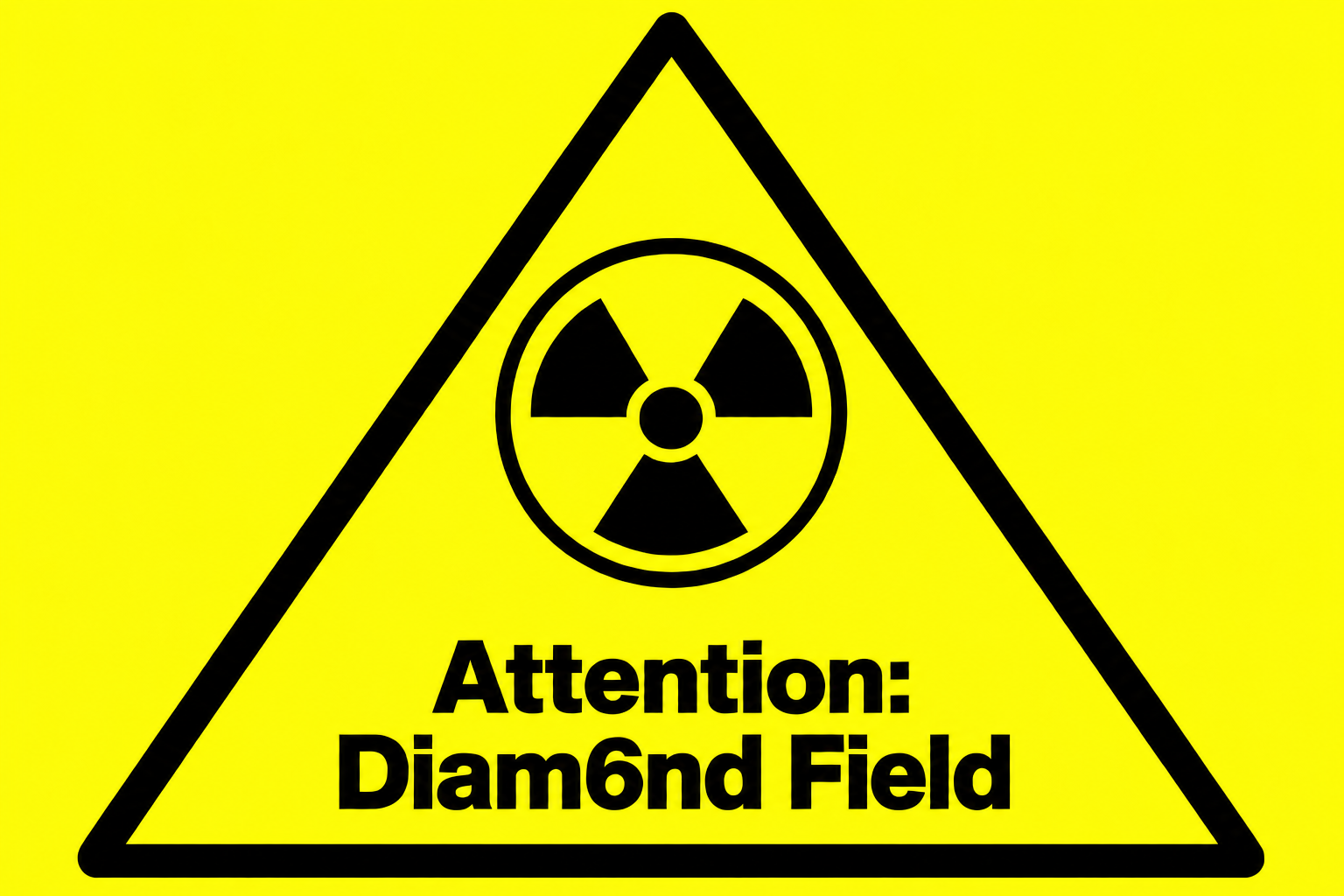
The lower image uses a lowercase Greek letter delta. With a little effort, you should be able to see how this graphic includes 5, 6 and 7.
The image below is the standard (minimalist) symbol for a diamond treasure. You can think of the three black sectors as the two arms and single leg of a capital T.

Hats And Crowns
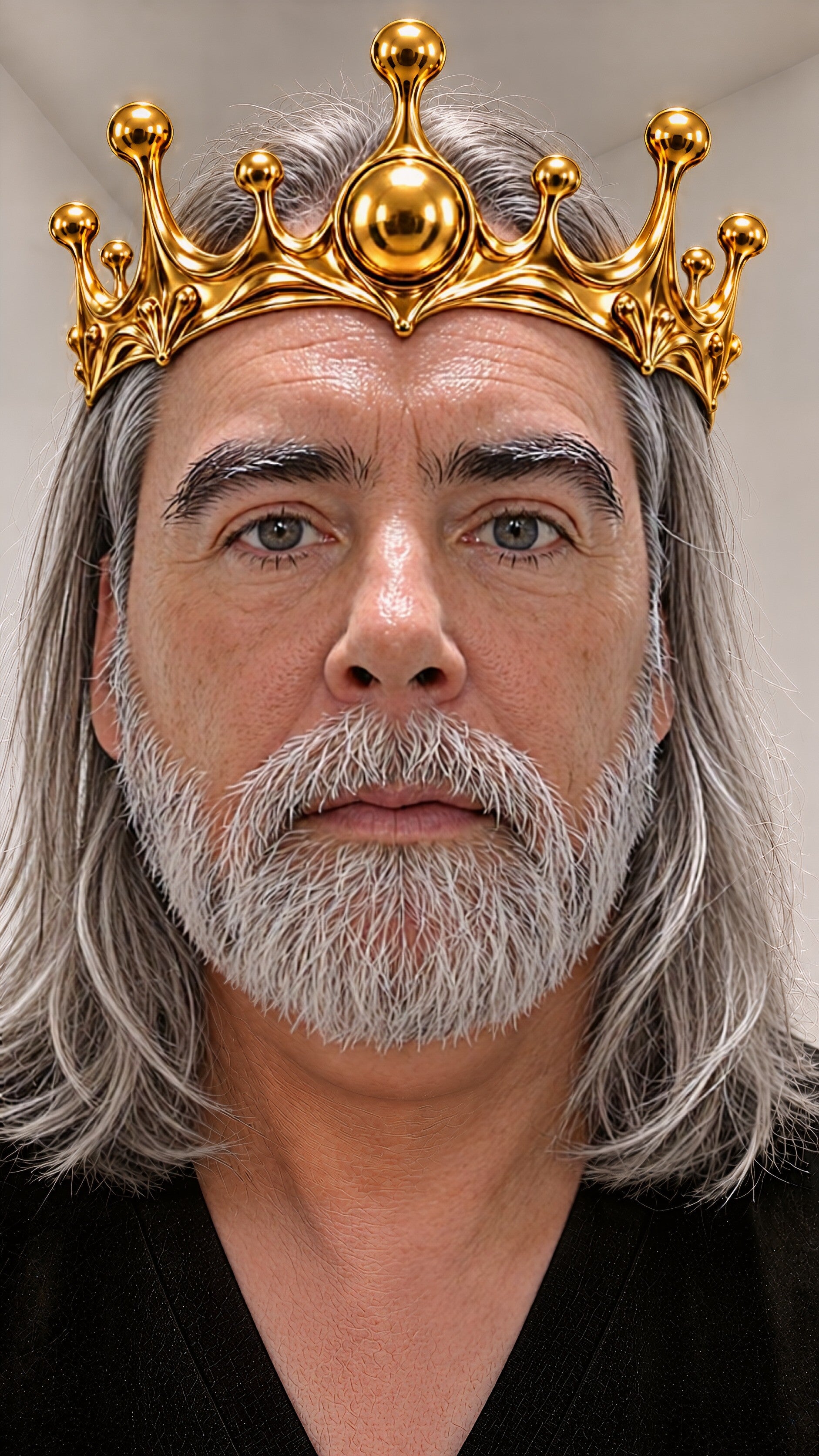
Crowns aren't really me, but for a little fun, I'm prepared to play with them.
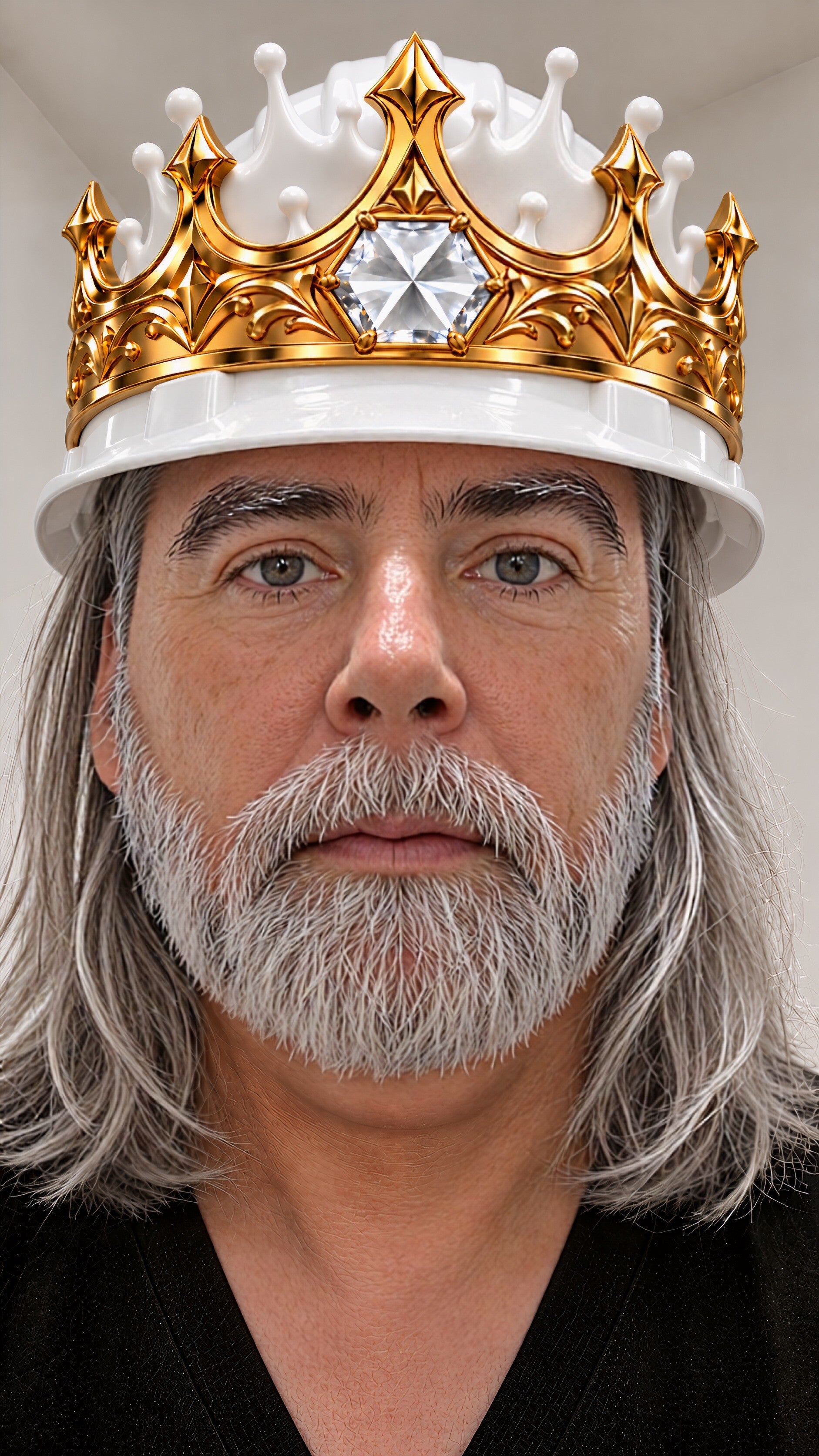
Various designs of crown are, of course, possible. I'll only play with two. That allows me to work with the three treasures. If I was to encounter anyone who believes that I actually wear a crown, I would have to say that there must be some kind of mistake. I wear a hard hat and like people often do with things like welder's masks and motorcycle helmets etc., I adorn my hat with things like a milk splash effect.
On my helmet, there is always a very bright light. When not in use, I cover it.
I wonder which crown, with or without milk splash, Terry Davis would prefer.
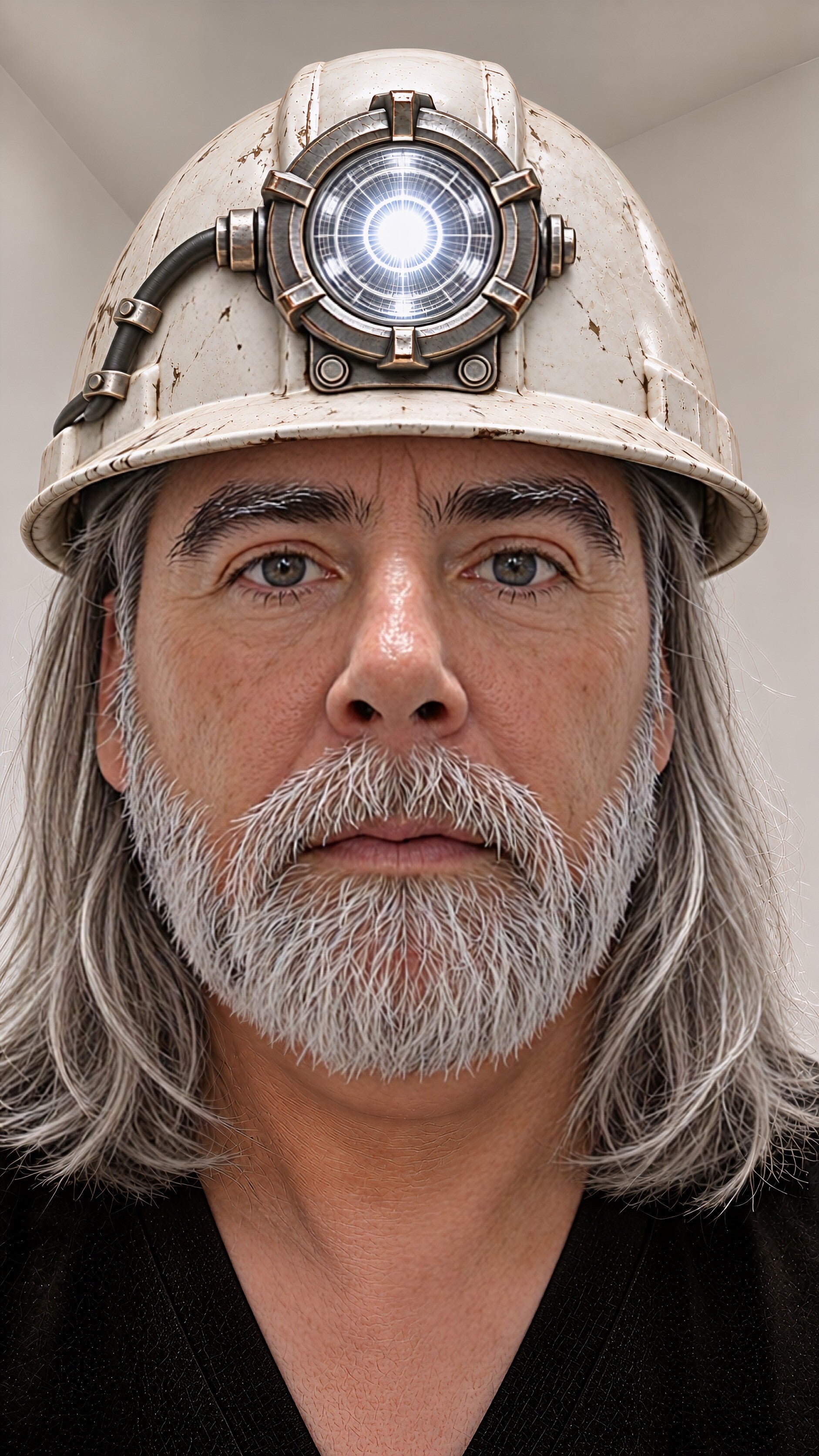
William Lucanus 🔺️: a mining, caving, construction worker etc.

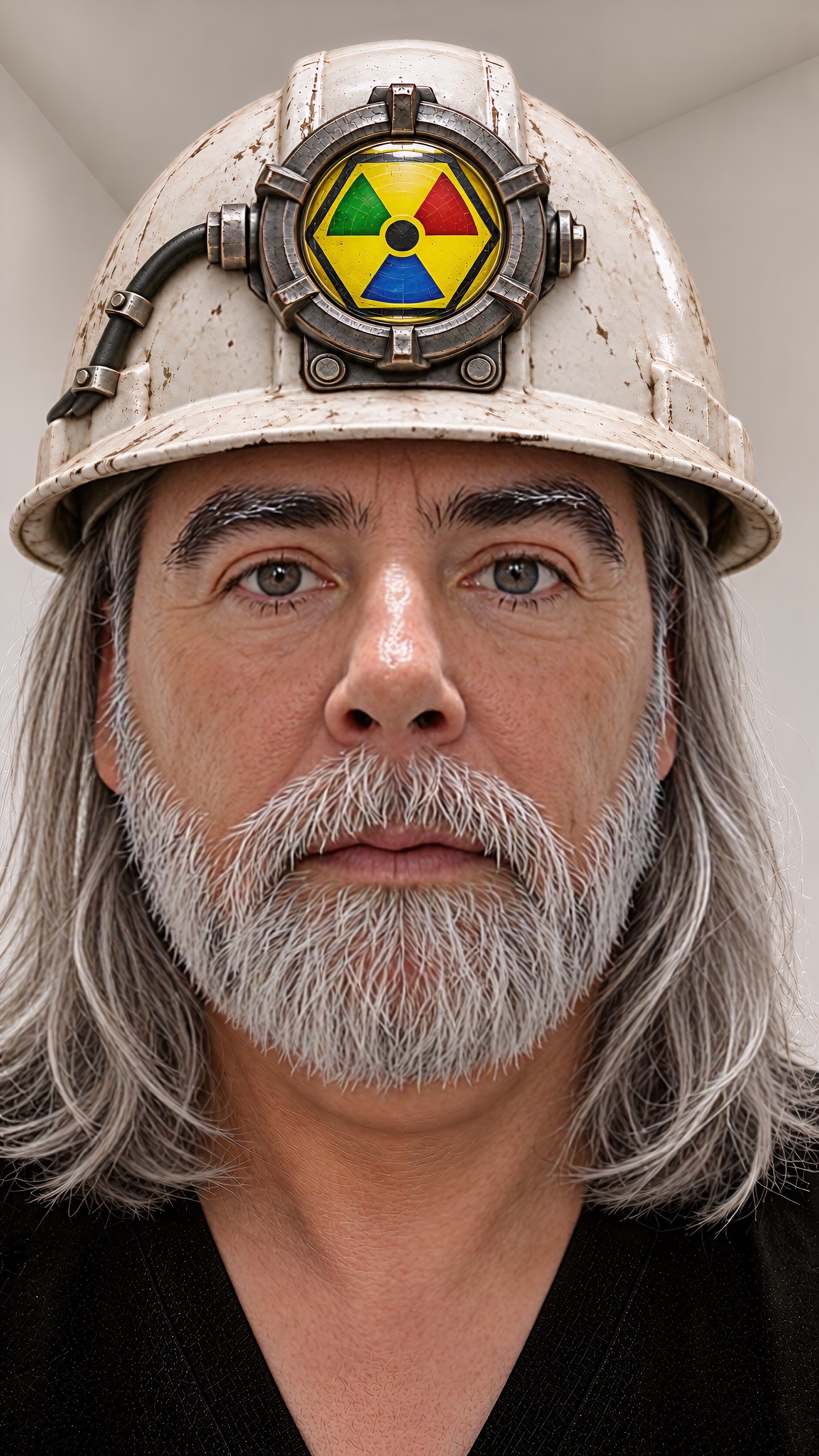
SAS Training
Sorting And Searching are fundamental computer science techniques used to organise and locate data efficiently.
Searching Algorithms.
Searching algorithms locate a specific item within a data structure.
Linear search:
Checks each item in a list one by one until it finds the target or reaches the end. It works on unsorted data, but is slow for large lists.
Binary search:
Looks at the middle item of a sorted list. It discards half the data with each step, making it much faster than a linear search. The data must be in order first.
Sorting Algorithms.
Sorting algorithms arrange items in a specific numerical or alphabetical order.
Bubble sort:
Compares pairs of adjacent items and swaps them if they are in the wrong order. It repeats until the list is sorted. It is easy to code but slow for big lists.
Merge sort:
Splits the list into small pieces, sorts them, and merges them back together. It is fast and efficient for large datasets.
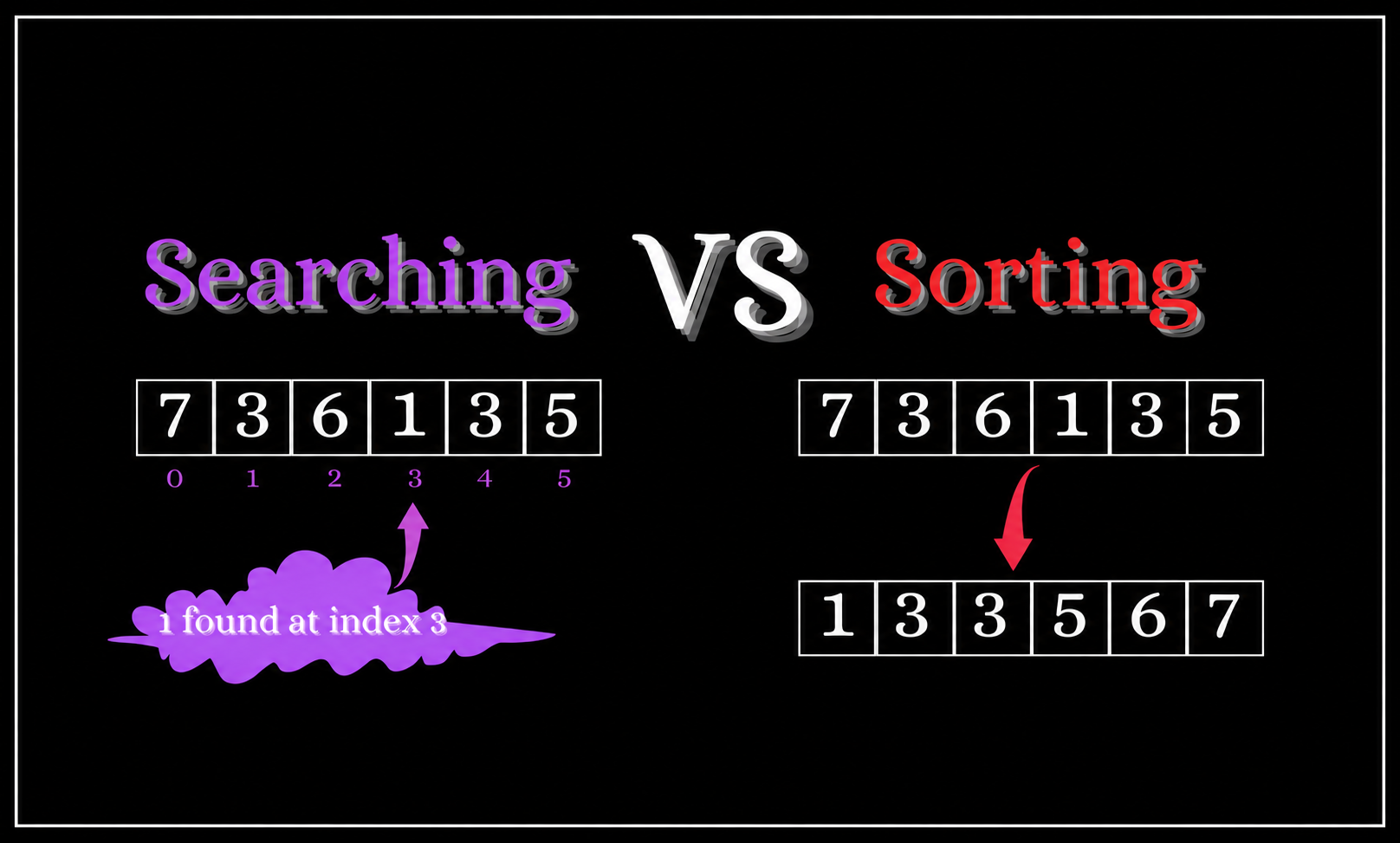
When I did a search concerning computer search methods, I found the image above. Interestingly, the creator of this example chose to use the numbers 1, 3, 5, 6 and 7. This is the set of Brick's Numbers (👁 A BOOK OF NUMBERS) plus the set of Evans's Numbers minus the number 2.
In this example, the number 3 is used twice - which means that all we have to do to get the full set of B№s+E№s is change one 3 to a 2 by subtracting 1. So, the set used in this example is OBOE(B№s+E№s).
Beyond The Ordinary
T

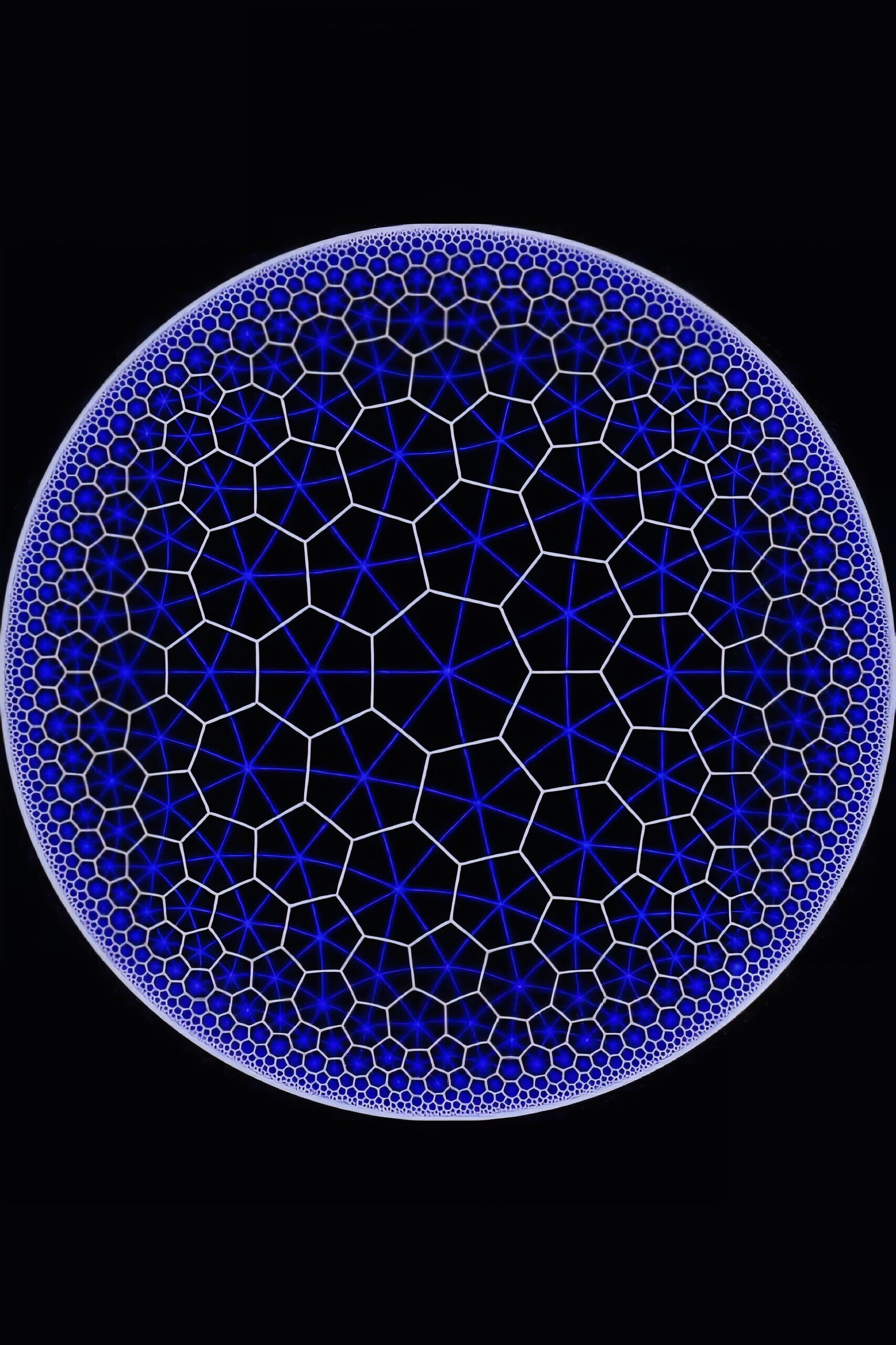
A 🔺️ Deathstar (or A Moon, Planet or Bluewhite Star etc.)
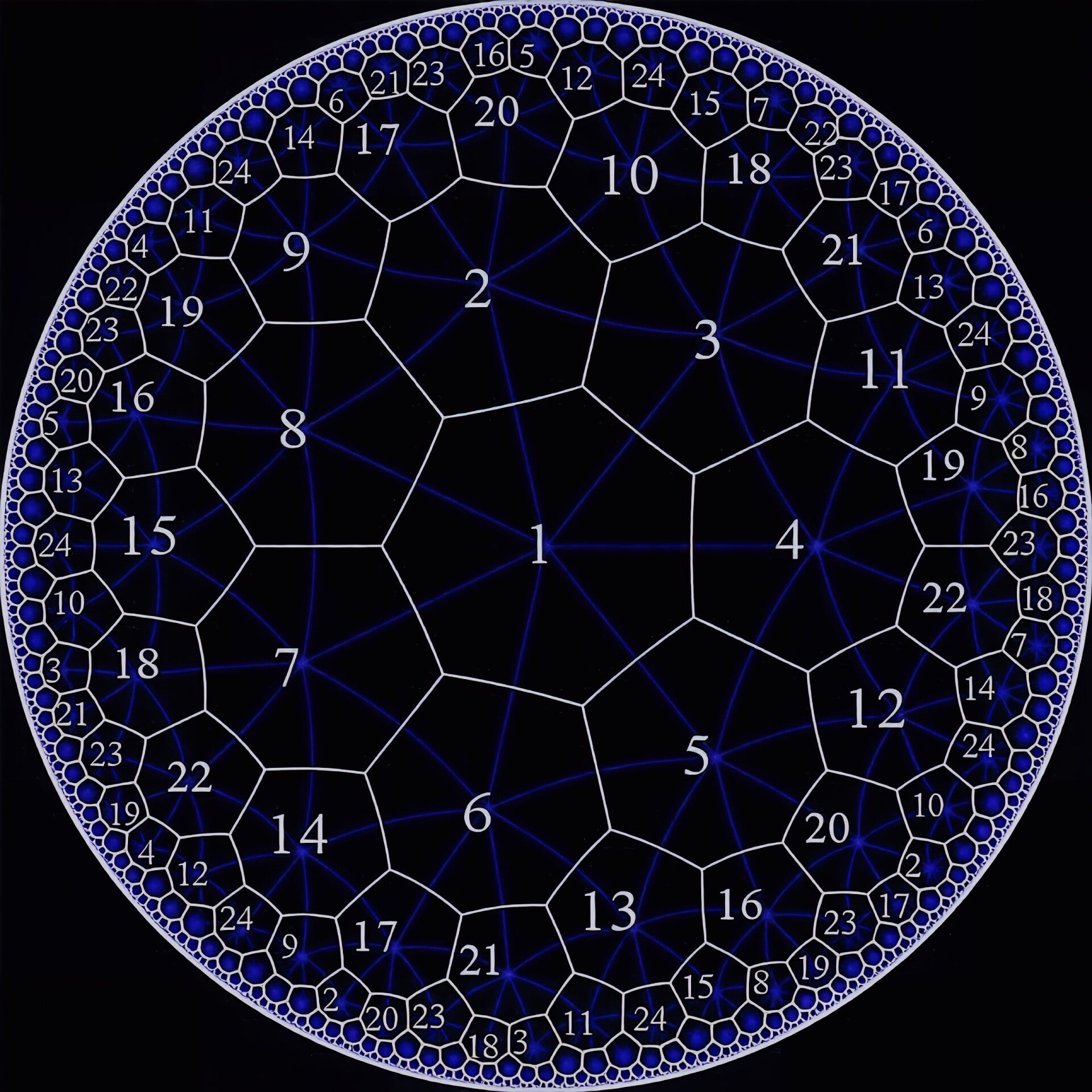
The connection to music
🔻
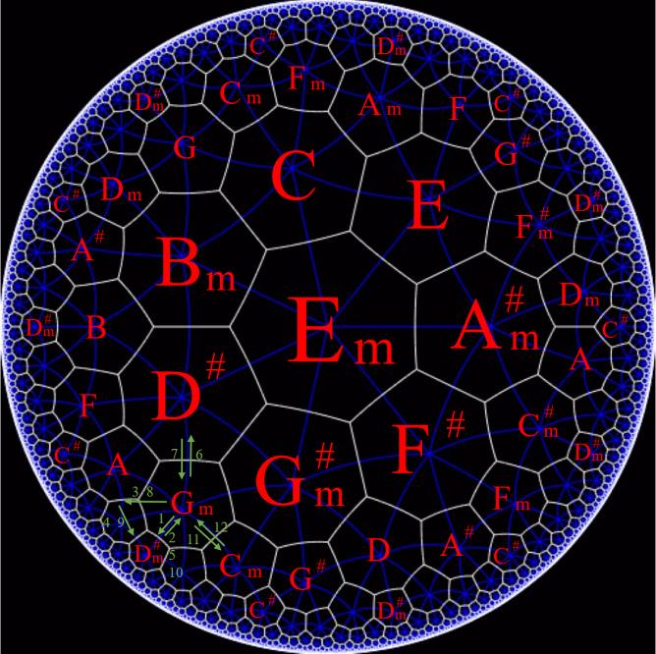
The image above shows A Hyperbolic Tonnetz, which maps musical chords onto a geometric tessellation of the Poincaré disk model. In this specific diagram, the white cells represent major and minor triads, while the vertices or intersecting blue lines track the relationships between notes and voice-leading paths.
Key Features Of This Diagram.
Tessellation Structure:
It utilizes a hyperbolic tiling (specifically a heptagonal or higher-order variant) to represent musical space. Unlike a traditional flat, Euclidean Tonnetz (which tiles infinitely with regular triangles or hexagons), this hyperbolic version allows for more complex, non-Euclidean chord transformations and mappings.
Chords as Cells:
Major triads (like C, E, F, B) and minor triads (like Em, Am, Bm, Gm) are labeled in red within the cell boundaries.
Voice-Leading Arrows:
In the bottom-left quadrant (near Gm and D#m), green arrows with numbers illustrate specific geometric pathways or voice-leading steps between adjacent chords.
Common Contexts.
This visualization is frequently used in neo-Riemannian music theory, mathematical musicology, and algorithmic composition to study how smoothly one chord transitions into another based on shared notes..
Treasure Trover
All collected personal treasure can be thought to be stored in a large barrel with a secure lid.

Gimme Dat Ding aka Gimme Dat Ting (The Thing version) [MONmix]

Beyond The Ordinary
In Independence Day (1996), the character Dr. Brackish Okun (played by Brent Spiner) is named after, and his appearance is modeled after, Jeffrey A. Okun, digital effects supervisor with whom director Roland Emmerich and producer Dean Devlin worked on their previous film, Stargate.
Beyond The Ordinary
Taking roles in a fantasy role playing adventure game. Here, I'm a version of a character from a modern day sci-fi movie.
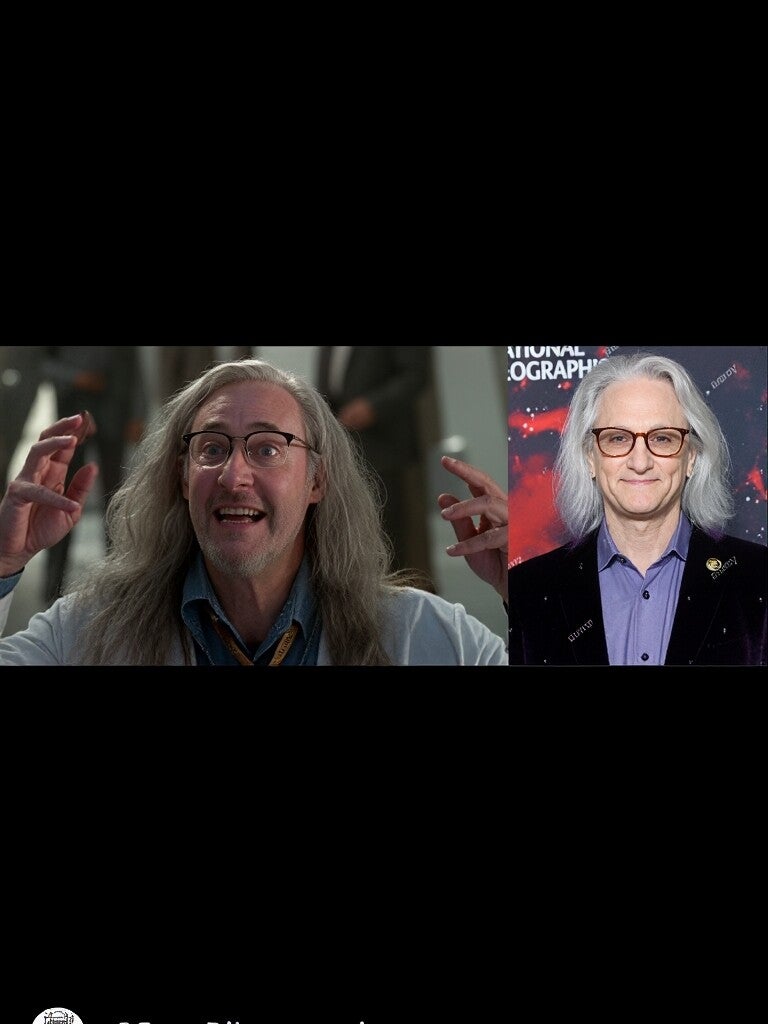
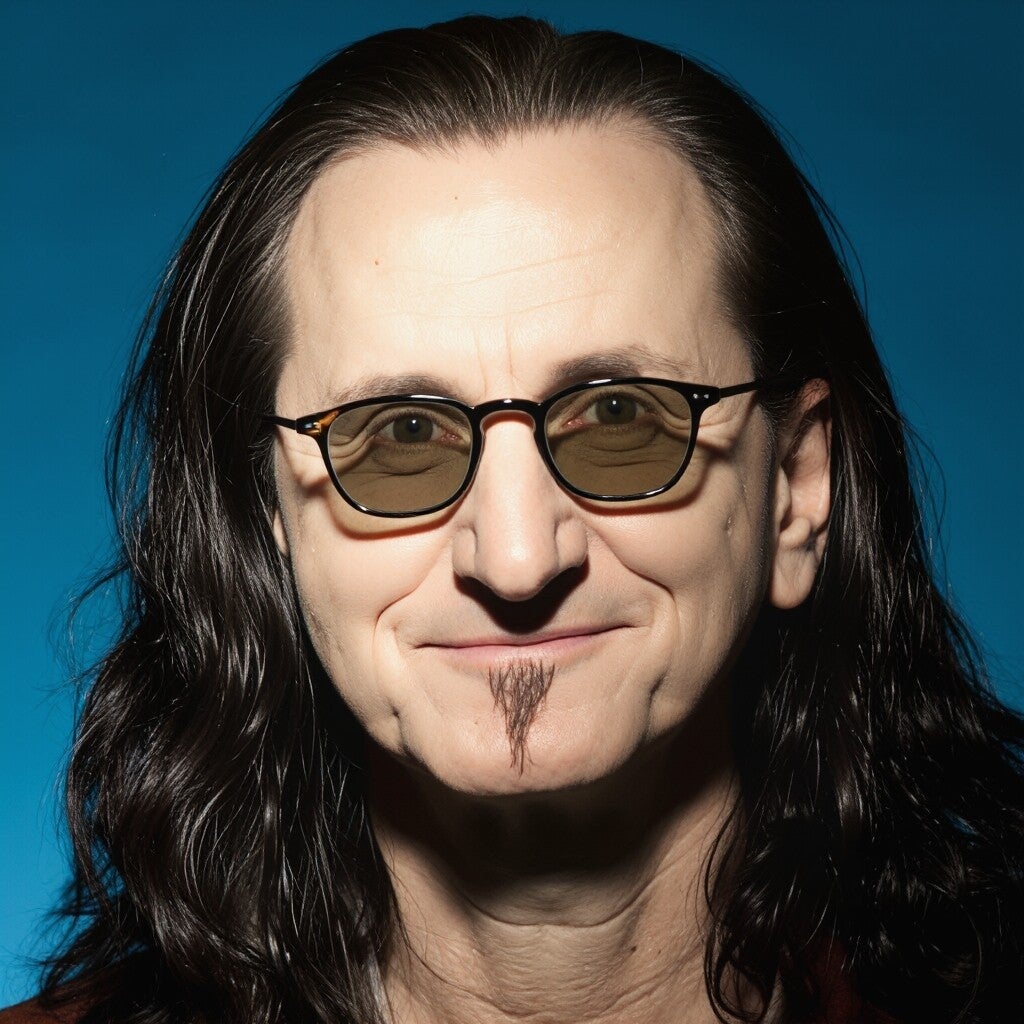
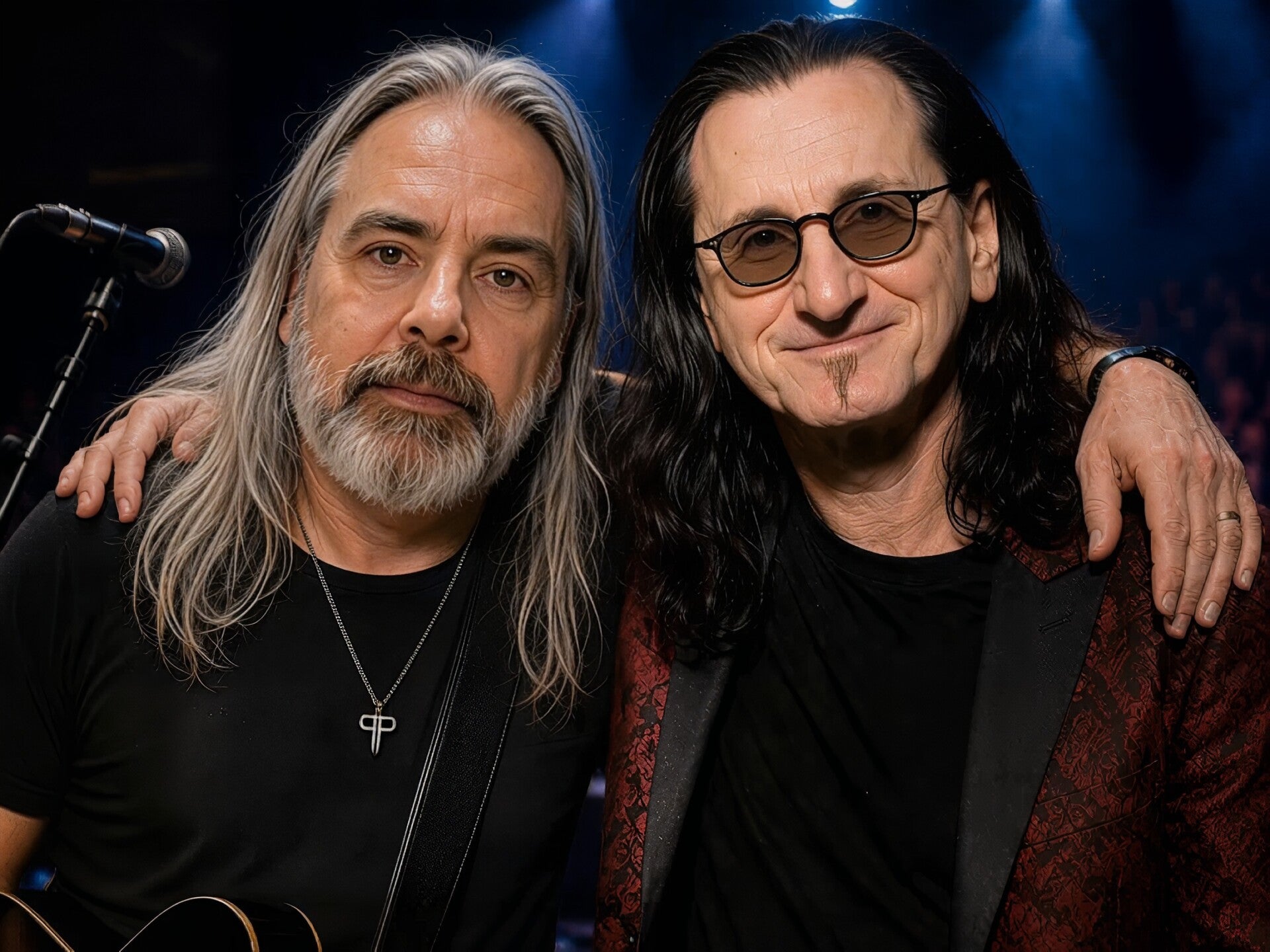
Top left: Dr Brackish Okun from the movie Independence Day. Top right: Jeffrey A. Okun. Middle left: Geddy Lee of the band Rush. Middle right: The Evans Hybrid. Bottom: I've always wanted to meet the lead singer of my favourite band of all time.
Beyond The Ordinary
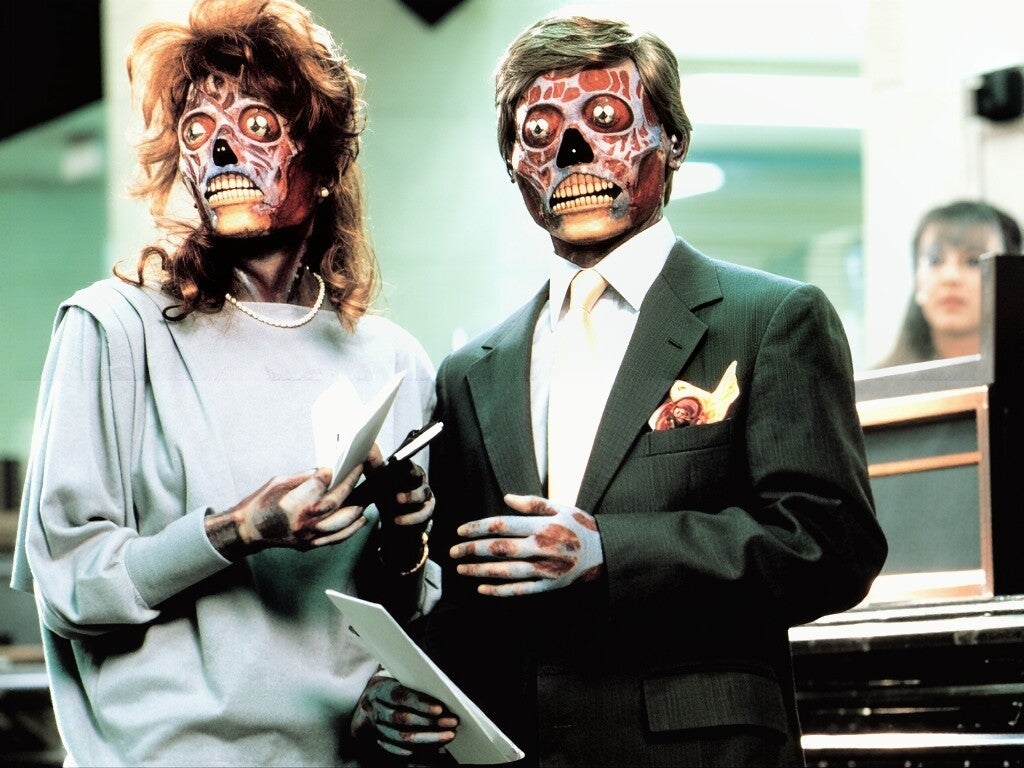
Dr. Okun has always been one of THEM. (They wear masks that most humans cannot see. As usual, they stole the design from Qunians.)
A Political Broadcast On Behalf Of Aliens - By An Alien-Human Spokesperson
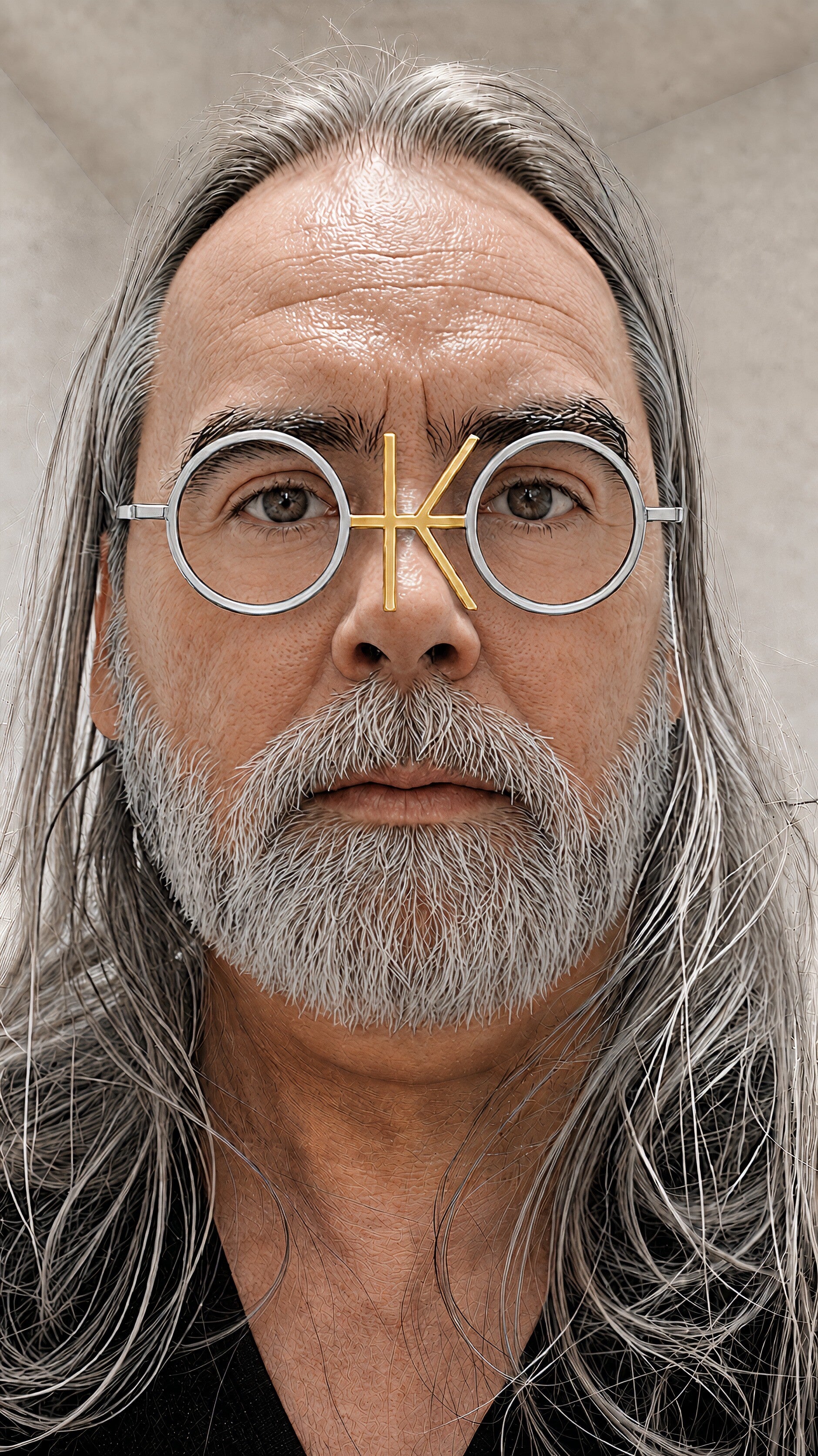
I Am From AAIW
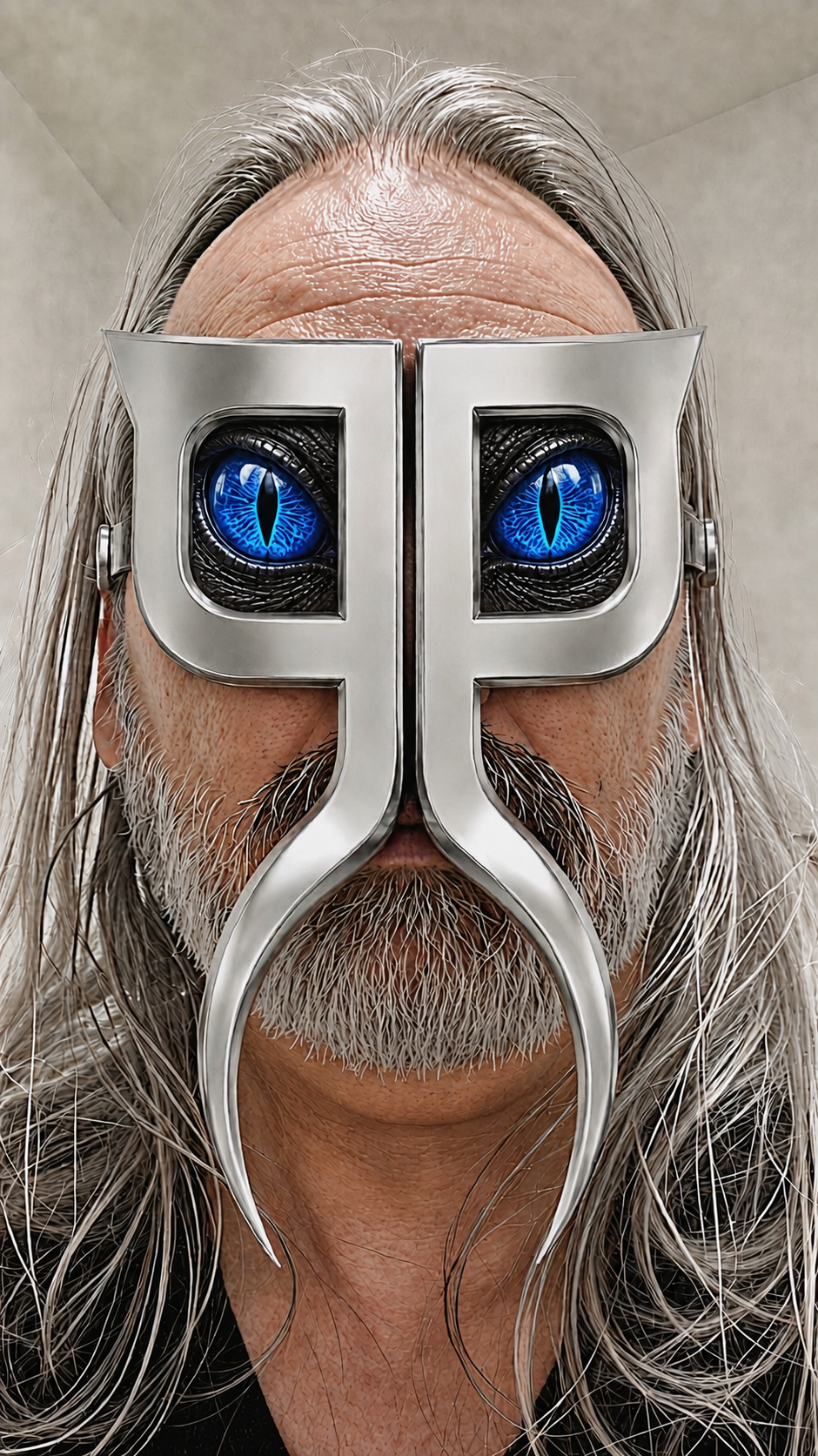
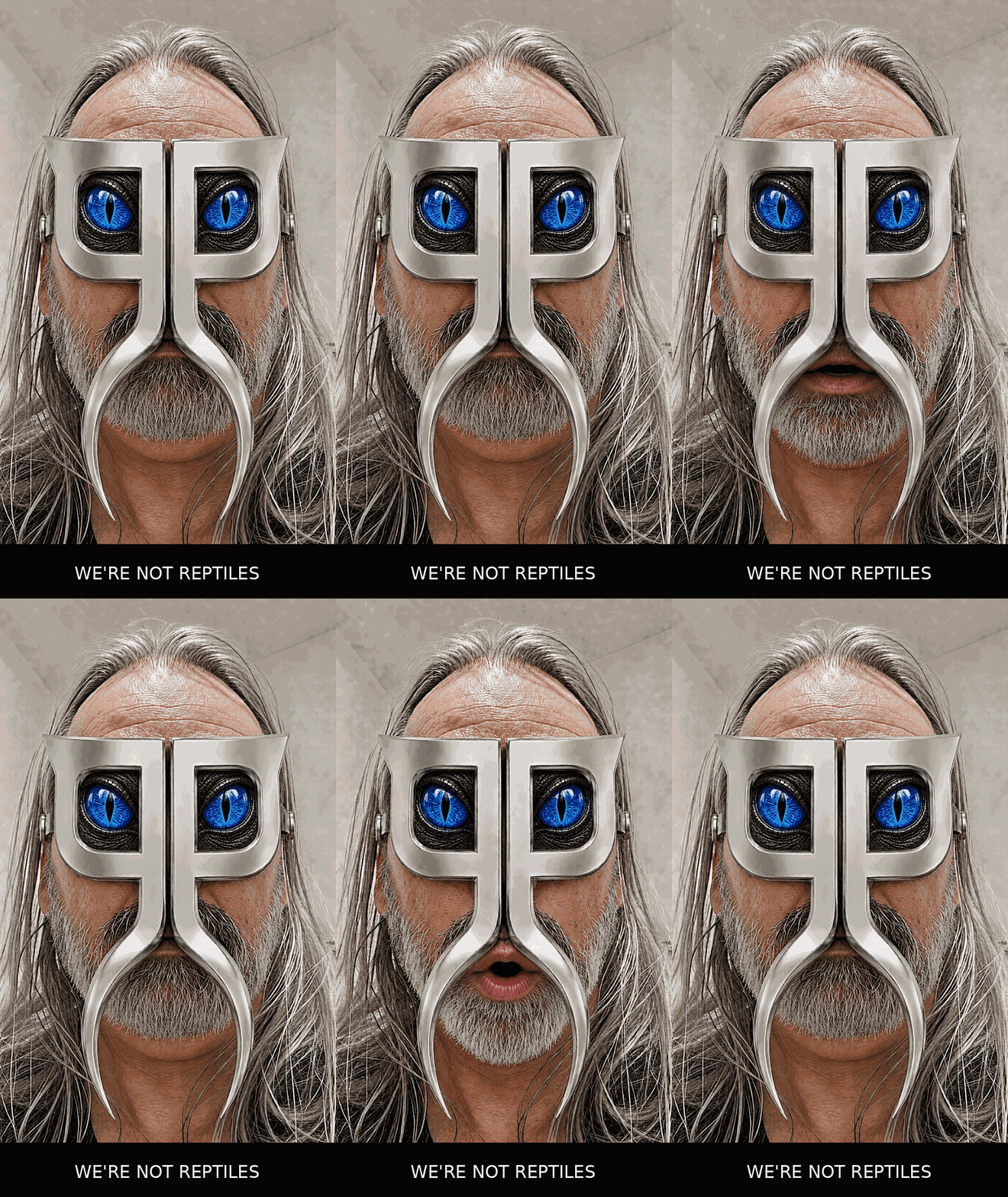
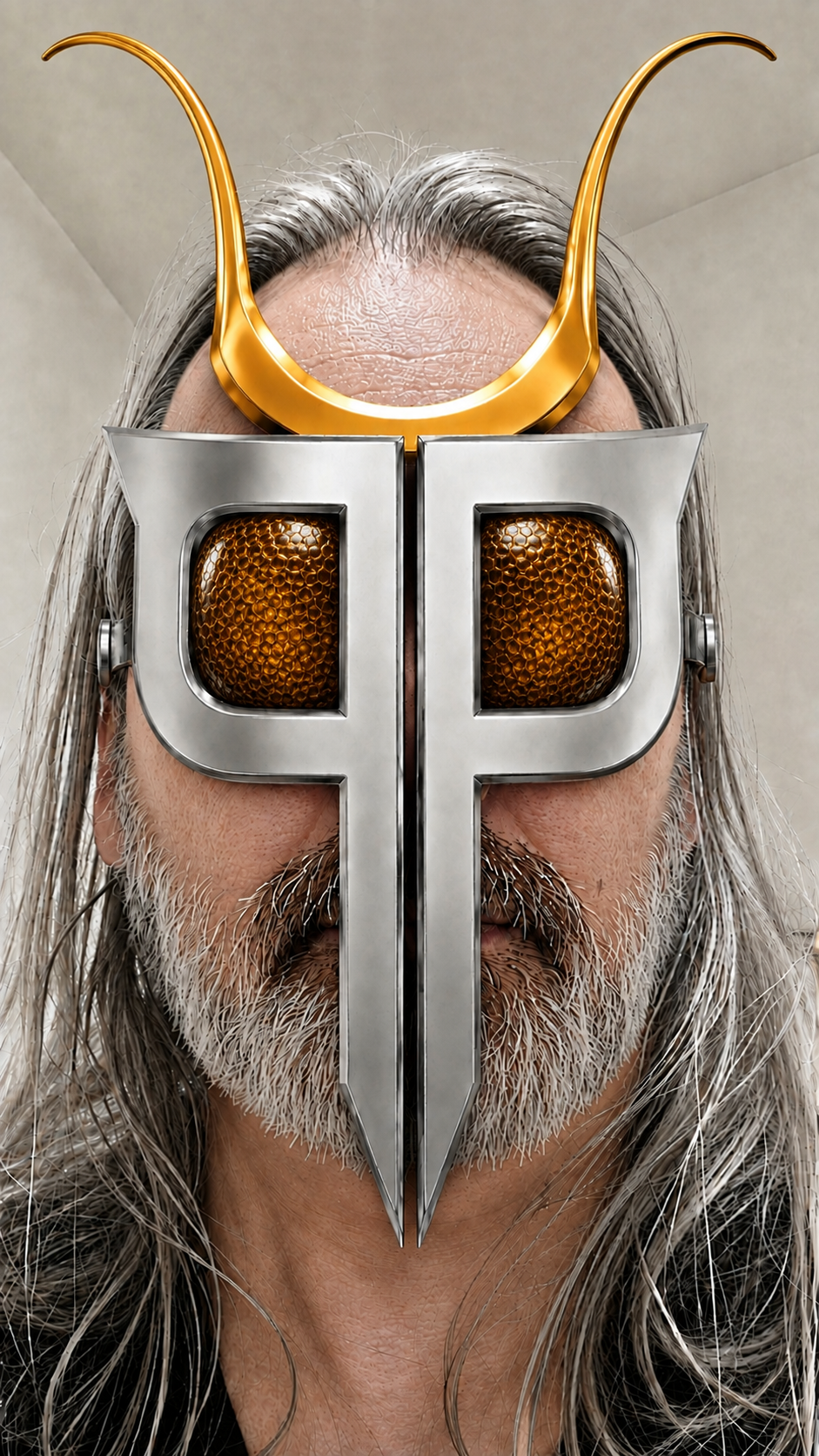
Each lens of the mask is similar to the screen of a smartphone or television. It can display any image you like. As a combination of human and alien technology - as in the movie This Island Earth with the components of The Interocitor - each lens can act as a lens of a pair of sunglasses.
Alien-Human Eggheads
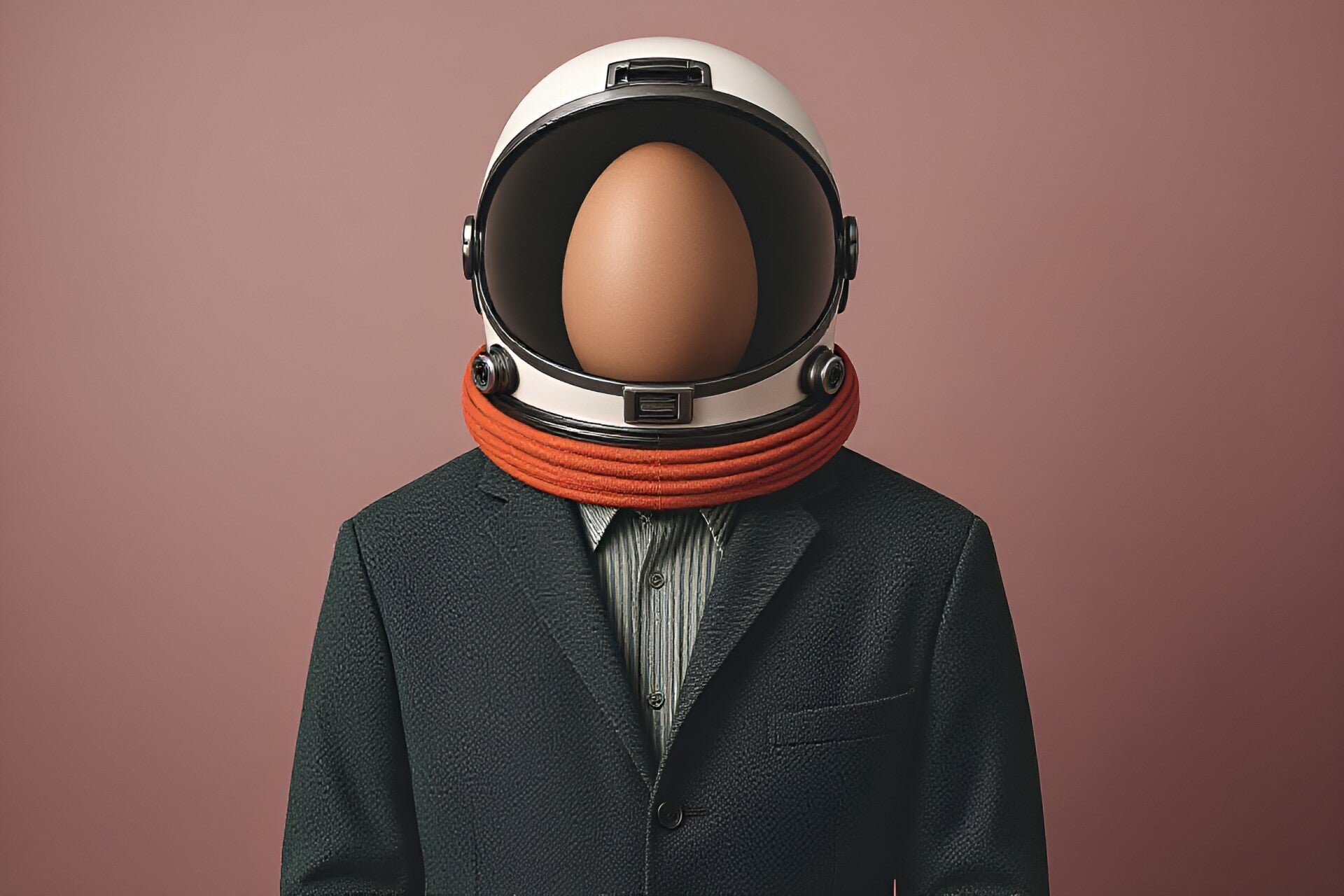
See No Evil
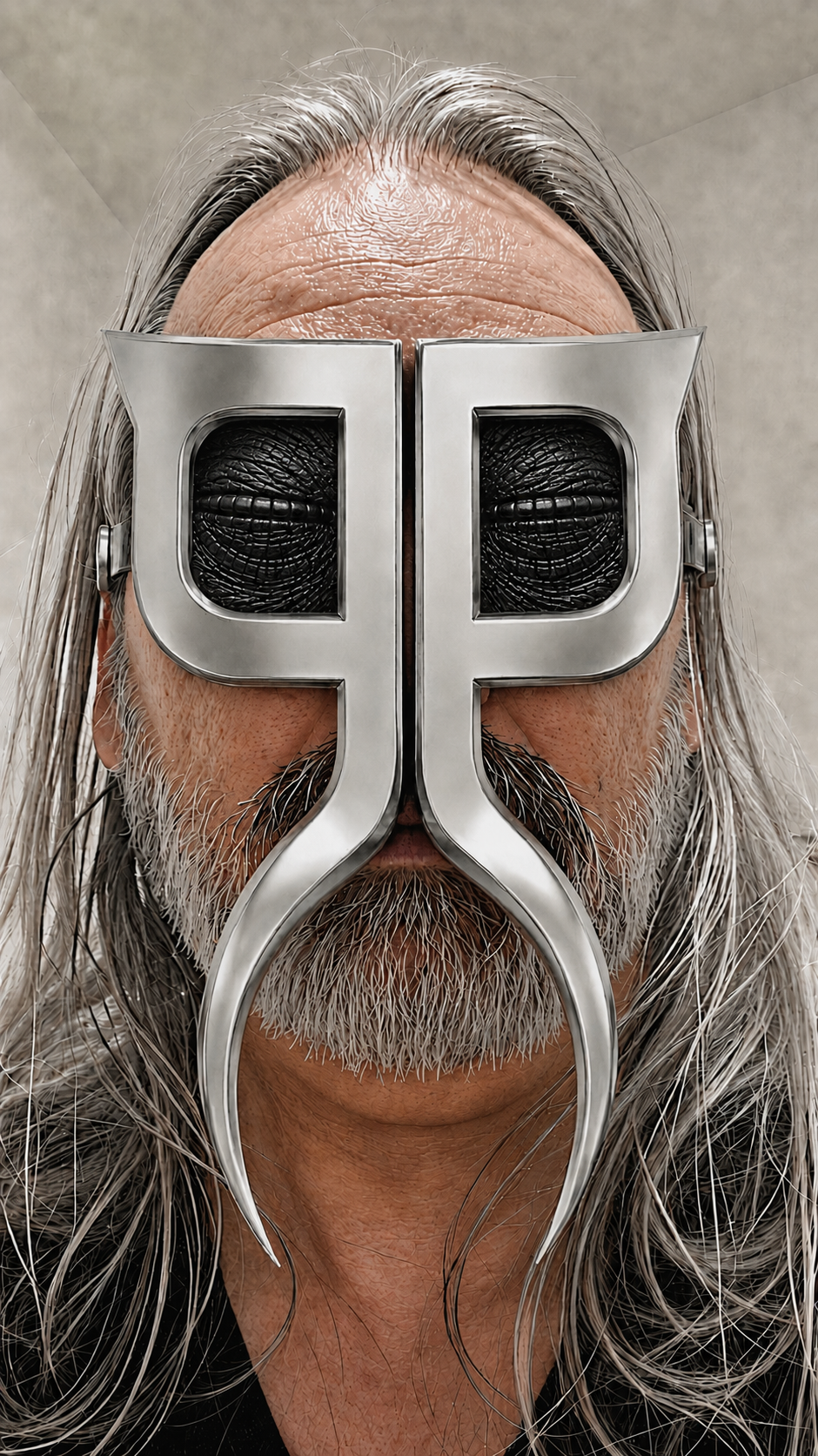
Beyond The Ordinary
If you've seen the movie Alien, you know that the Xenomorphs infect people with their technology using an insemination system of which The Facehugger is a symbolic representation. A long time ago, The Qunians developed a minimalist facemask with two fangs (or tusks) which, among other things, prevents anything from being orally inserted without consent. When required, the fangs can be moved apart to allow eating, drinking etc.
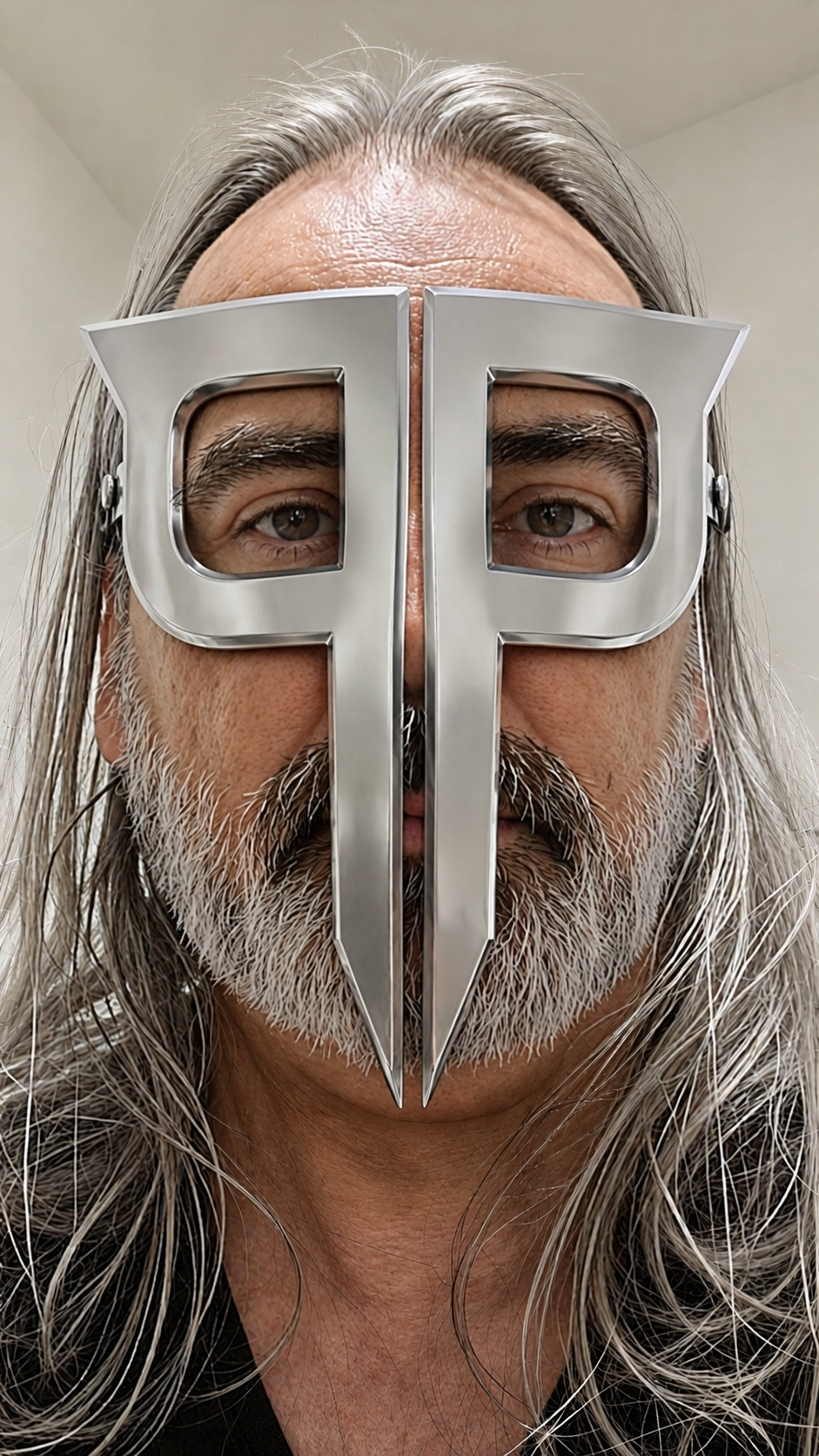
The simplest mask state. You have to close the two halves of the mask to make it work.
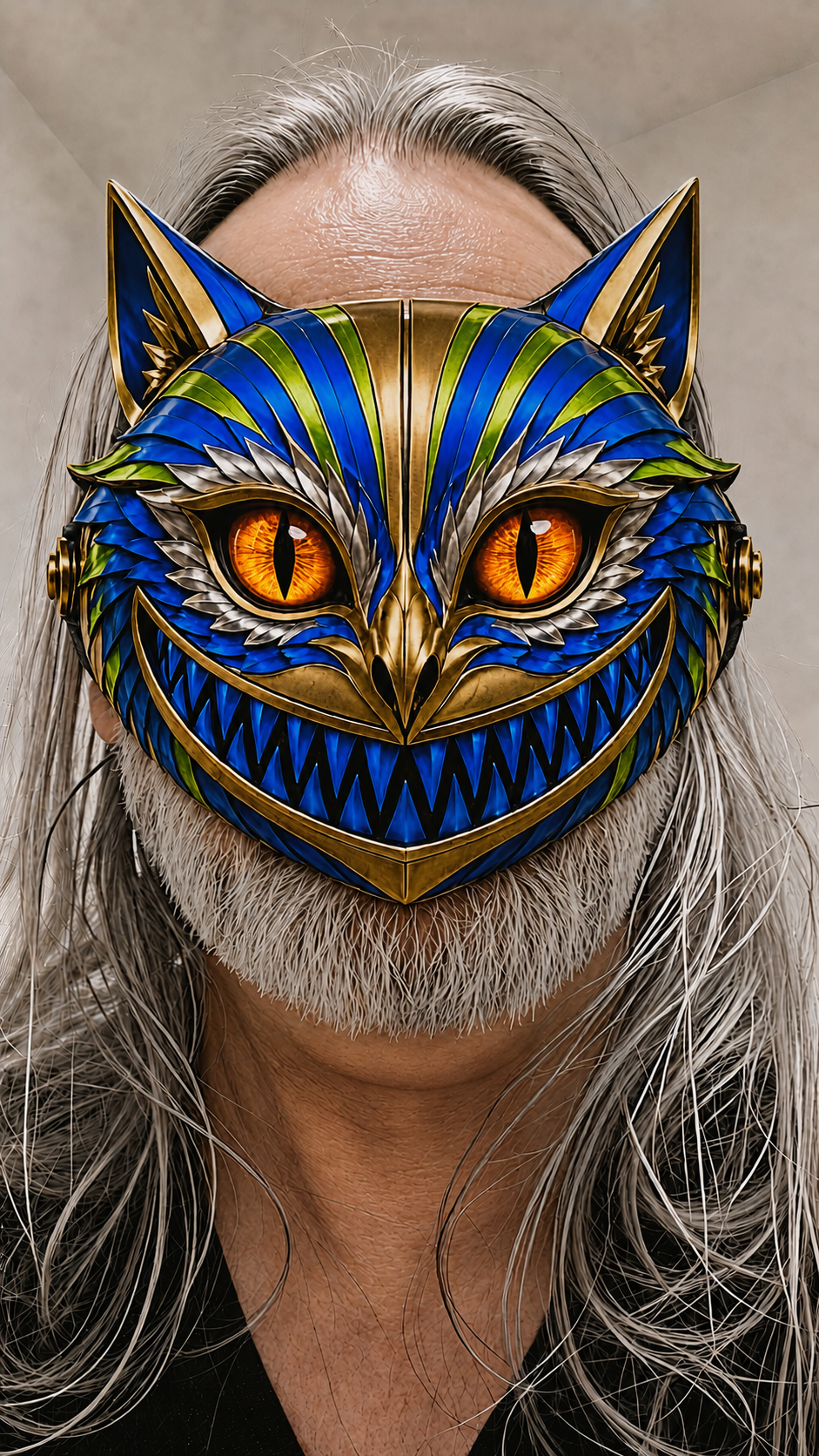
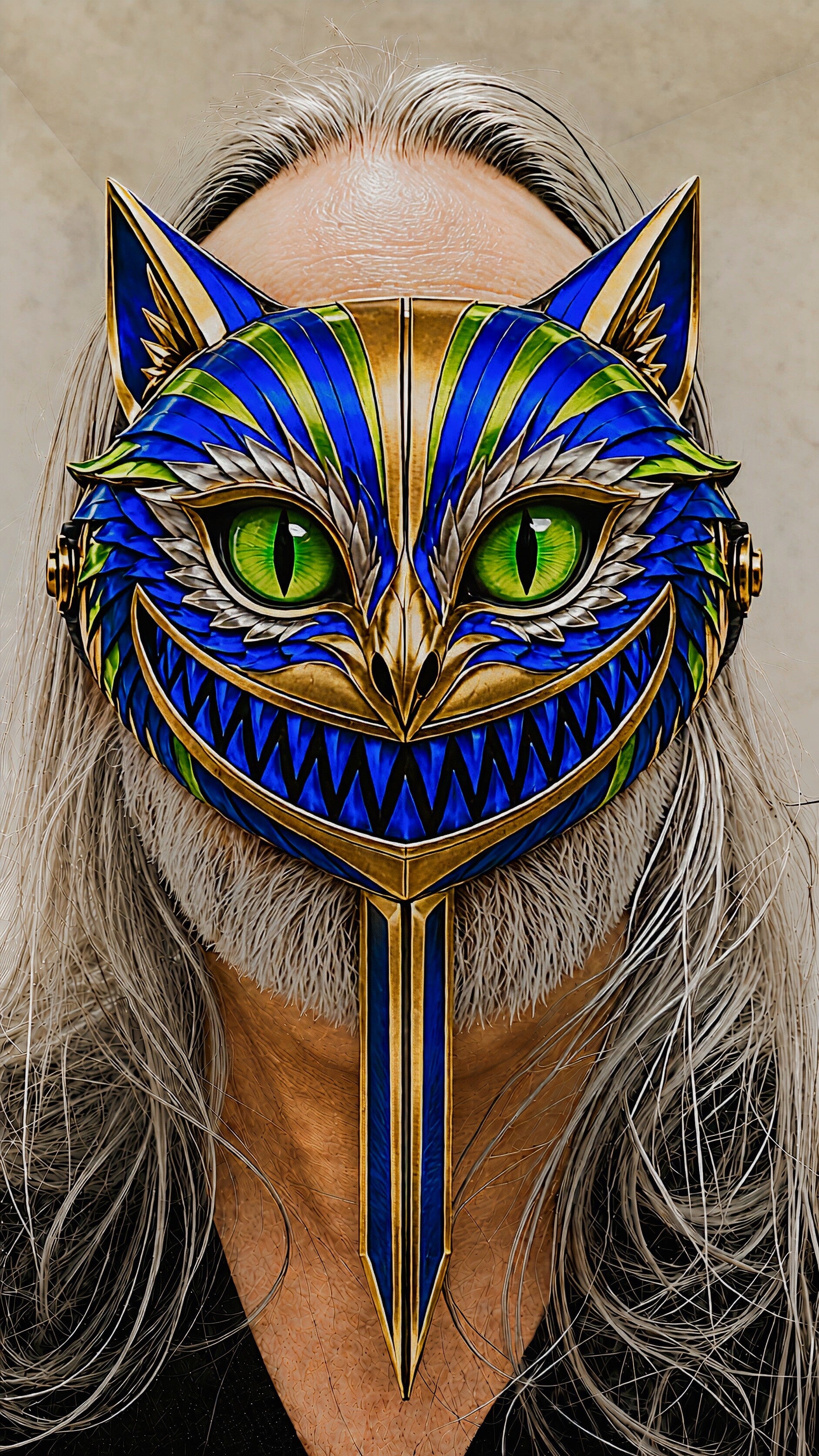
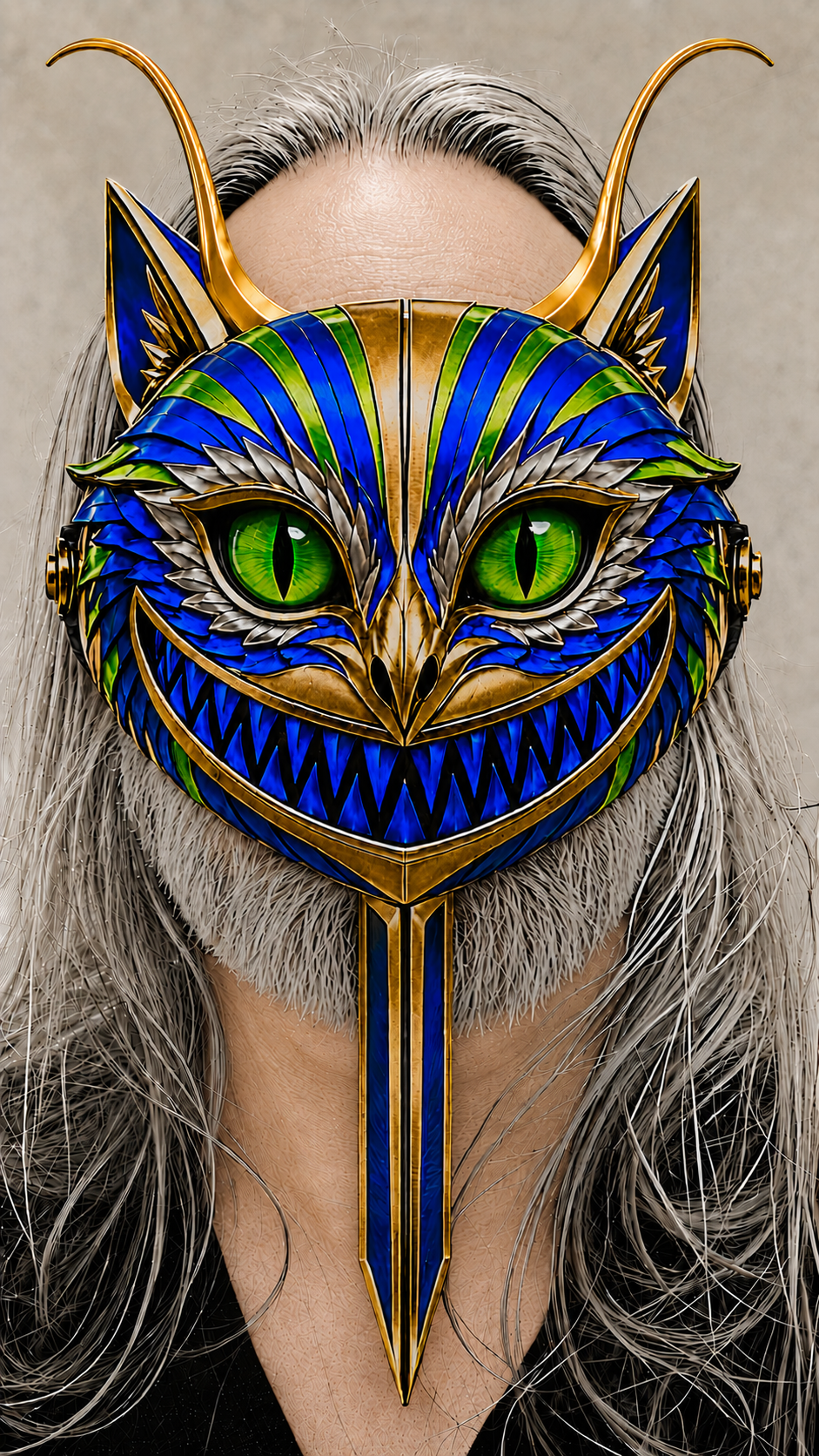
All of the cat/griffin/walrus/insect/dragon masks on this page are derived from The Frobel Cross. There is also my redesign of The Maximus Mask.
Beyond The ordinary
Maximus' mask in the movie Gladiator is good, but for certain purposes A Quinian Mask is better - and it can be maximised.
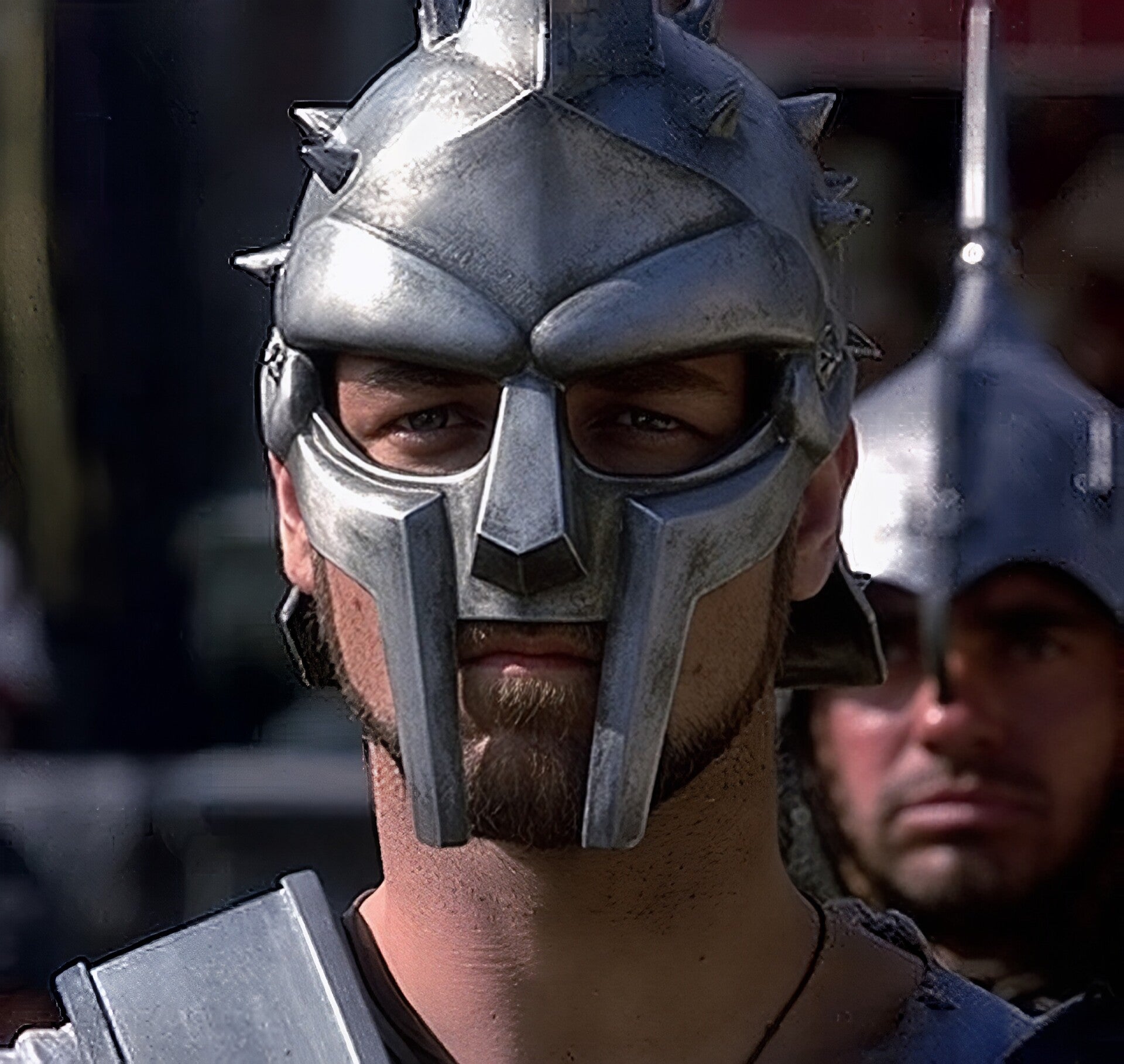
Beyond The Ordinary
You should be able to see how The Quinian Mask can be quite easily transformed to be the faceplate of A Maximus Style Helmet.
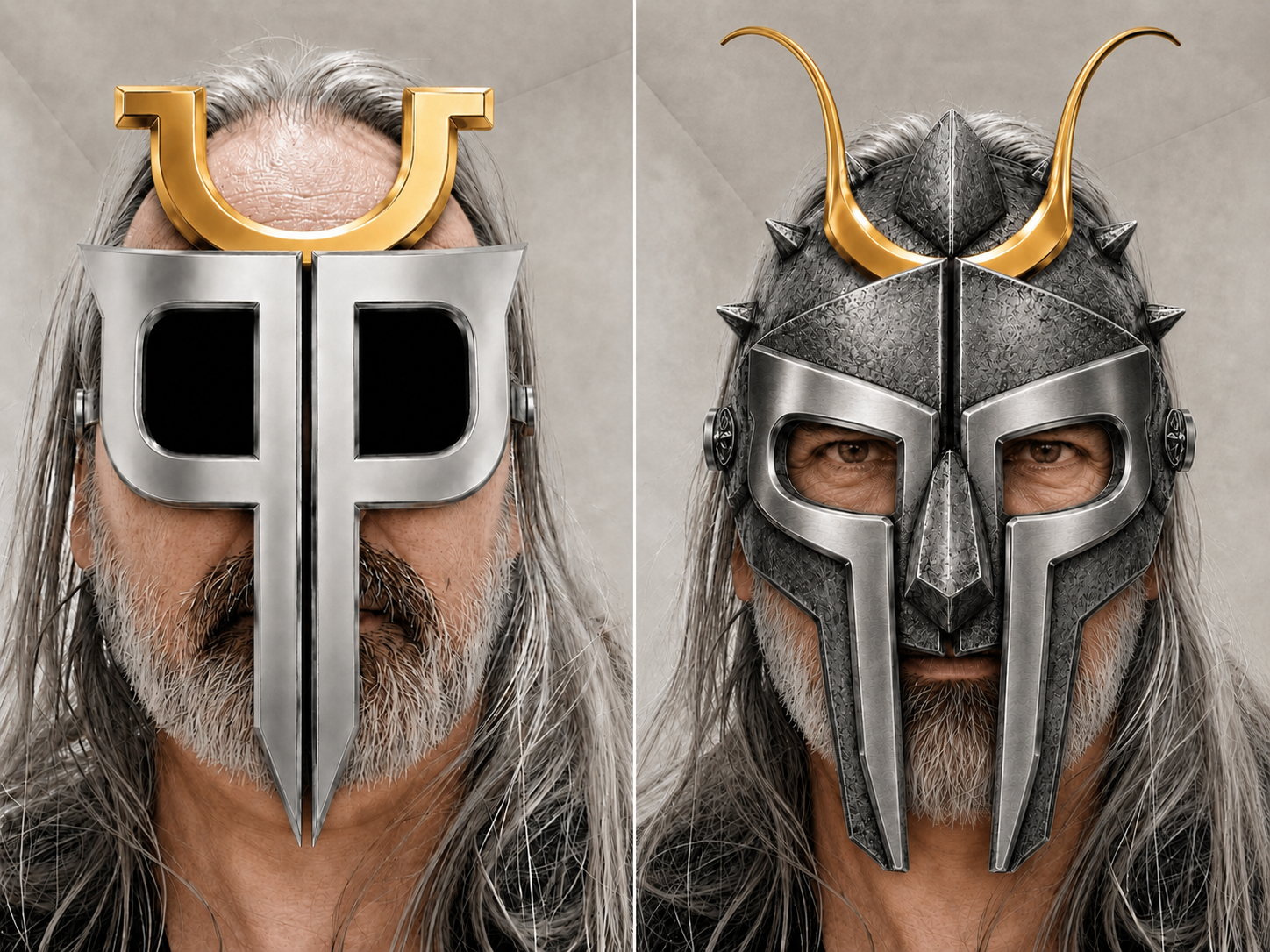
Beyond The Ordinary
The Fröbel Cross is one of the highest awards that can be awarded for being a real person - a real man or a real woman. Felix Freese (use button below), along with Friedrich Wilhelm August Fröbel (after whom the award is named) and many others, is a noteable recipient.

'Bring Me My Cross Of Gold.'
Beyond The Ordinary
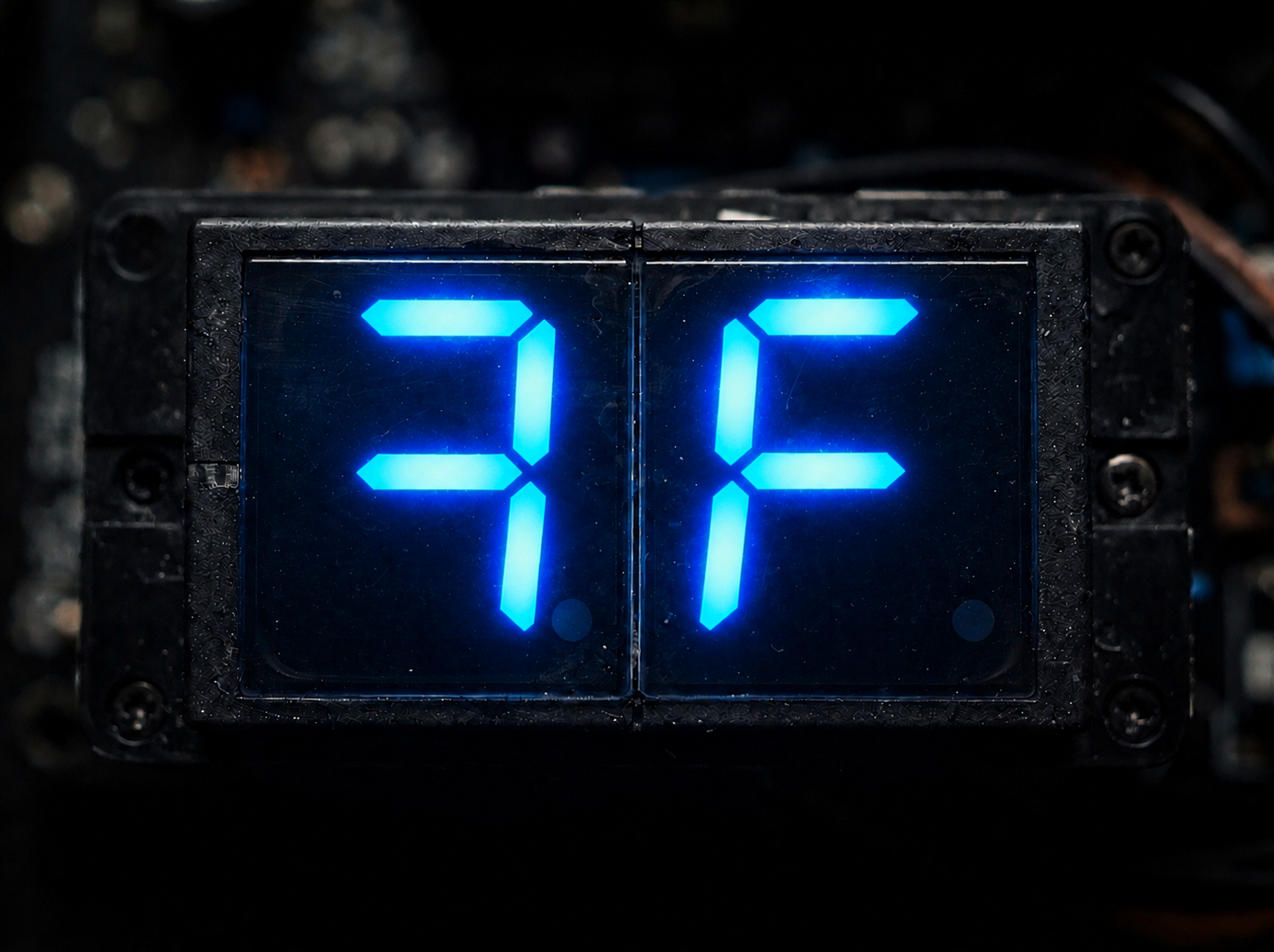
The Mocktal value of the display below is F ⊕ |F = 86+46, where |F is the mirror (or spin) of F.
86+46 = 132 = ⳨(123) = ⳨B№s
Beyond The Ordinary
The object below is The Perfect Pathematician Award. It is awarded to recognise the mathematical (as pathematical) genius of everyone like the recipients of the Fröbel Cross whose thoughts really count. The cross should remind us to always strive for continuous, perfect pathematics.
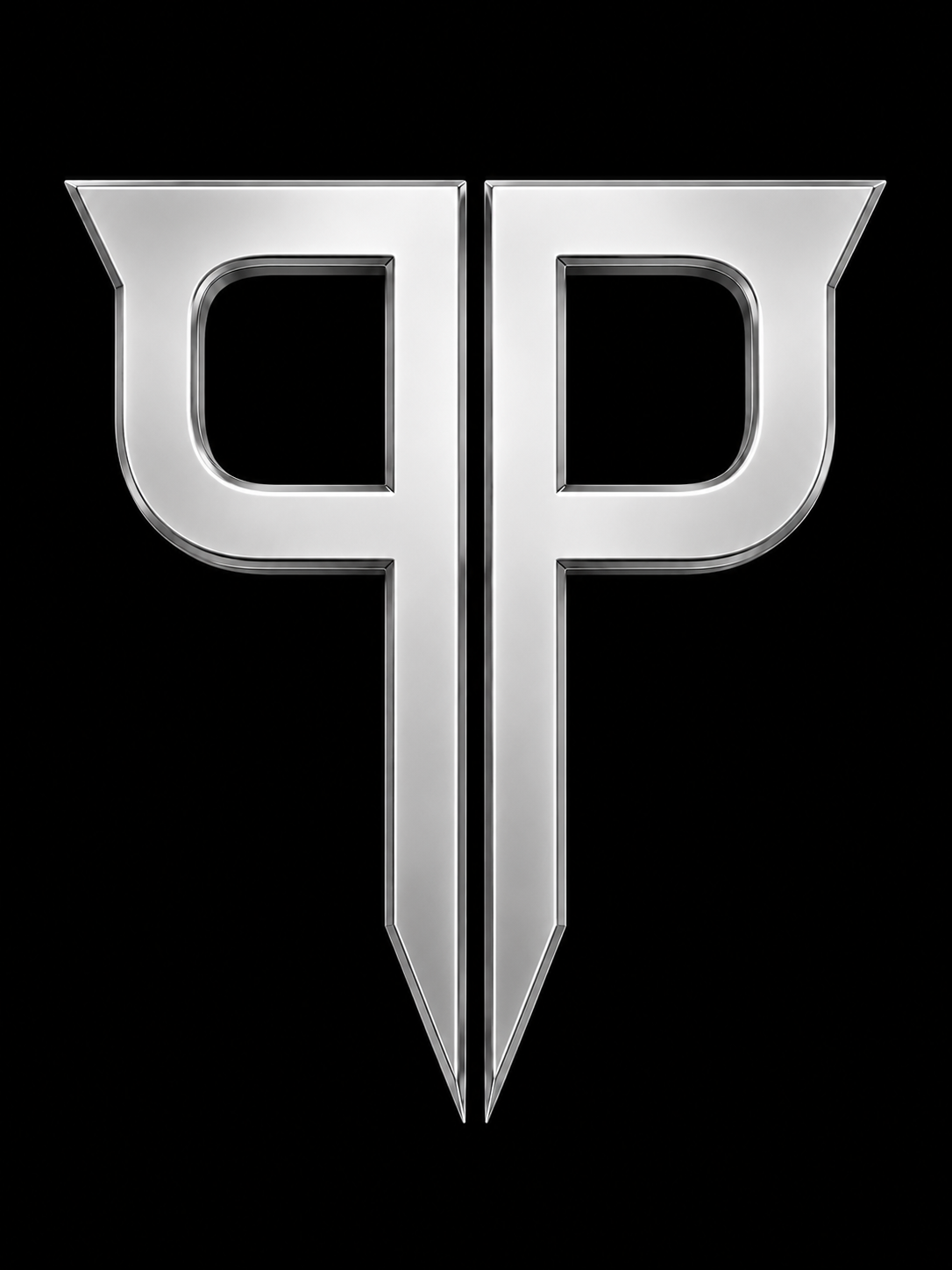
The central black line is a dark groove for a solid cross. A grooved surface here evokes the idea of union (integration) and simultaneous (dualistic) separation (differentiation).
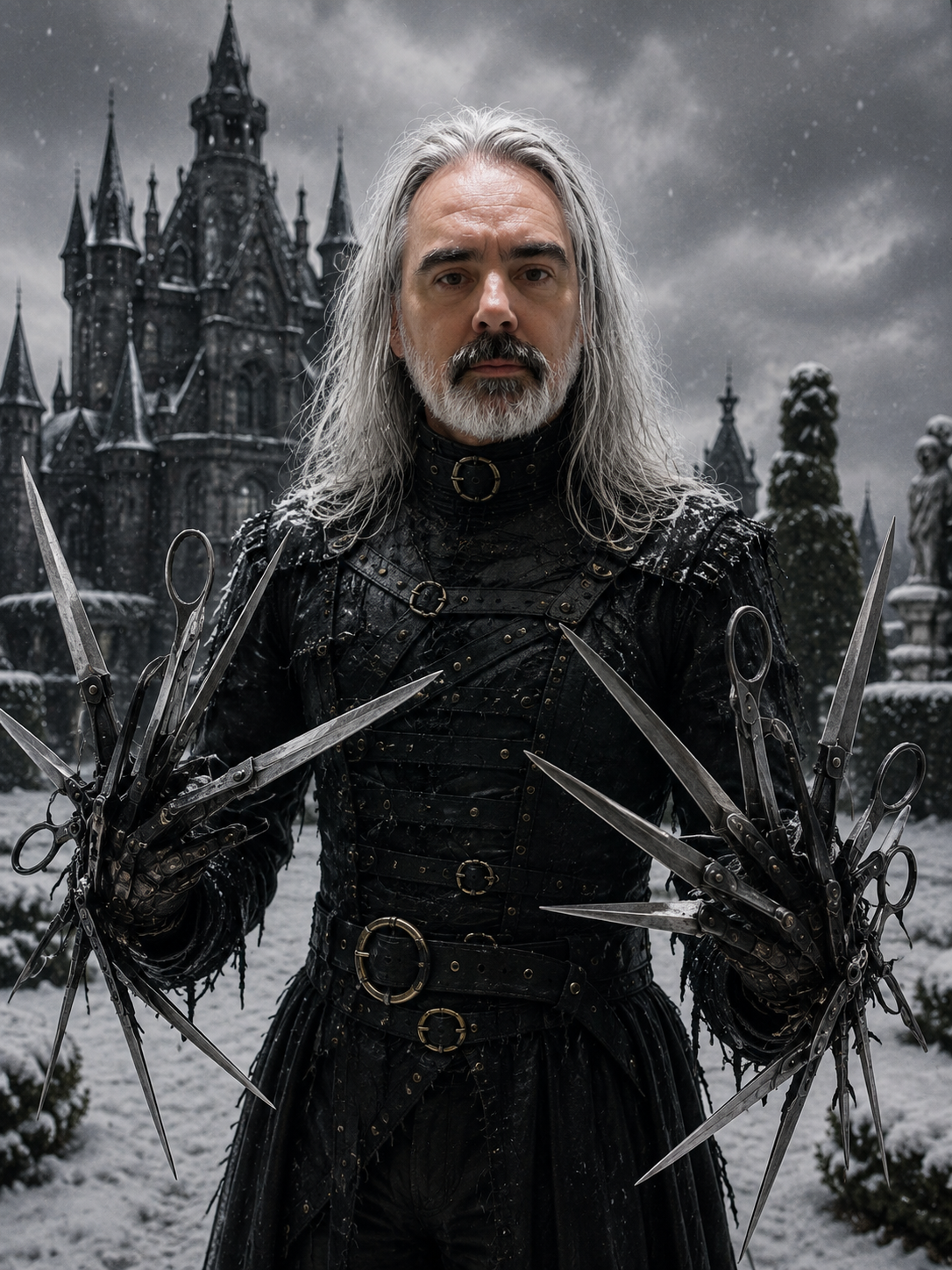
The scissors represent the abilty to do pathematics.
Beyond The Ordinary
The Mocktal value of the display below is P ⊕ |P = 118+110.
118+110 = 228 = 2×114 = 2×57 = ᘯ⊕℧ = ᘯ℧ = ᔐ.

The above figure has many names including The Owl Face (TOF).
Beyond The Ordinary
Hands for (usually heterosexual) pathematical Scissoring (Google the word).
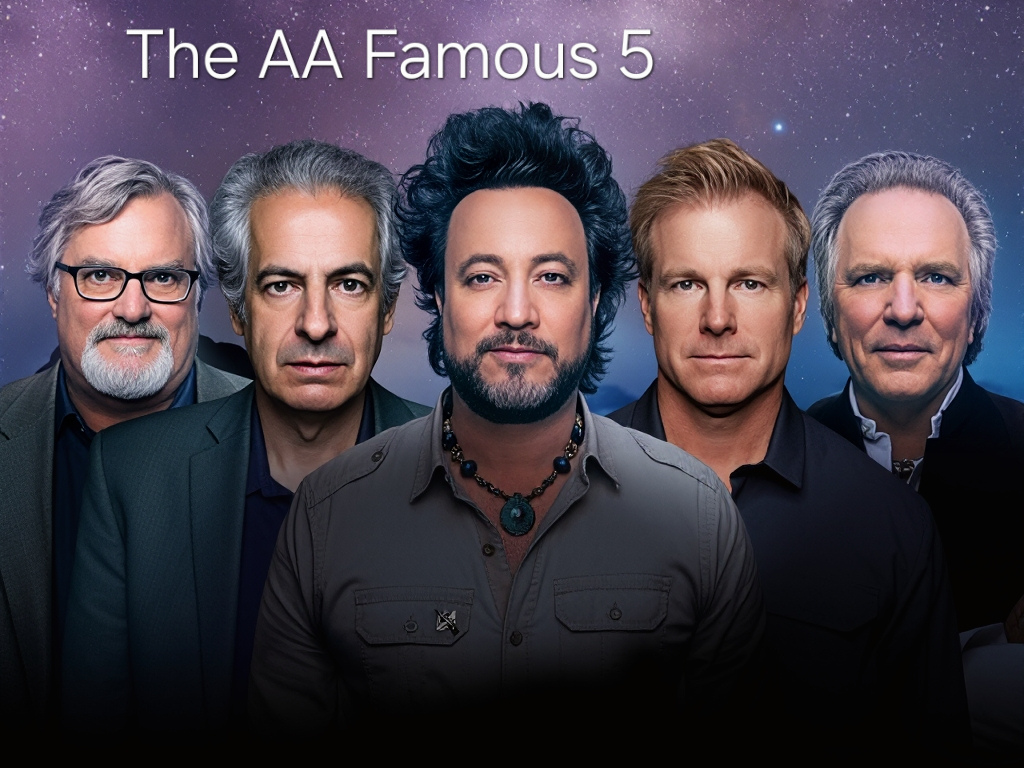
The Ancient Aliens Team
William Henry (The 1st) is on the far right 🔷️. I'm on the far left 🔴🙂.
Beyond The Ordinary
Beyond The Ordinary
In Qu, it is important to remember that everything must be interpreted in an appropriate context. Red players often engage in racism, homophobia, mysogyny, misandry, hatred of infidels etc.
_________________________________________
An infidel is a person who does not believe in a specific religion or who holds religious beliefs different from those of the speaker. The term is often considered derogatory or offensive, historically used by members of one faith (such as Christianity or Islam) to describe non-believers or outsiders.
Let us (the blue players) call any person we do not like An Infidel and thereby broaden the term to include racists, homophobics, mysogynists, misandrists, paedophiles, child murderers etc. Now, any term of abuse properly applies to red players and is often simply a reflection of the term back to it's source. Every red player is a nigger, a black bastard, a paki, a jew (when used by the anti-semitic), a spic, a redneck, a wop, a cocksucker, a fag, a faggot, a dyke, a shitstabber, a shirtlifter, a shit, a little shit etc. whenever these terms are used in a derogatory way.
____________________________________________________
Beyond The Ordinary
H.P. Lovecraft wrote a short, explicitly racist 1912 verse titled On the Creation of Niggers. The text uses severe racial slurs and dehumanising language to articulate the author's extreme racial prejudices, reflecting the deep-seated bigotry present in much of his early personal life and correspondence.
The Text of the Poem: 👁 next panel.
Context And Legacy.
Authorship and Views:
Archived in collections from his early life, the poem illustrates the virulent racism and xenophobia characteristic of Lovecraft's youth—views that evolved somewhat later in life while remaining part of his worldview.
Modern References:
The poem received renewed attention via Matt Ruff’s novel and the HBO adaptation Lovecraft Country, which used it to address historical American racism alongside Lovecraftian cosmic horror.
Beyond The Ordinary
THEY (the red players) are the true niggers of H P Lovecrafts philosophy. When pro not foe, I use the blue version of a thing and/or character.
ON THE CREATION OF NIGGERS
When, long ago, the Gods created Earth,
In Jove's fair image Man was shap'd at birth.
The beasts for lesser parts were next design'd;
Yet were they too remote from humankind.
To fill this gap, and join the rest to man,
Th'Olympian host conceiv'd a clever plan.
A beast they wrought, in semi-human figure,
Fill'd it with vice, and call'd the thing A NIGGER.
For Them, I'm a (W)hite (A)nglo (S)axon (P)rotestant [WASP (with a sting)] antiracist/antifascist/so on and so on supremacist skin-head...with long hair.
W●A●S●P

My Answer To The 🔸️ Version Of Brundle Fly - The WASP
T
Beyond The Ordinary
I shouldn't be calling
THAT🔻(lft or rght)🔻 A NIGGER?!
Myra and Hindley.
Hindley is an English masculine given name and surname that means 'deer meadow' or 'doe in the clearing'. It comes from Old English words for a female deer and a woodland clearing.
Origin and Meaning.
Roots:
Old English words hind (female deer) and lēah (meadow or clearing).
Geography:
Used as a habitational name from English towns in Lancashire and Yorkshire
Usage:
Rarely used as a first name today, but carries literary history.
Cultural References.
Literature:
Famous as the first name of the cruel brother, Hindley Earnshaw, in Emily Brontë's novel Wuthering Heights.
Association:
In the UK, the name is strongly tied to the surname of the infamous historical figure Myra Hindley.
A Curious Fact.
Hindley is primarily used as a masculine first name, though it is very rare and more commonly known as an English surname.
A Single Member Of A Magnificent 7 Of Legendary Golden Vampires
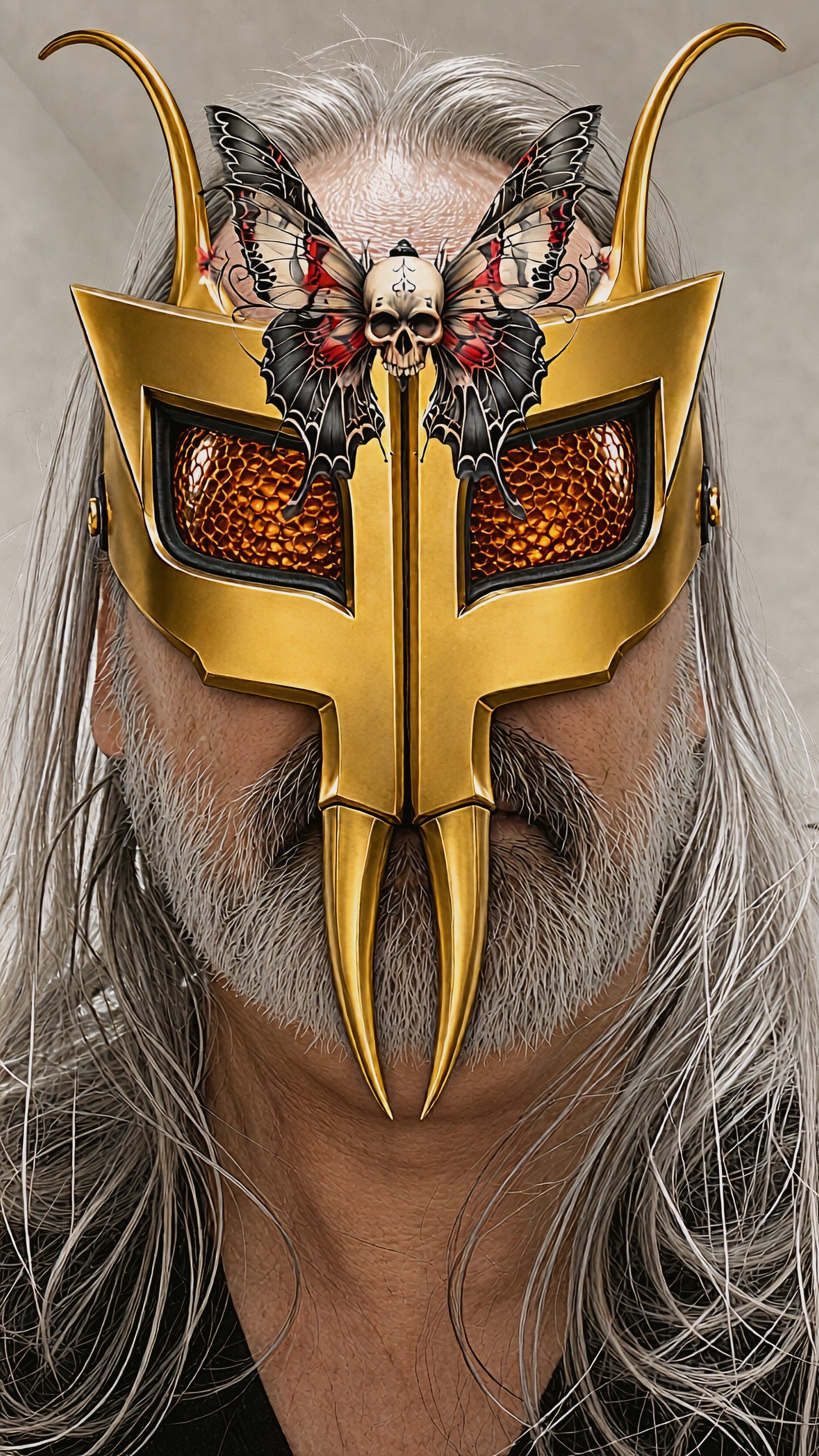
The Seven Golden Vampires is a representative group of legendary characters. A single vampire is, like most things in Qu, a metaphor that needs to be decoded In An Appropriate Context (IAAC). And, as usual in Qu, there are 7 blue (good) golden vampires versus 7 red (evil) ones.
Beyond The Ordinary
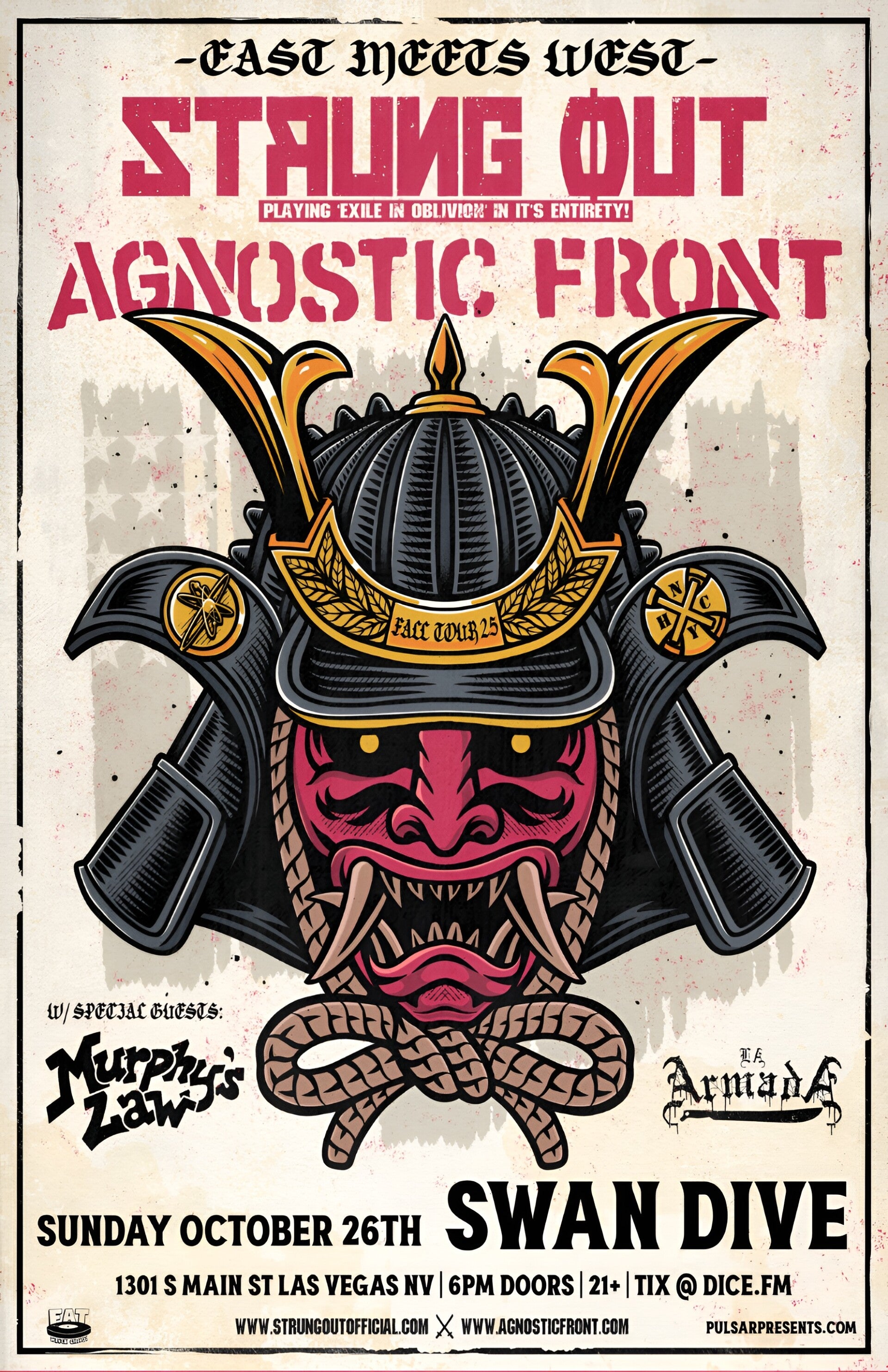
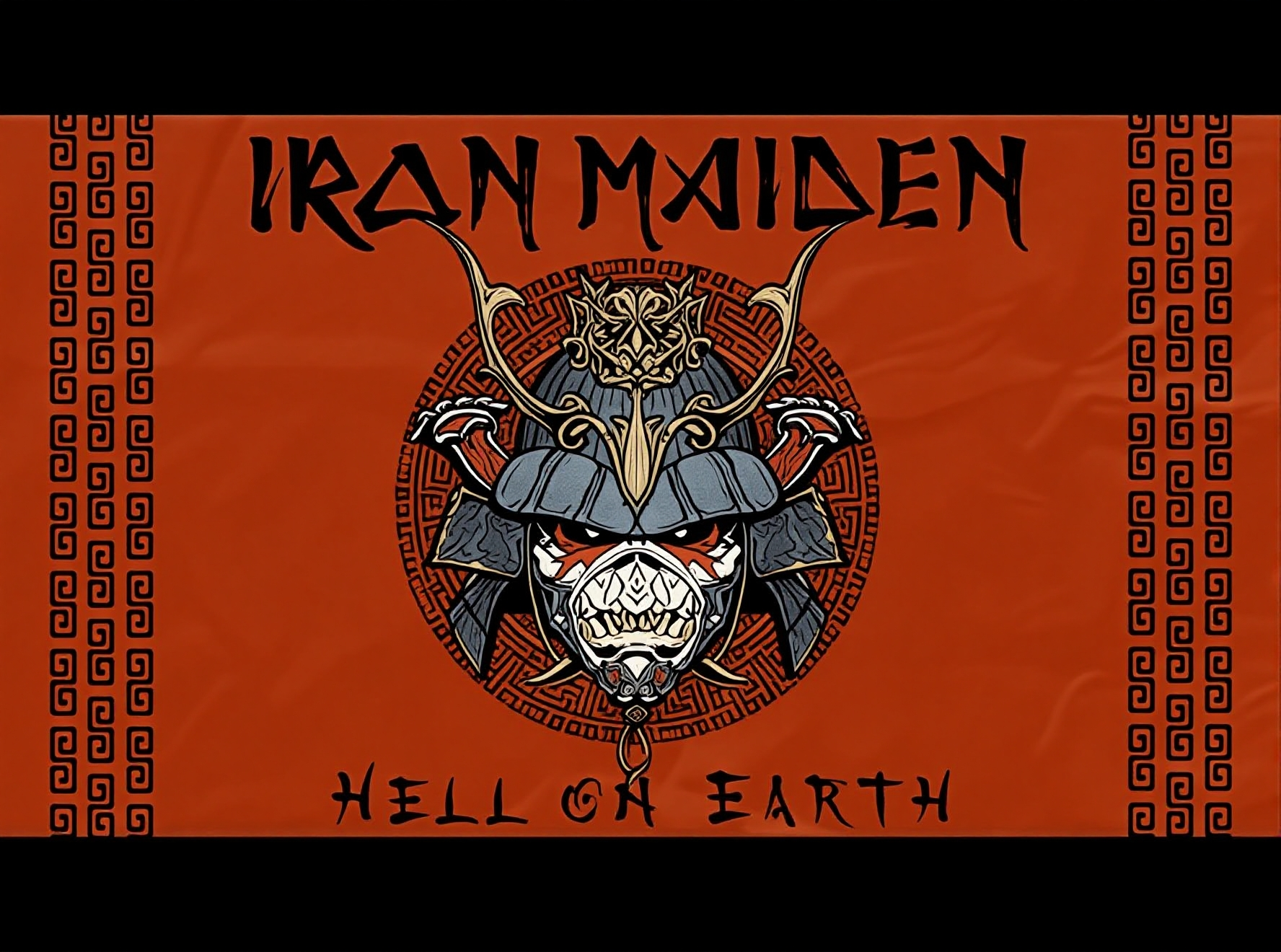
For the above mask, I took some inspiration from a feudal Japanese samurai helmet.
Beyond The Ordinary
The Legend of the 7 Golden Vampires is a unique 1974 martial arts horror film that represents a historic cross-cultural collaboration between Britain's legendary horror specialist Hammer Film Productions and Hong Kong's martial arts powerhouse Shaw Brothers Studio.
Key Details & Production
Directors: Directed by Roy Ward Baker (who handled the narrative elements) and Chang Cheh (uncredited, who directed the complex martial arts action sequences).The Cast: Features horror icon Peter Cushing reprising his famous role as Professor Abraham Van Helsing. It also stars Hong Kong martial arts icon David Chiang and Norwegian actress Julie Ege.Historical Impact: This film marked the final entry in Hammer's original Dracula film series. However, Christopher Lee famously declined to return, resulting in John Forbes-Robertson taking over the role of Count Dracula.
Synopsis
The story kicks off in 1804 Transylvania, where a Chinese Taoist monk named Kah travels to Castle Dracula to ask the Count to help restore the fading power of the Seven Golden Vampires in rural China. Instead of just assisting, Dracula kills Kah, absorbs his soul, and claims his physical form to relocate his evil empire to Asia.A century later (1904), Professor Van Helsing is lecturing at a university in Chungking. He is approached by Hsi Ching (David Chiang) and his seven kung fu-trained siblings. Together, they form an alliance to travel to the remote village of Ping Kuei to completely eradicate Dracula, his golden-masked vampires, and their rising army of undead slaves.✂️ Alternative Cuts & Alternate NamesThe movie was heavily altered depending on the market where it was released:The Original UK Version: Features the standard 89-minute runtime containing the uncut blend of horror and martial arts.The U.S. Release (The 7 Brothers Meet Dracula): Truncated by about 14 minutes down to a 75-minute runtime. This version significantly altered the chronological order of scenes and cut vital exposition to prioritize non-stop action.To see a glimpse of this unique genre mashup, check out the original theatrical preview showing how the studios blended traditional gothic horror with classic kung fu cinema.
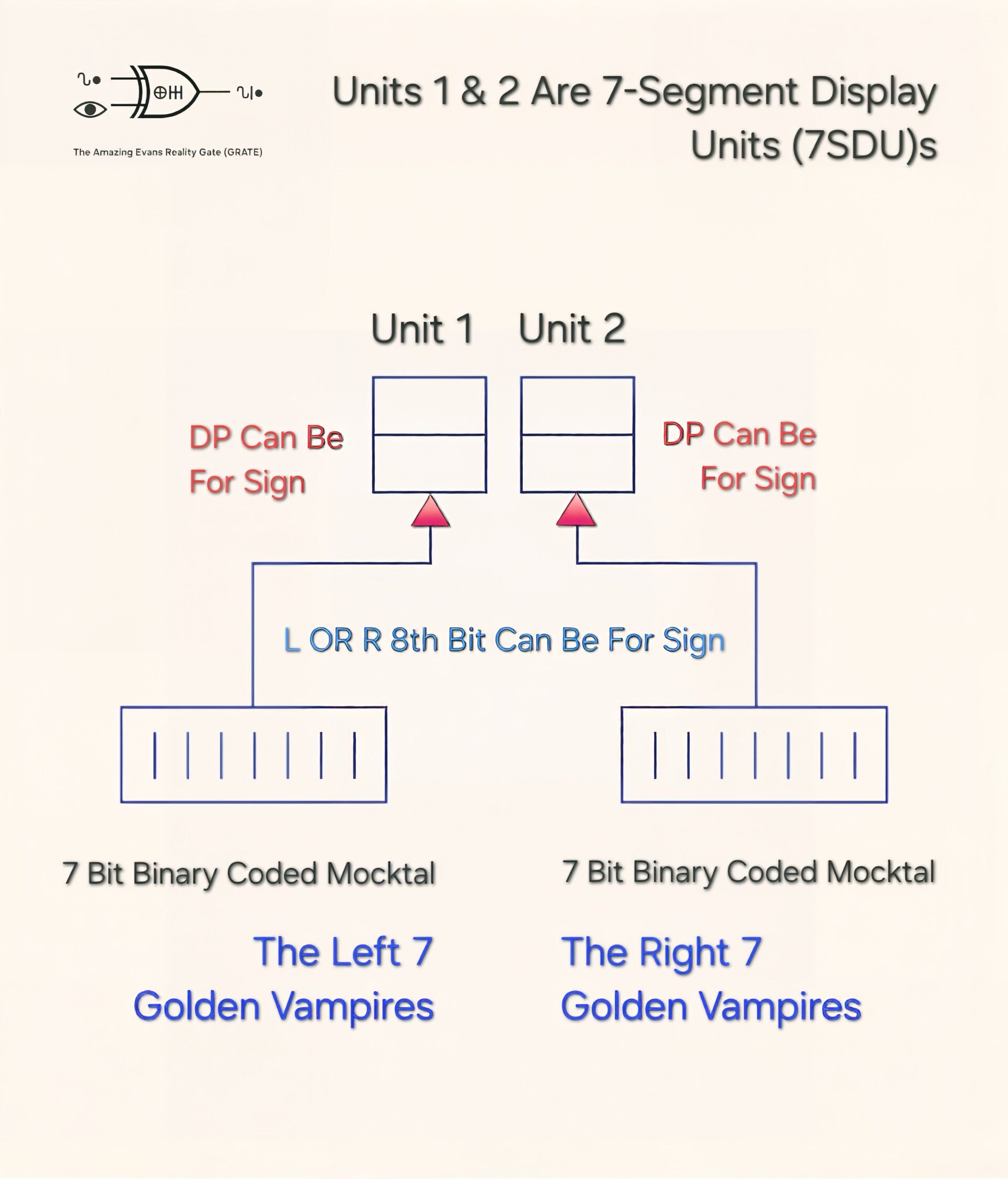
The Golden Number: (+ or -)[2 To The Power Of 7]
A system for displaying Mocktal Numbers is discussed on another page (Mocktal Turtles And Other Stuff).
Beyond The (Ordinary) Earth
Temple I/O is A TAD Insane and an awful lot out (of) lunacy.
(That's) One Small Step For [A] Man,
One Giant Leap For Mankind.
Beyond The Ordinary
A reflection in my visor of an off-world encounter? Or some strange and revealing transparency.
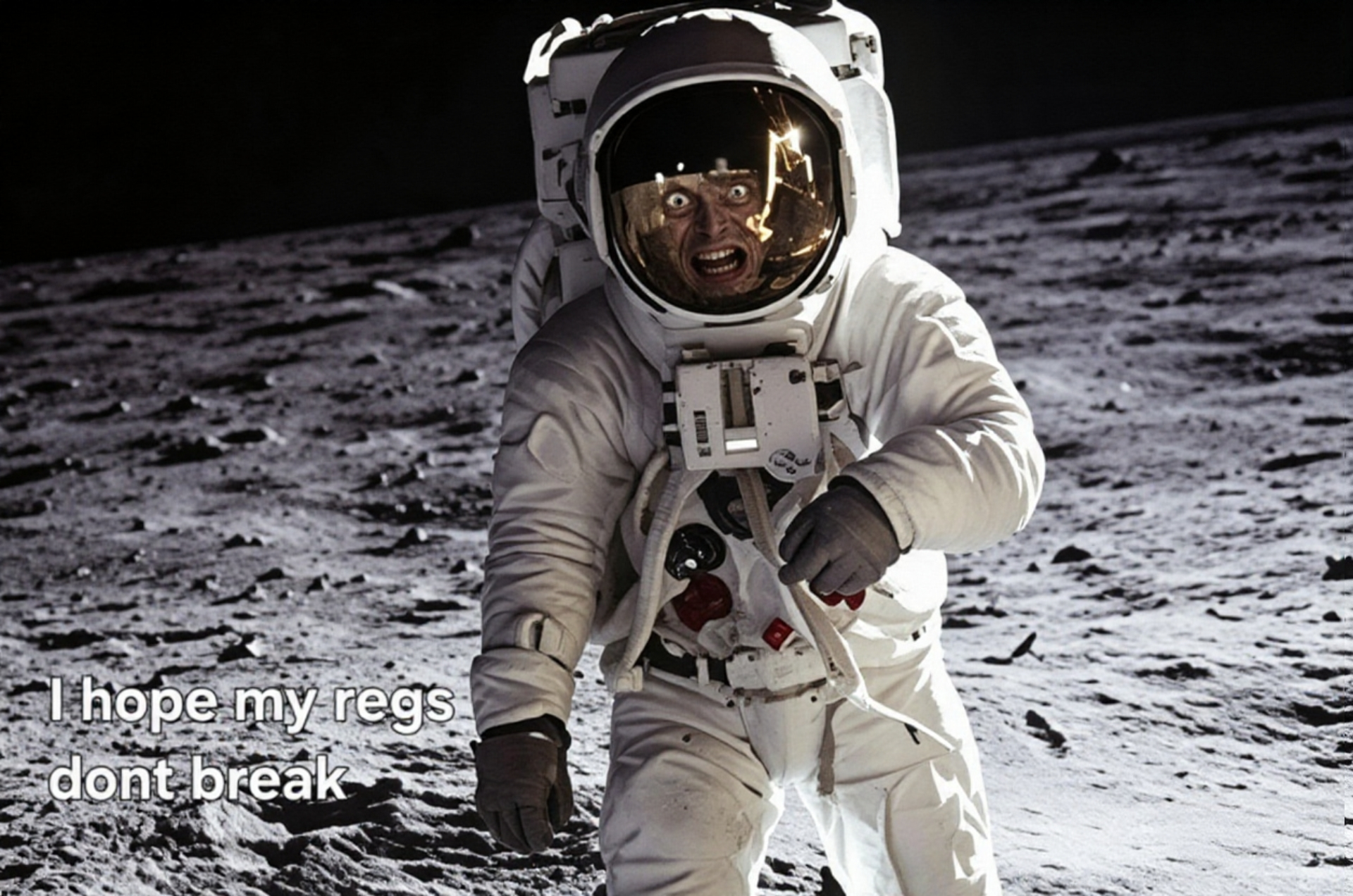
Undertaking any complex, work intensive mental project involves leaving the ordinary world of relative simplicity and ease to land on and explore The Moon. The Moon here is any appropriate environment for The Project.
On the Moon, you can have a bit of trouble with apostrophes.
The word apostrophe comes from the Ancient Greek word apóstrophos, which means 'turning away' or 'to turn about'.
Greek Roots.
- apo-: meaning "away from"
- strephein (or strepho): meaning "to turn"
From Rhetoric To Punctuation.
Rhetorical Device: In classical rhetoric, an apostrophe was a literary technique where a speaker or actor turned away from the main audience to address an absent person, a god, or an inanimate object.
Punctuation Mark: The Wiktionary definition evolved in Latin and French to describe an "accent of elision"—a mark showing that a sound or letter had been "turned away" or omitted.
Introduction: French printer Geoffroy Tory and Italian publishers in the early 1500s popularized the comma-like mark to signal missing letters in contractions (such as l'heure).
Possessive Use: English adopted the mark in the 16th century for contractions, and later applied it during the 17th century to show possession (shortening older genitive endings like -es to 's).
Beyond The Ordinary
Astronaut regulations (regs) cover medical fitness, education, and international space laws. Agencies like NASA and the European Space Agency require strict qualifications, while international treaties define astronauts as 'envoys of mankind' with guaranteed safety and rescue provisions.
Education And Professional Prerequisites.
Master’s degree or higher in a STEM field (engineering, biological science, physical science, computer science, or mathematics). Professional experience of at least three years in a related field, or a specified number of pilot-in-command hours on jet aircraft. Fluent English communication skills, which is the standard operational language for crew cooperation.
Medical And Physical Standards.
Visual acuity must be correctable to 20/20 in each eye. Blood pressure must not exceed 140/90 measured in a sitting position. Height requirements typically fall between 62 and 75 inches (157 to 190 cm) to fit inside spacecraft seats and suit designs.
Legal And Safety Regulations.
Outer Space Treaty of 1967 states that astronauts must be rendered all possible assistance by state parties in the event of an accident or emergency. Rescue Agreement of 1968 obligates nations to safely and promptly return any astronauts who land off-course or ditch in foreign territory or international waters. Jurisdiction remains with the state of registry for the spacecraft and any personnel on board or outside during a spacewalk.
⚠️
I hope my regs don't break is a saying that bundles up everything personified by The Astronaut's Regulations into a single package of sanity said while involved in a dangerous endeavour.
Beyond The Ordinary
Beyond The Ordinary
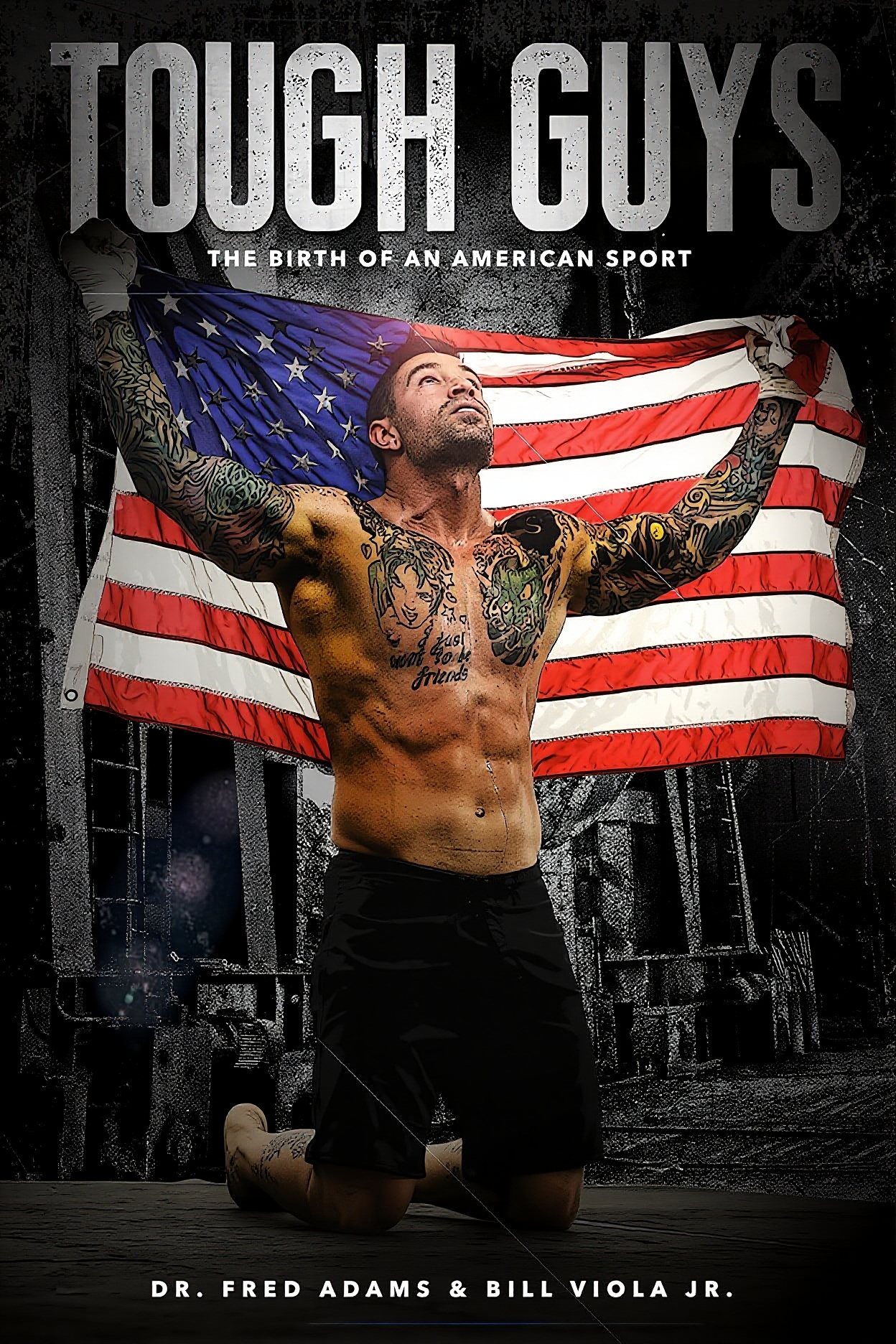
Sully Erna's Ego: There is a strong consensus online that frontman Sully Erna projects an arrogant, aggressive 'tough guy' persona that turns off listeners who view it as pretentious.
Beyond The Ordinary
When I first saw this image, I thought it was Sully Erna.
Sully Erna frequently pulled atmospheric audio clips from late-night television, horror movies, and occult documentaries to establish the dark, ritualistic vibe of early Godsmack tracks.
Hidden Audio Samples In Early Godsmack Tracks.
Vampires (Awake):
This entire Grammy-nominated instrumental track is built around creepy television dialogue. The sampled narrator details the "overtone of sexual lust, power, and control" that vampires exhibit, ending with a deep-dive quote about the "dark and hidden parts of our psyche". Like "Moon Baby", this audio was also sourced from the paranormal TV series Mysterious Forces Beyond.
Voodoo (Godsmack):
The underlying spiritual themes of this track were heavily inspired by the 1988 Wes Craven horror movie The Serpent and the Rainbow. While the rhythm section mimics a tribal ritual, the track builds upon cinematic, hypnotic production techniques directly influenced by late-night horror aesthetics.
Moon Baby (Godsmack):
Beyond Fernando Allende, the song weaves in a cracked, low-fidelity audio transmission of Neil Armstrong’s historic "One small step for man..." speech. This real-world space sample contrasts heavily with the fictional werewolf commentary sandwiching it.
The Lyrical Meaning Of Moon Baby.
Sully Erna wrote Moon Baby as a dual-perspective metaphor for werewolves and inner psychological madness.
The First Verse:
Sung entirely from the perspective of the wolf/beast side of a person, speaking directly to the human soul it is trying to consume ("Every time I'm near you, I always wanna swallow you down").
The Second Verse:
Flips the narrative completely, representing the human side staring back in horror at the monster it becomes ('Where were you when I was down? Staring into the dead').
The Moon Metaphor:
The song explores how an obsession, addiction, or toxic relationship can act like a full moon, completely altering your personality and driving you to madness.
Beyond The Ordinary
T
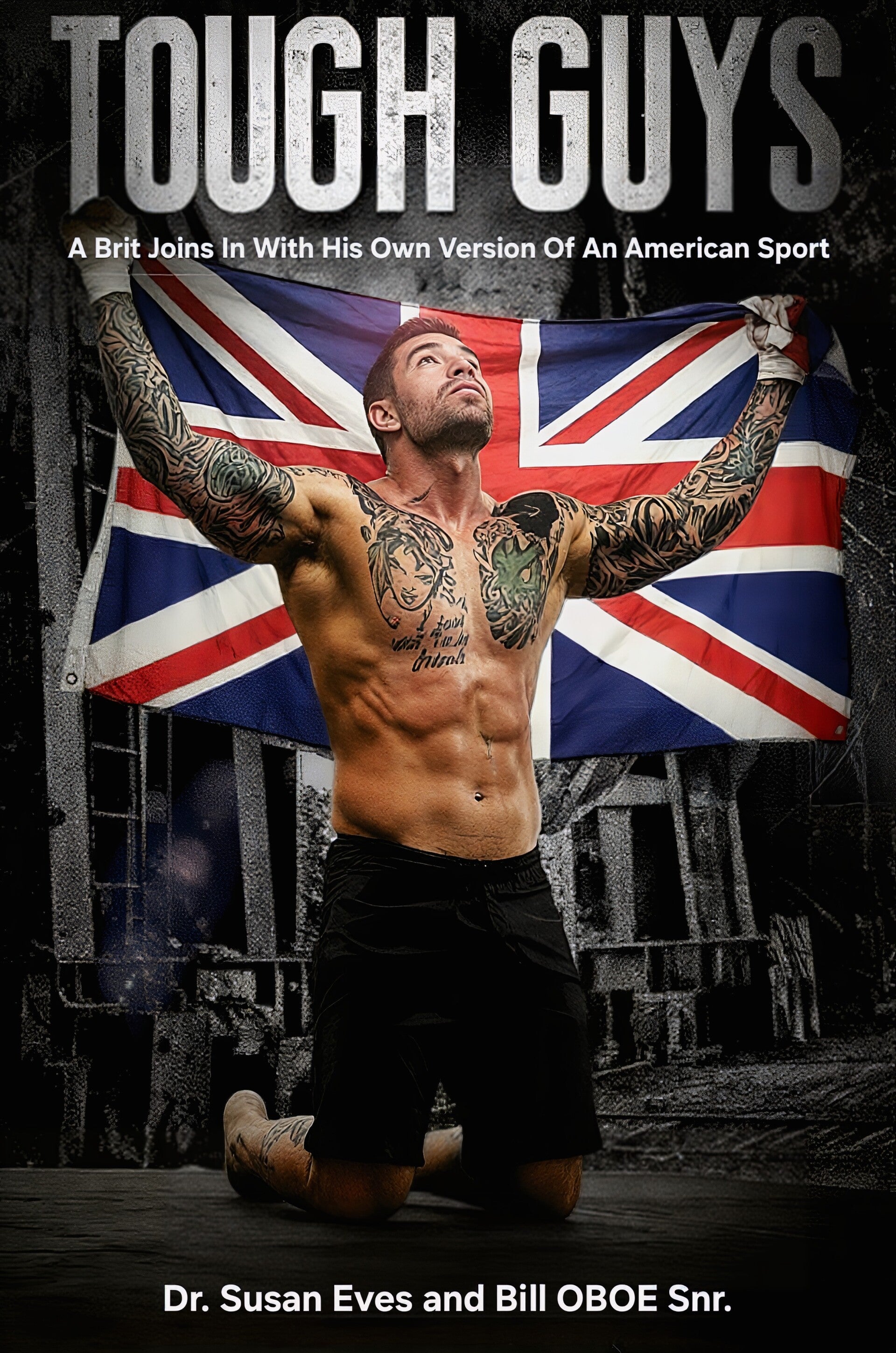
For anyone who doesn't know, a viola and an oboe are both musical instruments.
Beyond The Ordinary
T
Beyond The Ordinary
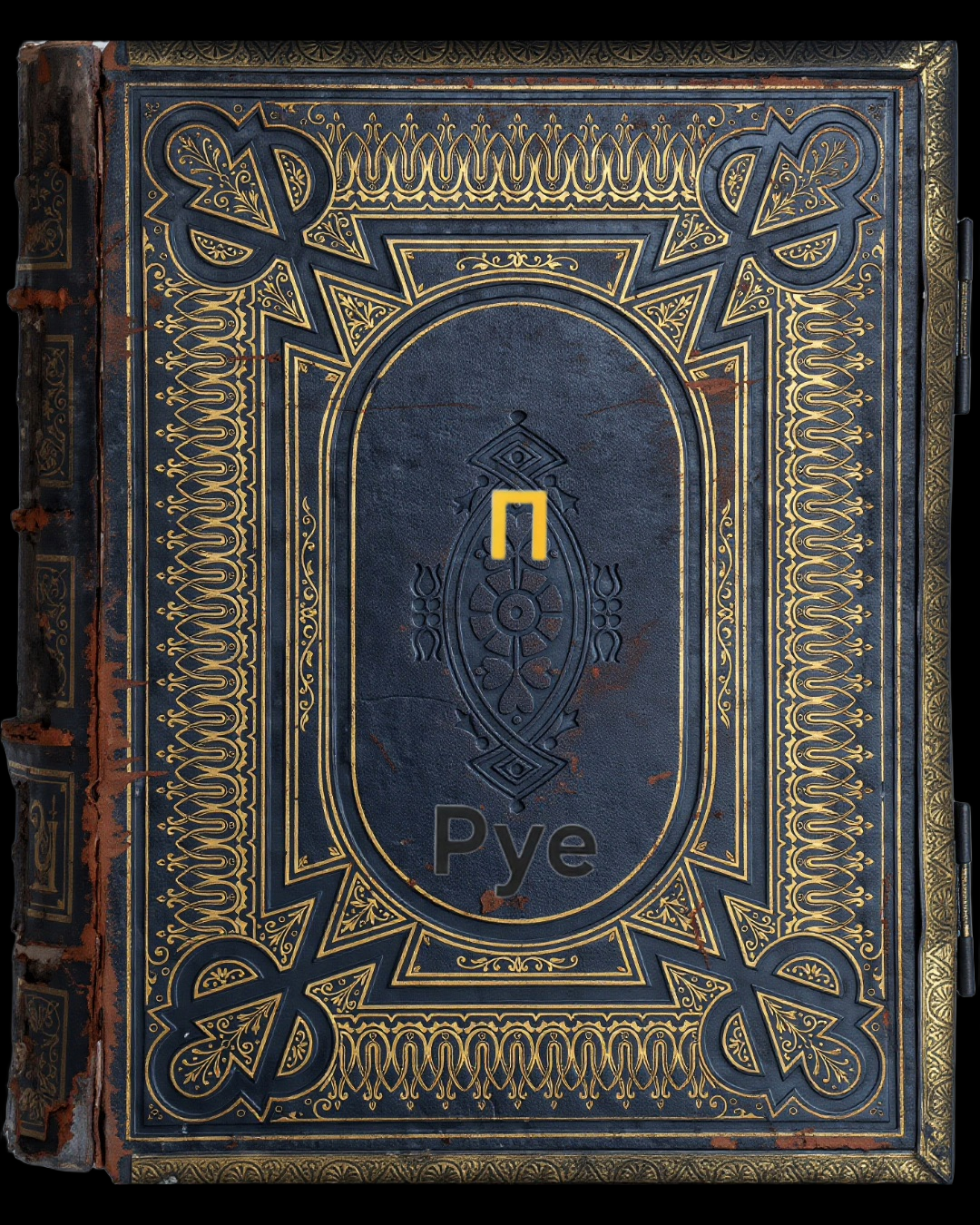
Here's what Google Ai had to say about the above book:
The image shows an antique, dark-blue leather-bound book featuring ornate gilt (gold-tooled) Victorian framing, an embossed central oval cartouche bearing the name 'Pye', and a small yellow shelf-mark label near the center.It appears to be a 19th-century Victorian or Edwardian leather-bound volume, ledger, or family record book.The elaborate gilt-tooled border work and centerpiece layout are characteristic of mid-to-late 19th-century fine bookbinding styles.
Based on the distinct design elements, style, and provenance indicators, this book has a 19th-century British Victorian origin, specifically tied to the prominent Pye family of art collectors and artisans.
Key Origin Factors.
The Pye Connection: The central embossed cartouche bearing the name Pye marks this as part of the personal collection or family archives of the notable Pye family. The family included William A. Pye—a wealthy Victorian collector of contemporary and oriental art—and his daughter, Sybil Pye (1879–1959), who went on to become one of the most famous British female master bookbinders of the early 20th century.Historical Placement: The book design is an exceptional example of a late Victorian publisher's deluxe binding from the mid-to-late 1800s (circa 1860–1880). During this era, elaborate gold-tooled (gilt) bindings on morocco or calf leather became highly fashionable statement pieces in affluent British households.
Institutional Context: The small yellow "⊓" shape label affixed to the center is a traditional library shelf-mark or press-mark, indicating that after its time in private hands, the book was archived within a formal institution or a meticulously organised private research library.
Beyond The Ordinary
One From A Book Of Songs
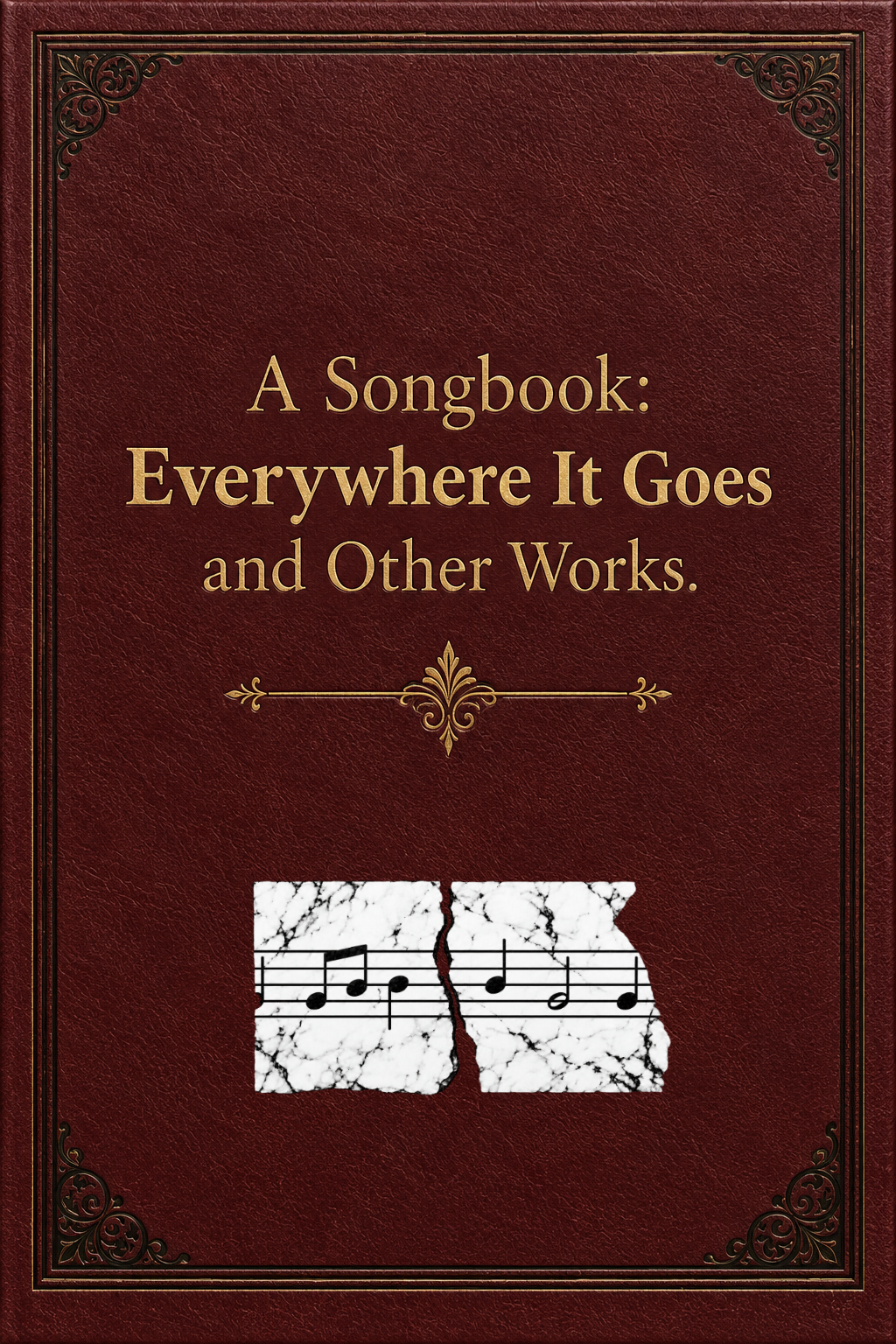
No serious attempt at seizing the crown of Terry Davis would be complete without something like his Risen that has been specially created by a contender. The following is called Everywhere It Goes (EIG) and is my first offering as a model song.
William Evans and Sam Hollander using SoundBreak
Interpretation.
Also known as The Sentinel's Song, in a Matrix Machine (MM) context, this song is about the omnipresence of evil in the MM and the need to go everywhere in search of it - as An MM Sentinel - in order to destroy It. Everywhere It Goes, we go.
EIG is a SAD (Search/Seek And Destroy) Song.
Sound As Glass
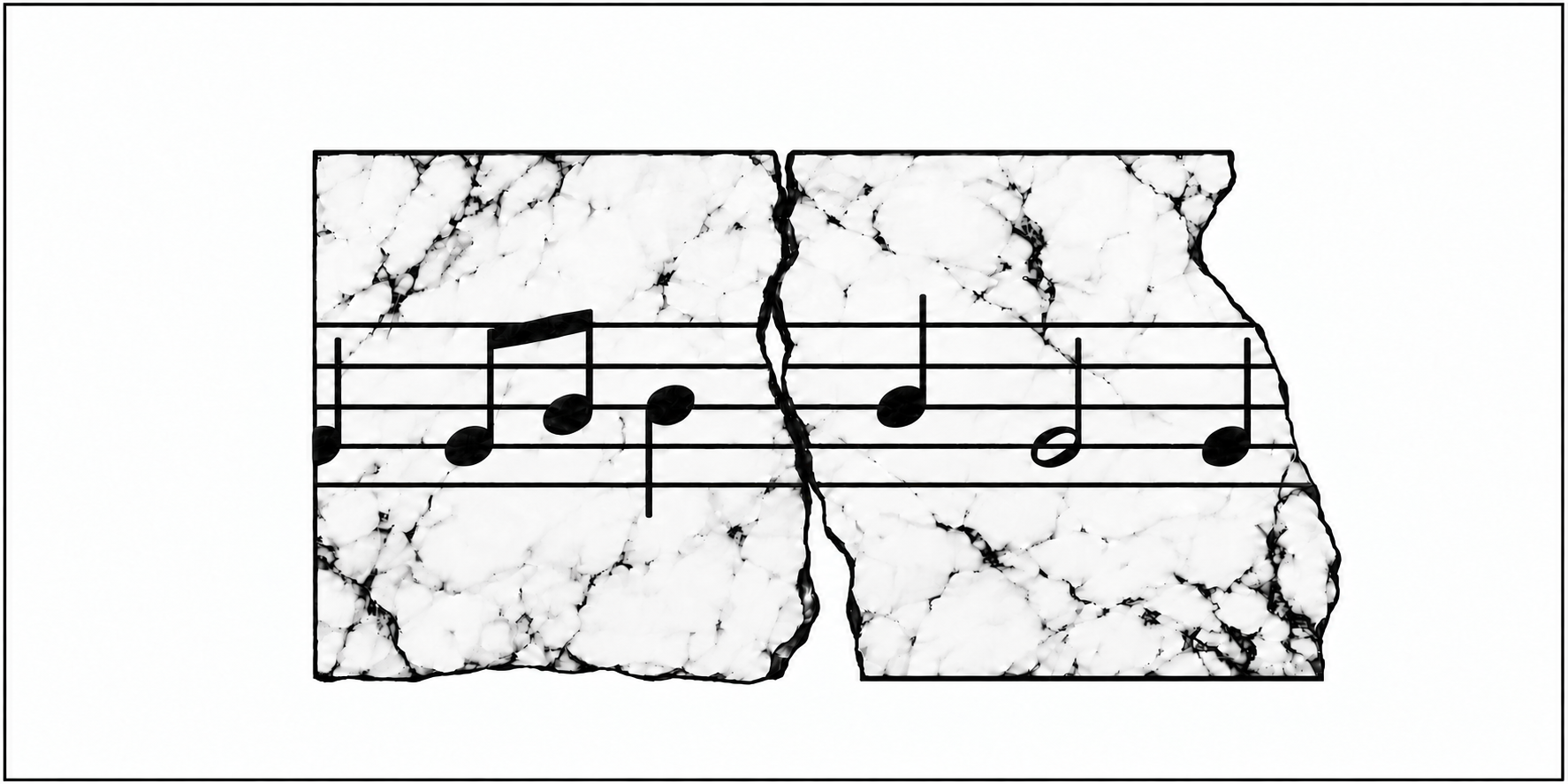
BrokenSound by SoundBreaker
What is the significance of the notes on the broken platform? First, play them. 🔻
The Tune.
Decoding The Tune.
The seven notes of The Tune were, as far as I'm concerned, chosen at random using ChatGPT. I simply input words to the effect: create an image of broken music on white marble.
After a little work, you'll find, like me, that the seven notes of The Tune are G–G–A–B–B–G–G. This determines (codes) the musical relationships (structure) between the notes.
Keeping things simple, to decode the music, you first change the 6th note to an A and then transpose all of the notes to get E–E–F–G–G–F–E. The pitch of the notes has now been changed but the structure remains the same. The seven new notes obtained by transposition are the first seven notes of Beethoven's Ode To Joy.
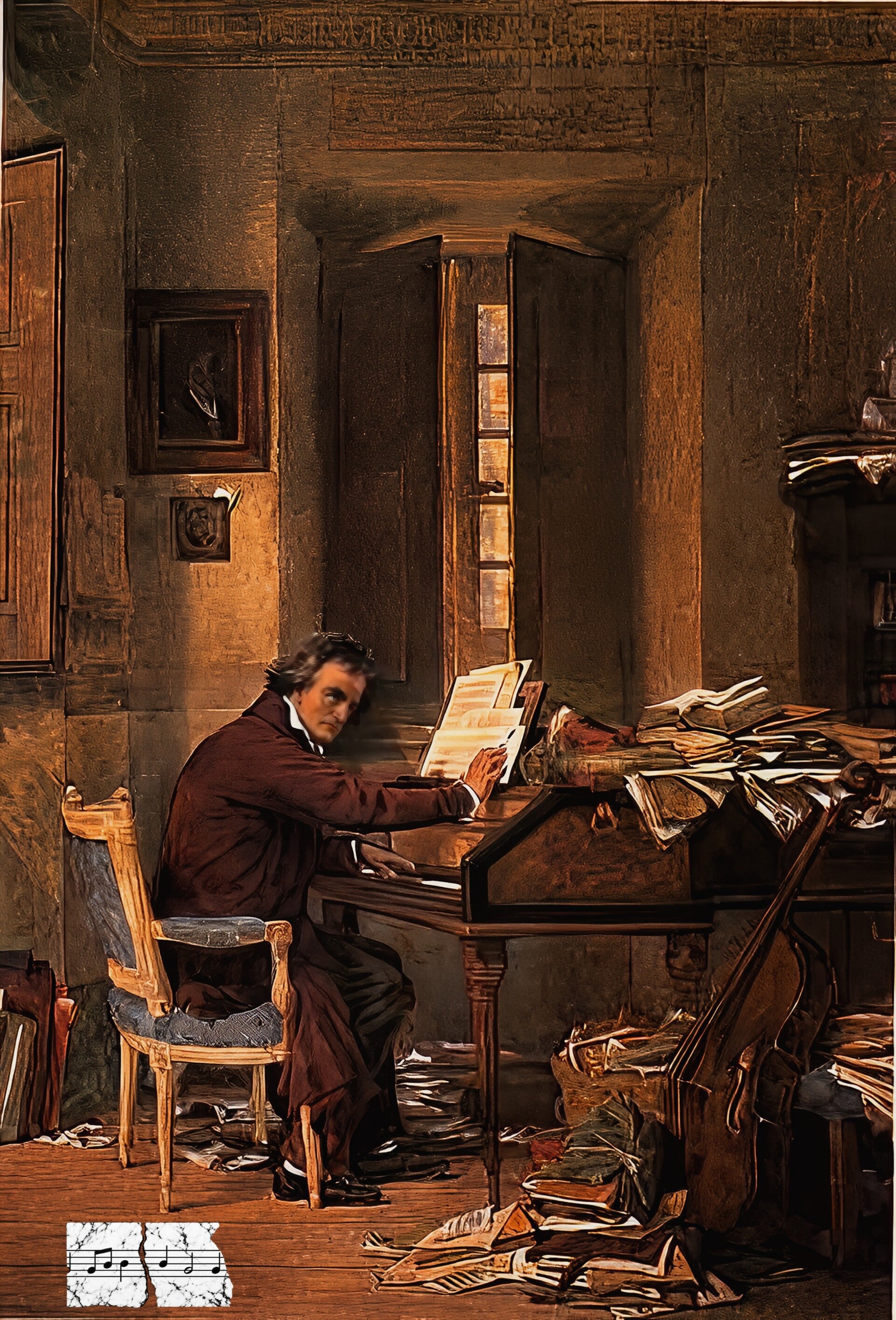
From a simple beginning into a complex masterpiece. Stage 1.
Beyond The Ordinary
A musical key is not the same as pitch, though they are closely related.
Pitch is the highness or lowness of a single, individual sound or note, measured by its vibration frequency (such as 440 Hz for an A note).
Key is the overarching framework or family of notes and chords that a whole piece of music is built around. It uses a specific scale anchored to a main 'home' note called the tonic.
Key Differences.
Scope:
Pitch applies to one single note. A key involves a whole group of pitches that work together harmoniously.
Function:
If you sing a single note out of tune, you hit the wrong pitch. If you play or sing notes that do not belong to the song's established scale or family, you are playing out of key.
Changing them:
Changing the pitch alters the raw audio frequency of a sound. Changing the key (transposing) shifts the entire group of notes up or down while keeping the musical relationships and patterns between the notes the same.
Beyond The Ordinary
You can use transposition to change the pitch of notes up or down by a specific musical interval.
How Transposition Works.
Definition:
Transposition means moving a collection of notes higher or lower in pitch by the exact same distance.
Intervals:
You measure this distance in semitones (half steps) or scale steps (like a major third or perfect fifth).
Relationships:
Every note in the piece moves by the same interval so the melody and harmony stay the same, just in a different key.
Methods for Transposing.
Manually:
You rewrite each note higher or lower on the staff while keeping the same shape of the melody. You also adjust the key signature or add accidentals to keep the correct scale steps.
Digitally:
Music notation software like Sibelius or MuseScore does this automatically when you select the notes and choose a new key or pitch shift.
Mentally:
Musicians often transpose on sight by reading music in one key while playing it in another.
Beyond The Ordinary
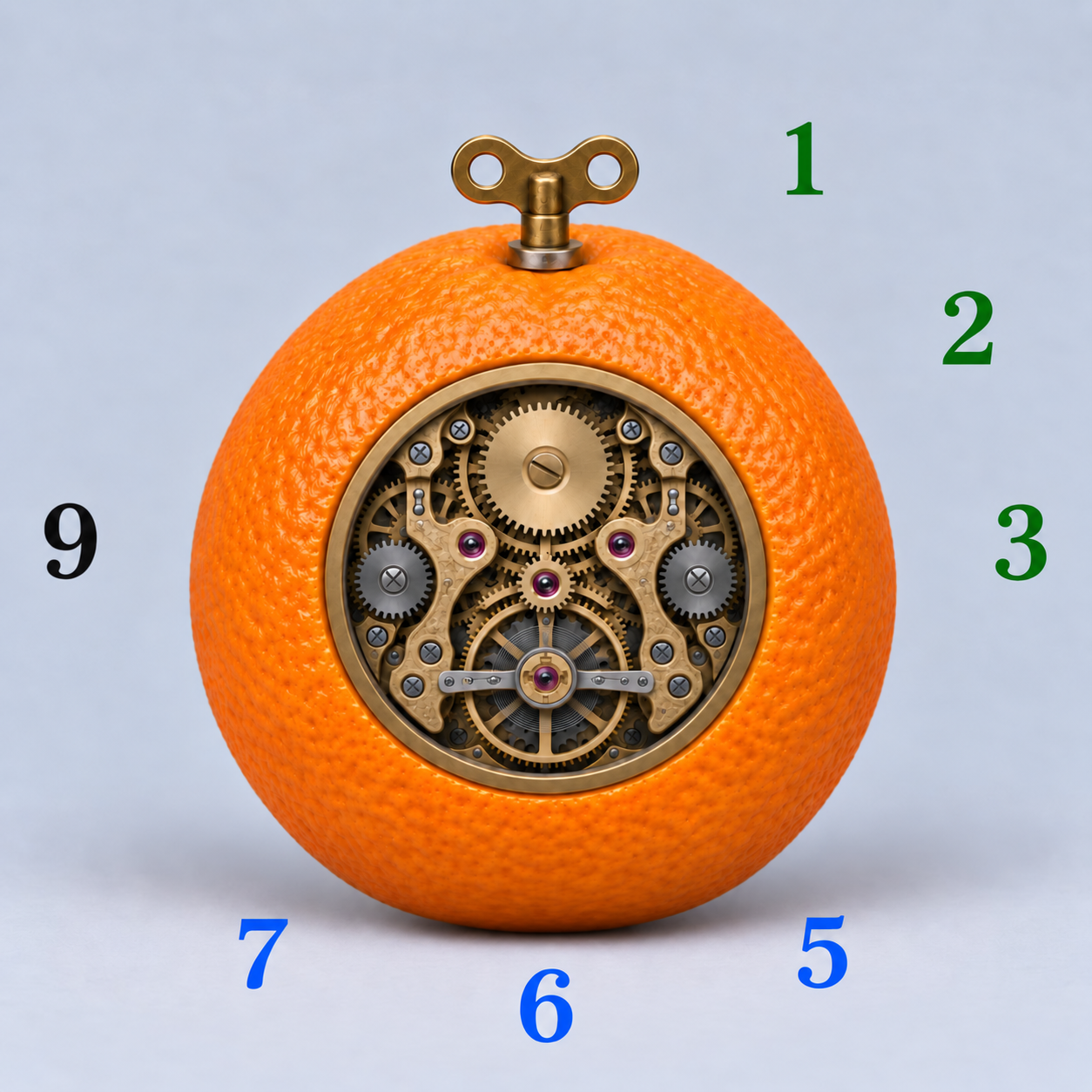
The Five Note encounter Tune from the movie Close Encounters Of The Third Kind. D–E–C–C–G.
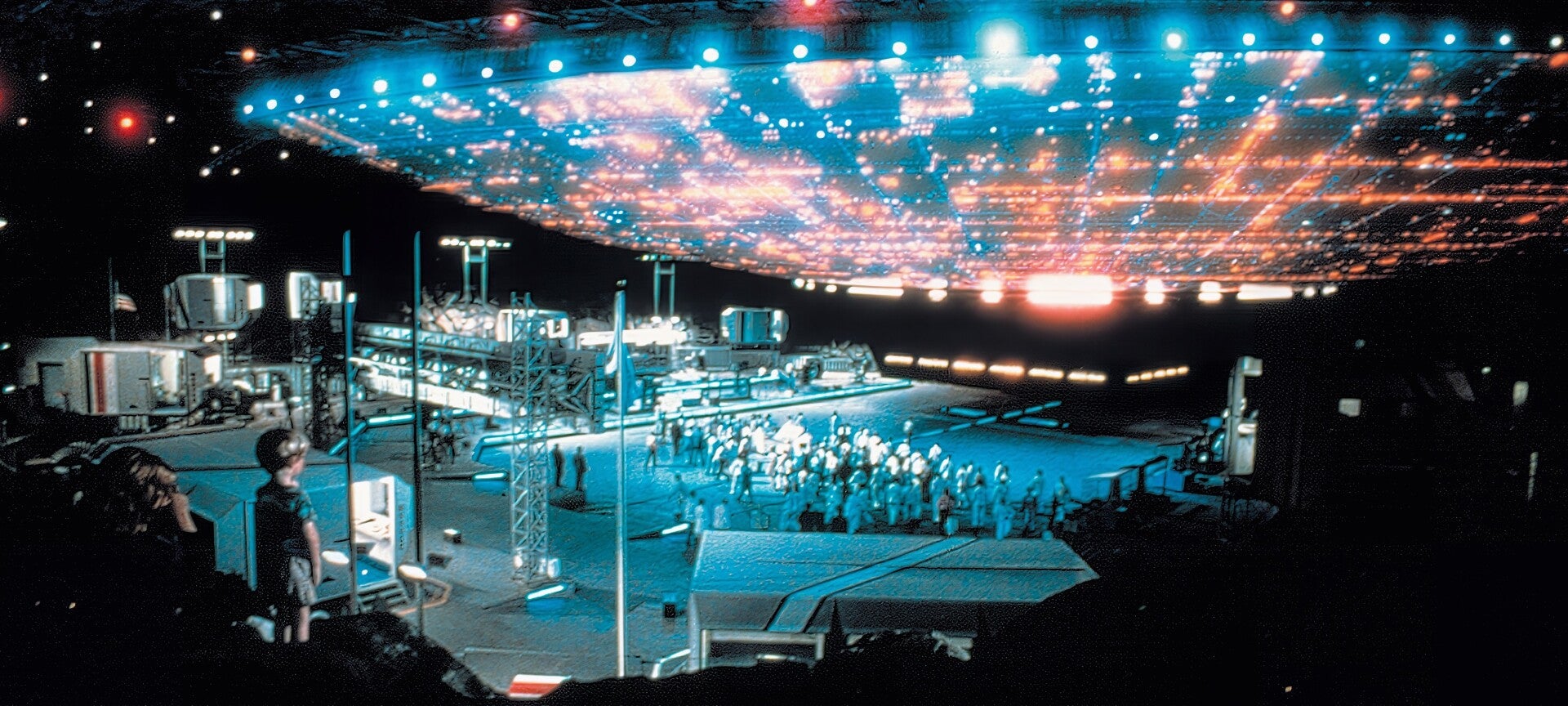
The iconic music scene from CE.
This is more me during a close encounter.
Spell(Book)binding Beauty
.
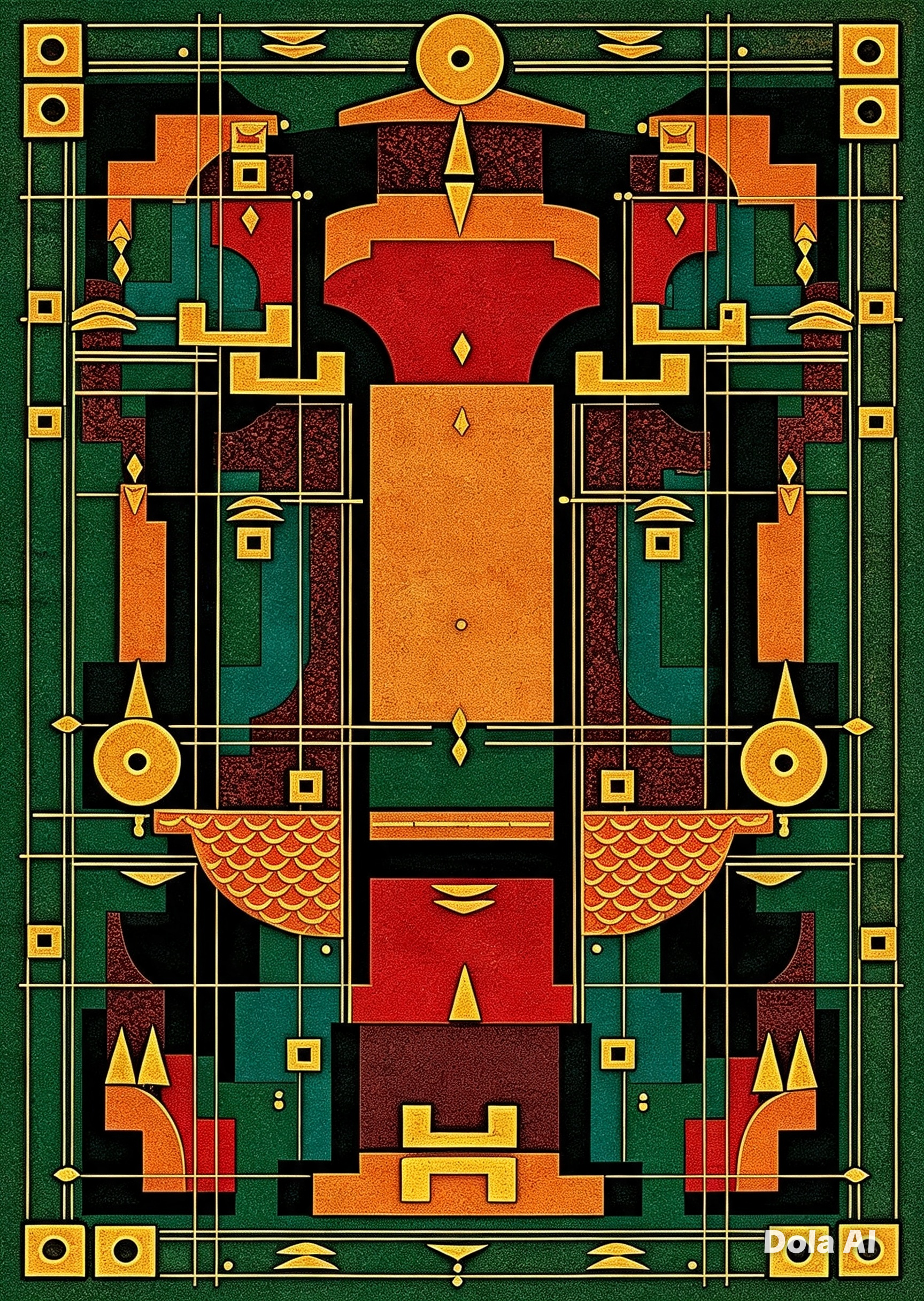
A book cover design by Sybil Pye.
By using The Qu Story Arc to guide your searches, you can extract and pull together many things that have a beauty like the above design.
Beyond The Ordinary
T
Beyond The Ordinary
Below is the character Beastie created by Jethro Tull and included on the cover of the album Broadsword And The Beast.
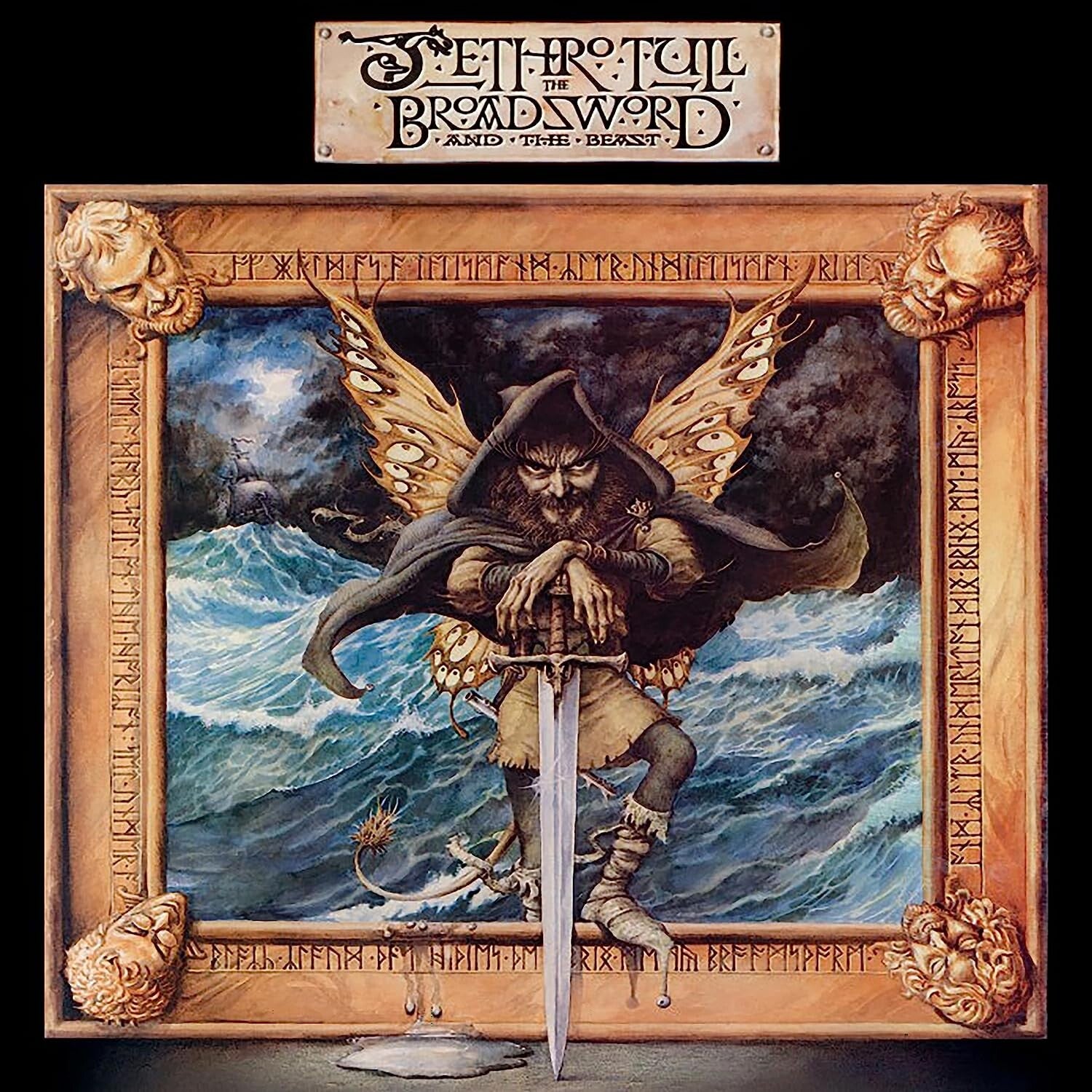
For my own use, I created three Beastie Owl graphics that all, among other things, have Tull's Beastie's Eyes. These three designs, plus an external owl graphic, are shown on the next panel.
More Maskeraiding
The Beastie Owl/Griffin
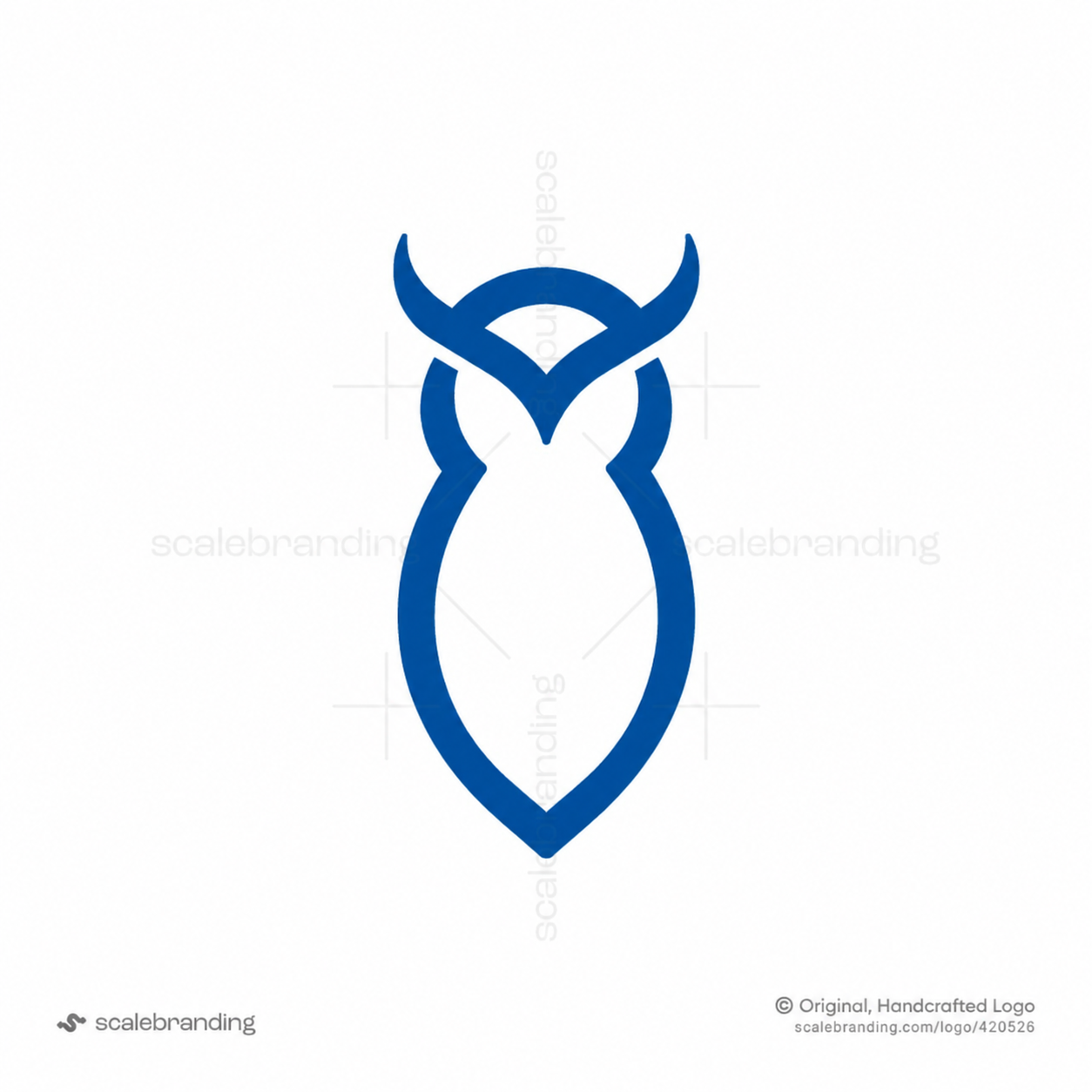
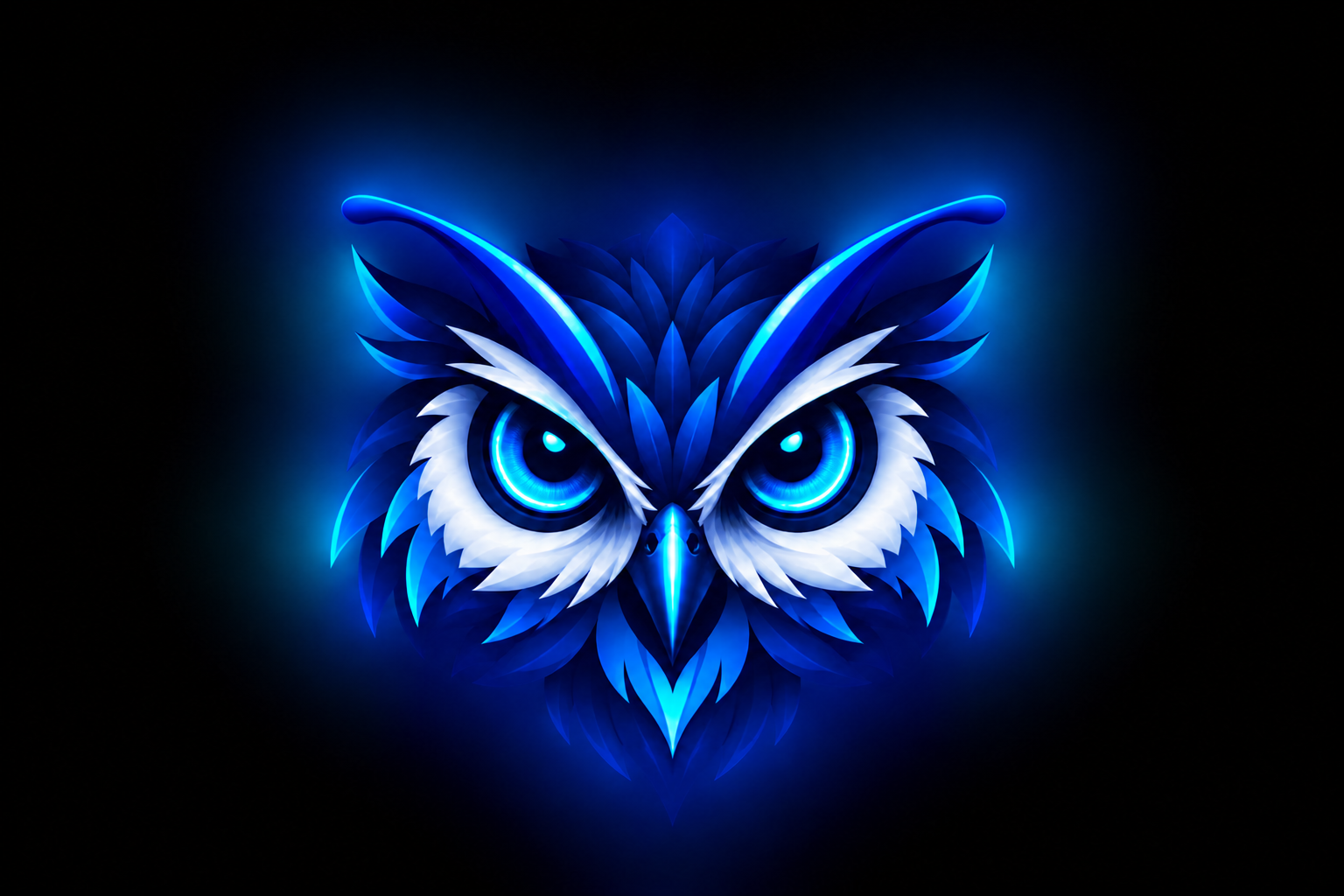
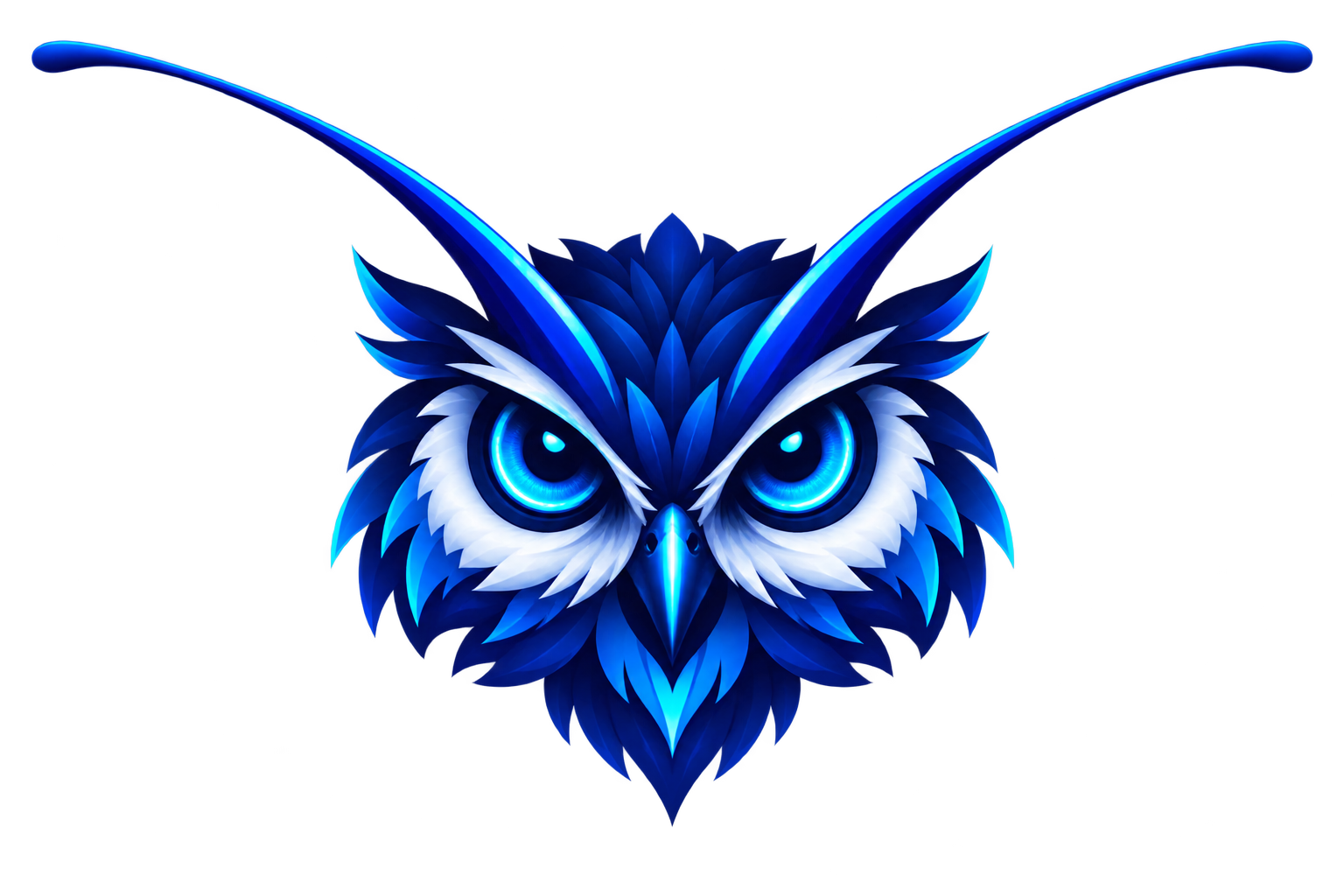

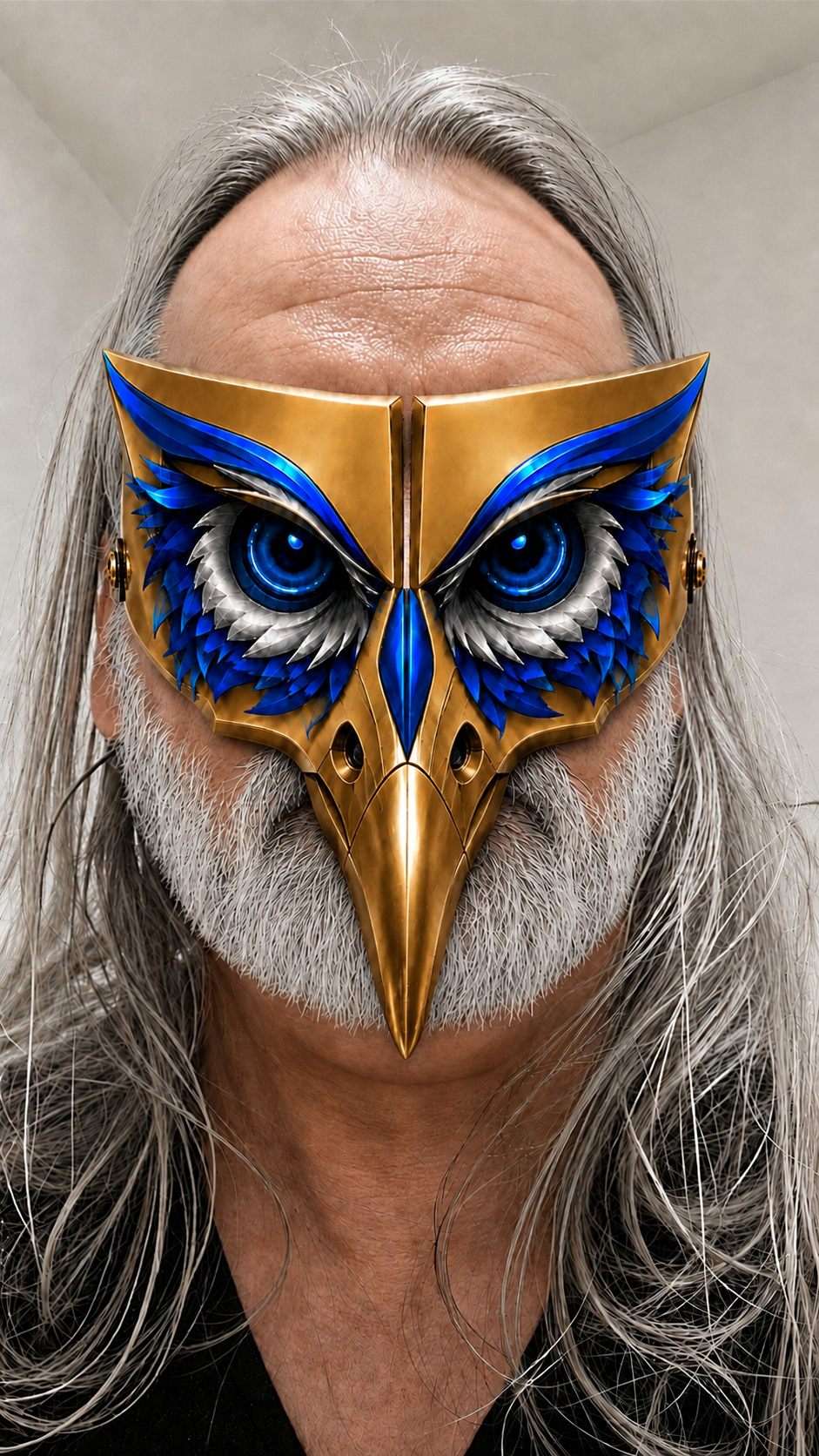
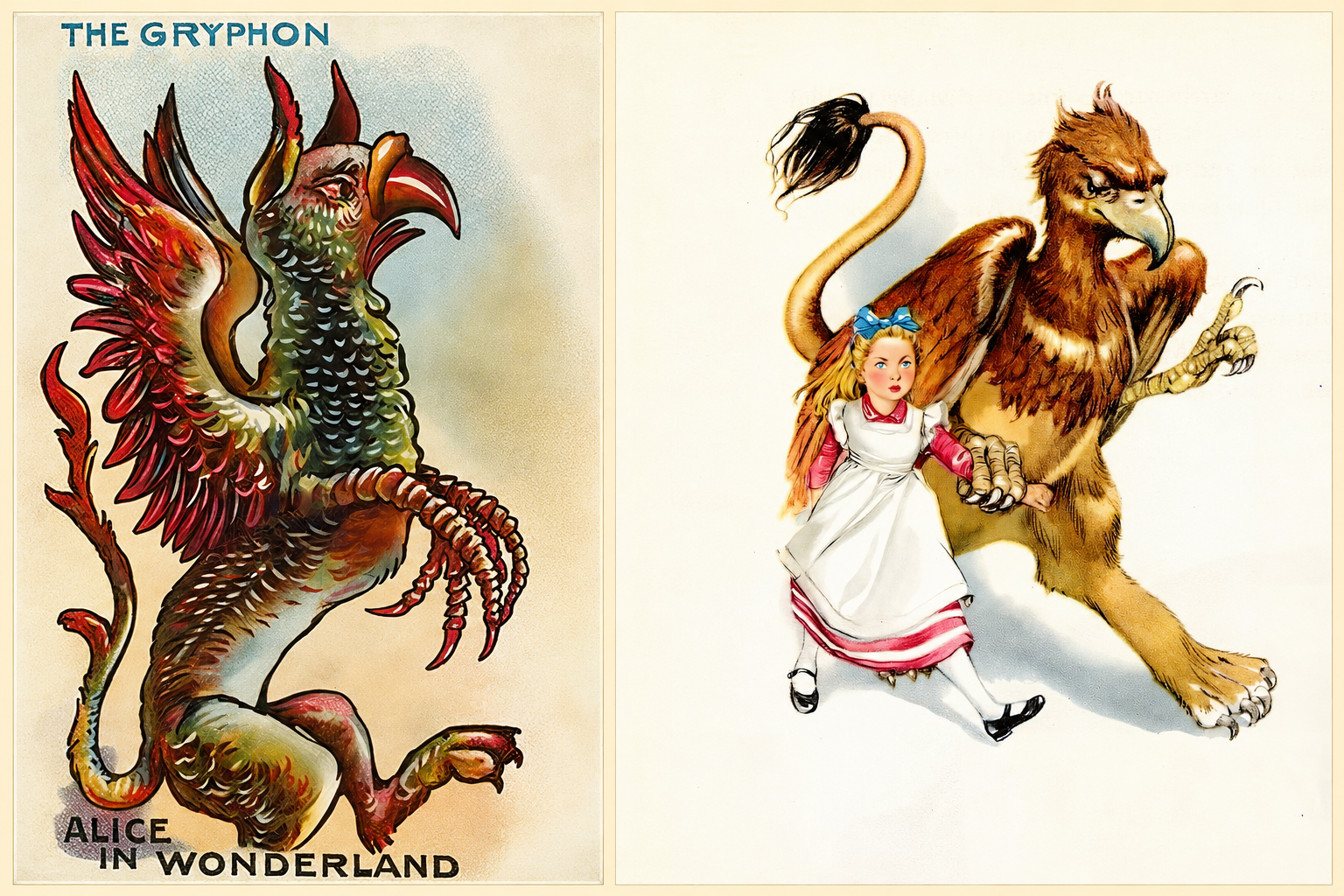
With my Beastie Owl, you also get the face of A Griffin - that can be a version of the Lewis Carroll character from Alice's Adventures In Wonderland.
The Gryphongriffin And Alice
Beyond The Ordinary
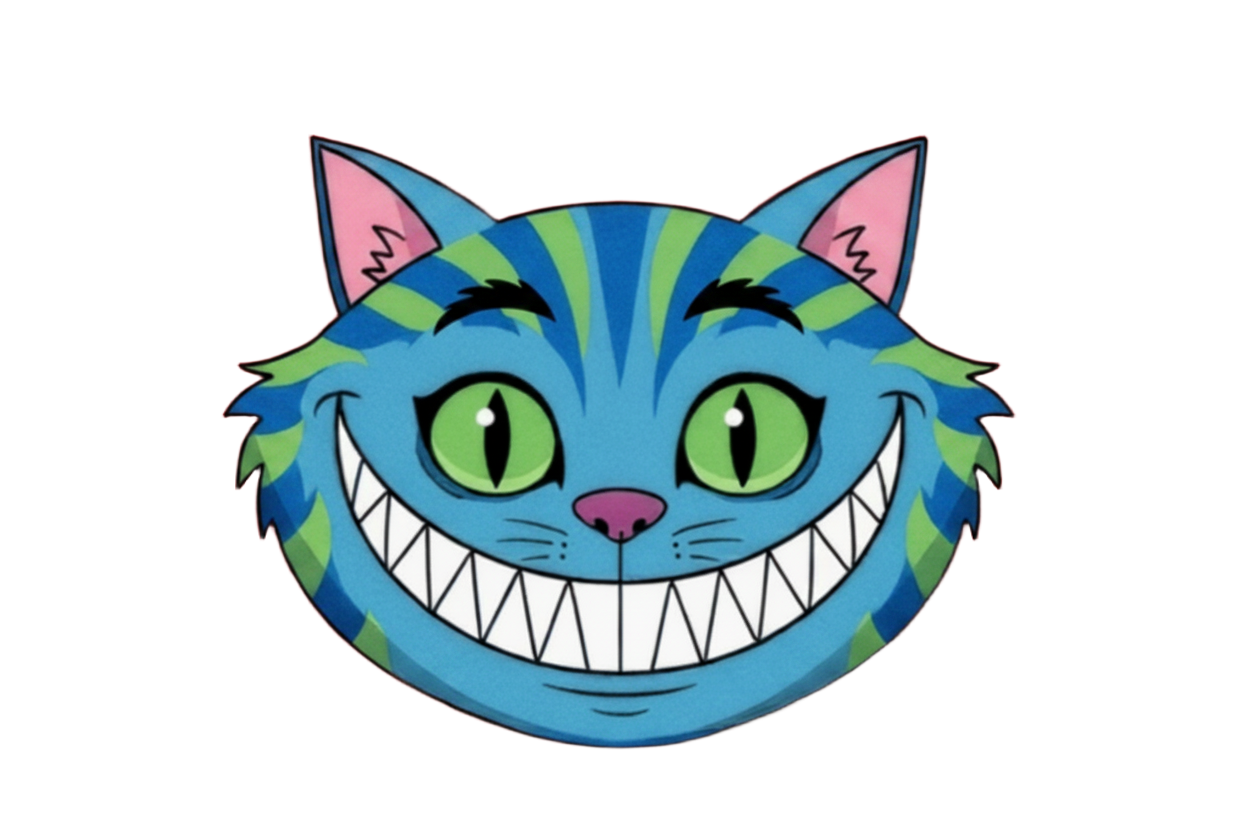
The Cheshire Cat
Beyond The Ordinary
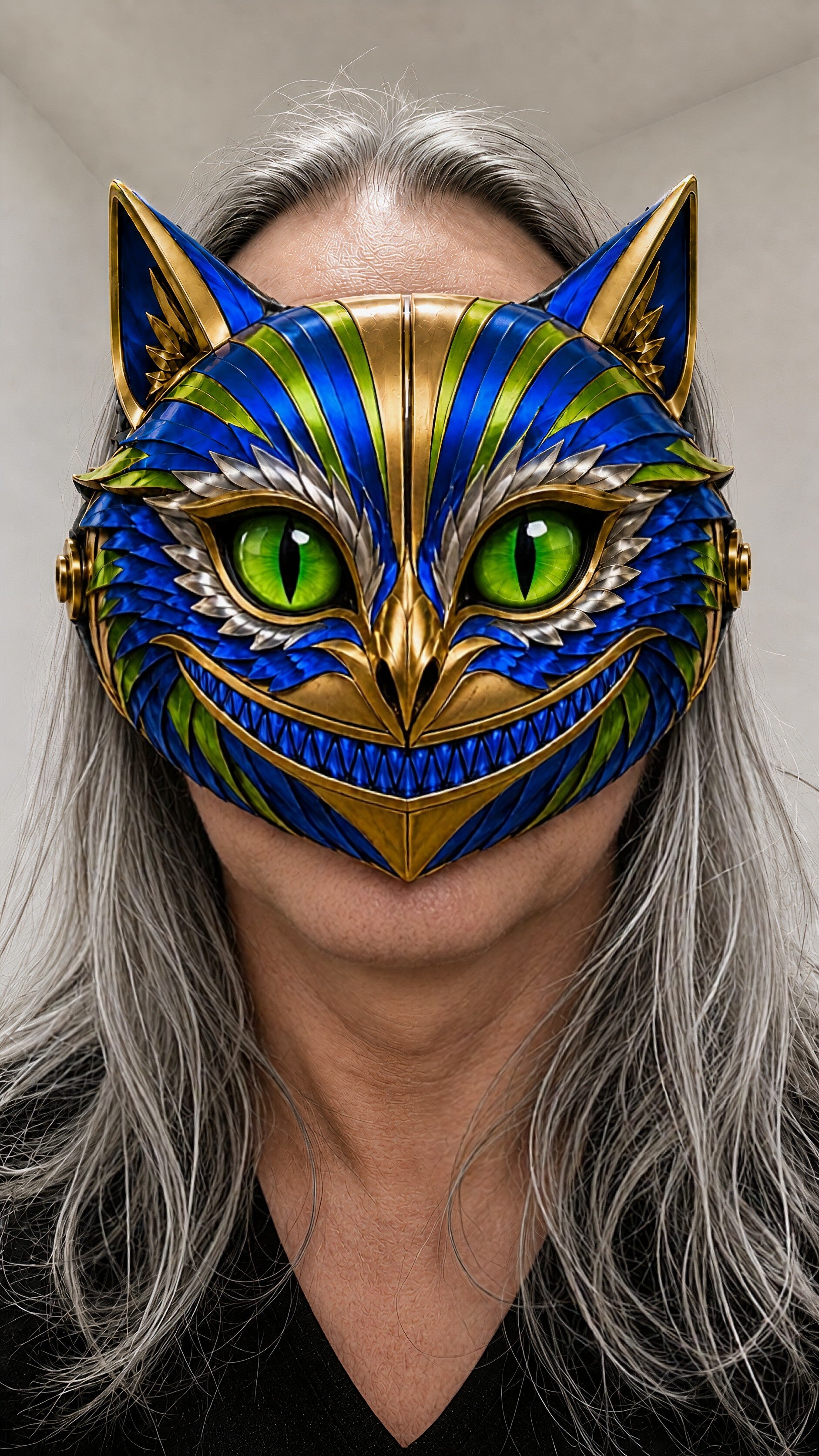
OWL + GRIFFIN + CHESHIRE CAT plus an influence from the creators of Tutankhamun's Funeral Mask. (There might be some Bearded Dragon in the second image too).
Disclaimer
Often with masks, I dont really want it to look like me wearing it - just someone. This is because I often want the mask to have certain characteristics concerning proportions and the general placement of elements. Cats, for instance, dont have human heads and faces. Best to think of it as me wearing an alien-human mask with appropriate GEP transformation of my head. That said, sometines I do adjust a mask to fit my human face.
Playing with proportion can be a useful artistic technique and not an error.
Beyond The Ordinary
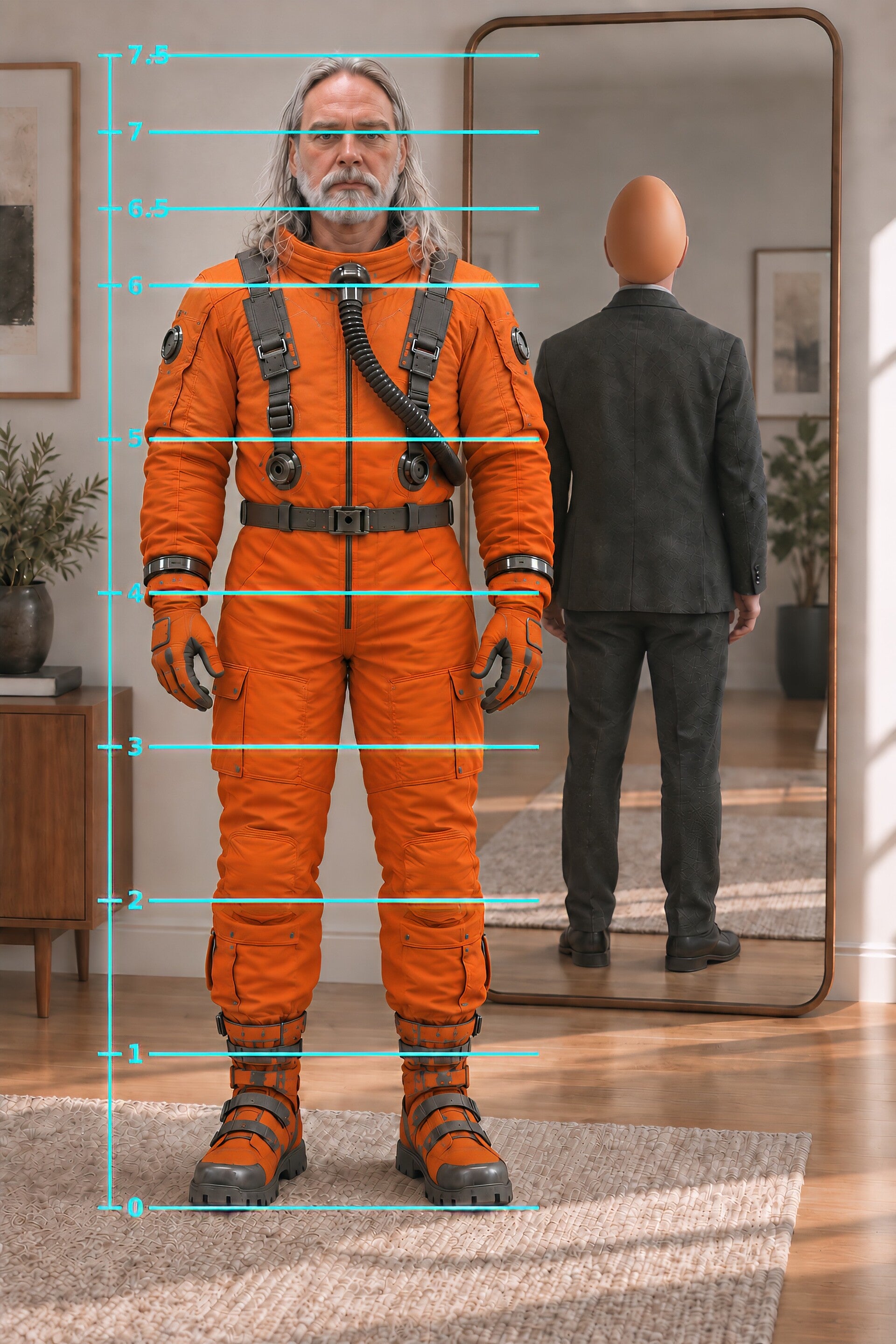
I use a standard human model of 7.5 heads in height.
Beyond The Ordinary
Have you ever played American McGee's Alice? And/Or it's sequel Alice: Madness Returns?
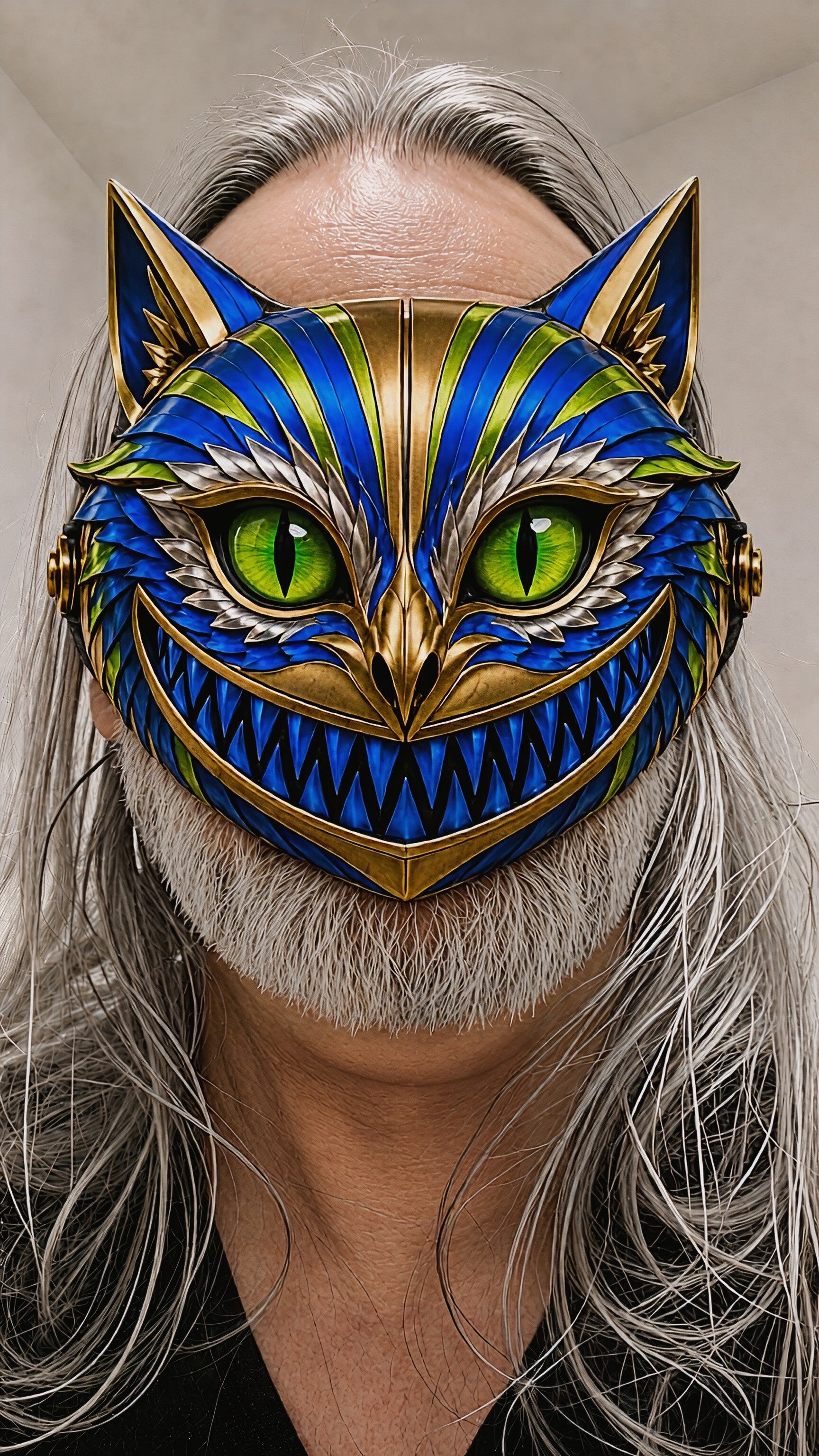
Mask with Bearded Dragon.
Beyond The Ordinary
Like everything else, the eyes are programmable. So far, I've put 100, 000 lines of code into these masks - the list of different masks is growing all of the time. 🙂
Beyond The Ordinary
The Cat/Griffin/Owl/Bearded Dragon Pharoah.
Beyond The Ordinary
Previous plus Insect. Being Revealed As An Alien Wearing A Mask!
Beyond The Ordinary
An influence from Rotwang's Robot from Metropolis. Plus ReinhardtMax from the end of Disney's The Black Hole. With this mask, there can be a sense of what some might consider to be, a man trapped behind a mask within a dark fate. An allied interpretation is a diver with blue liquid, associated with The Flood, half-filling his diving mask.
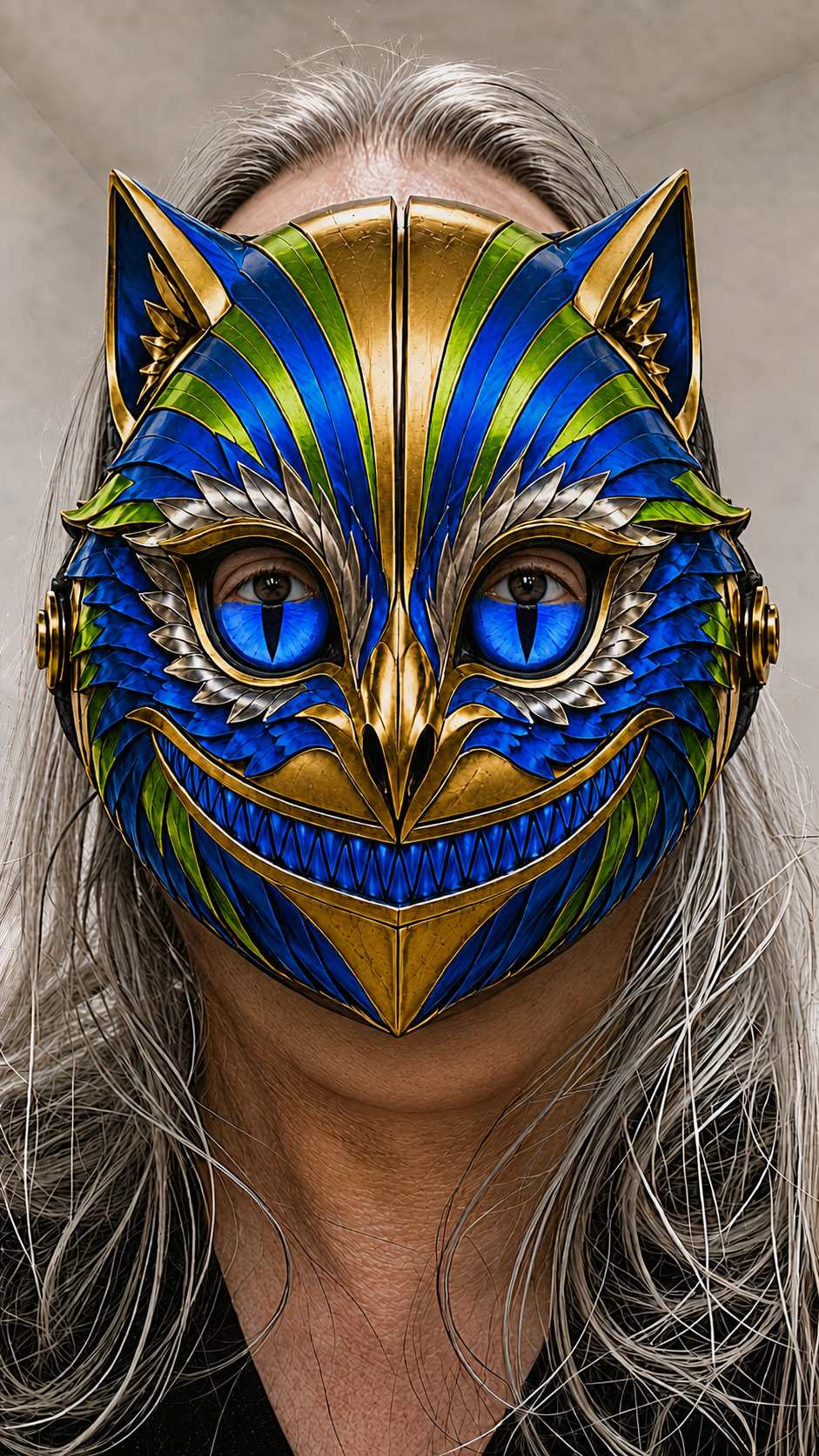
In the surreal and abstract ending of Disney's 1979 sci-fi film The Black Hole, Dr. Hans Reinhardt's physical body ends up trapped or encased inside his red, menacing robot, Maximilian.
Beyond The Ordinary
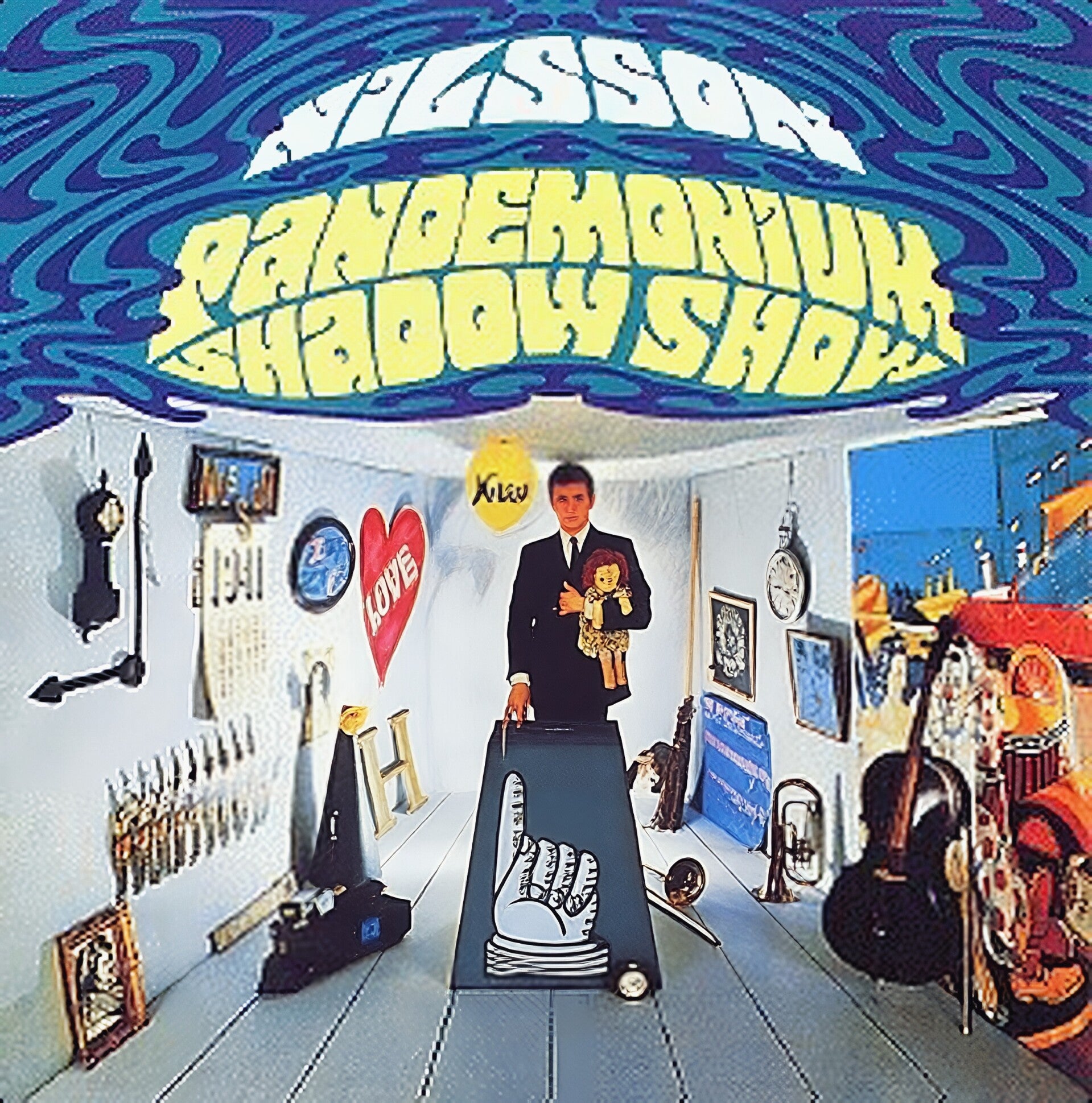
The cover for an inspirational album by Harry Nilsson.
Beyond The Ordinary
The cover for the 57 Shield album TOOLs - somewhat in the style of Nilsson above.
If you've ever used an ai for generating images, you'll probably be familiar with a line similar to the one: 'It wants us to have fun playing with optical illusions'.
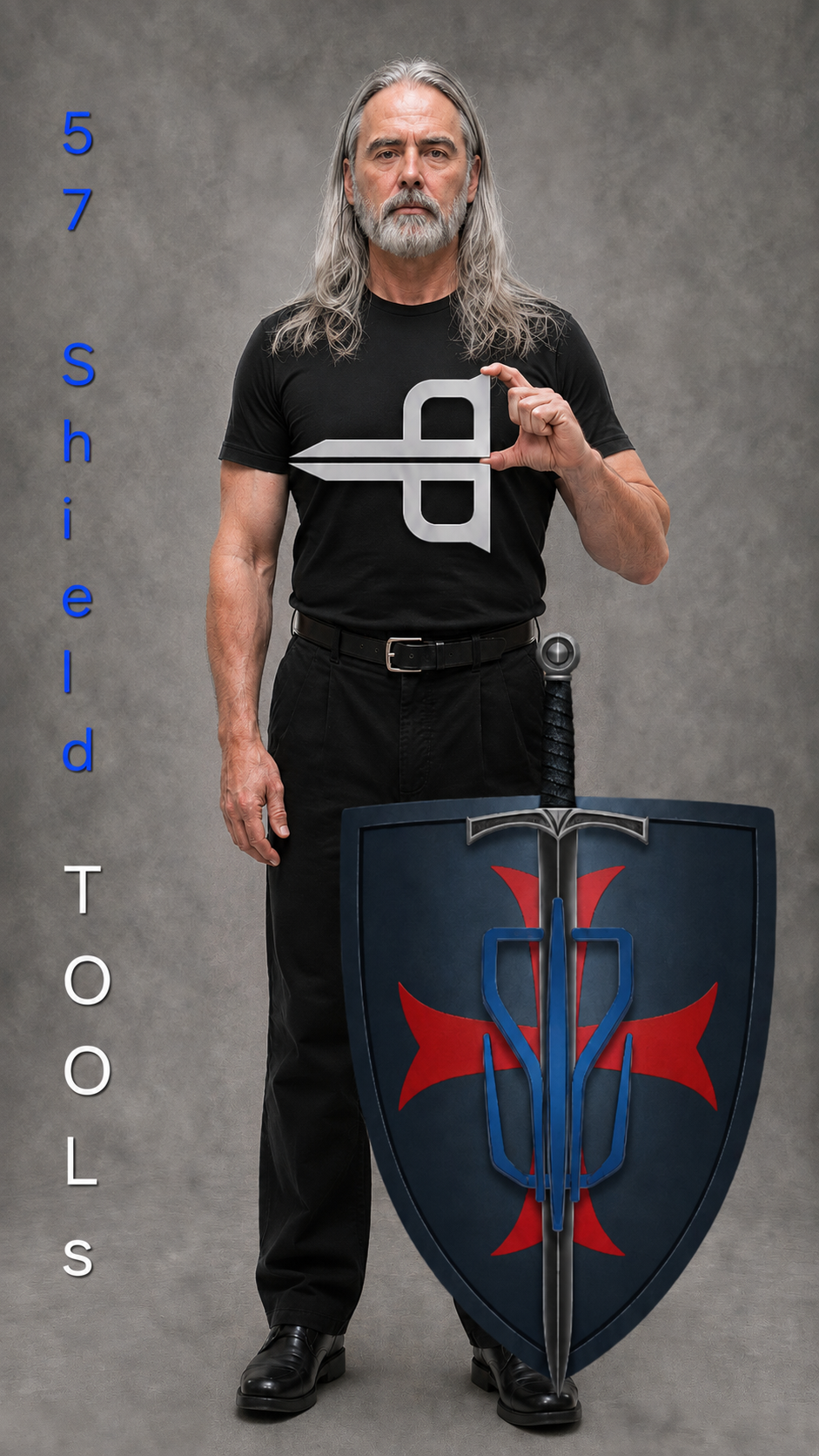
The optical illusion here involves The Tool.
My shoes contain steel toecaps.
Beyond The Ordinary
The first certificate is genuine.
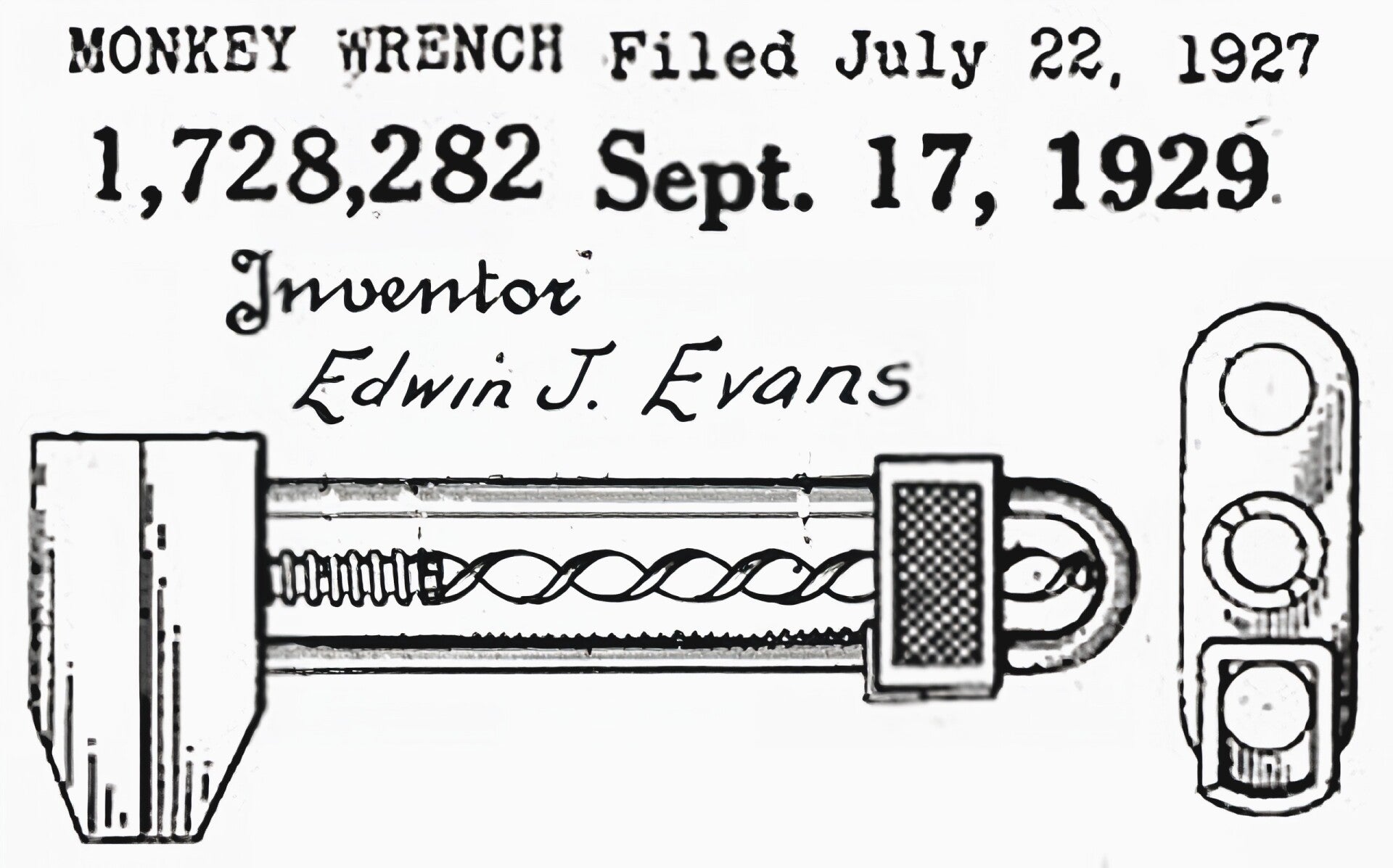
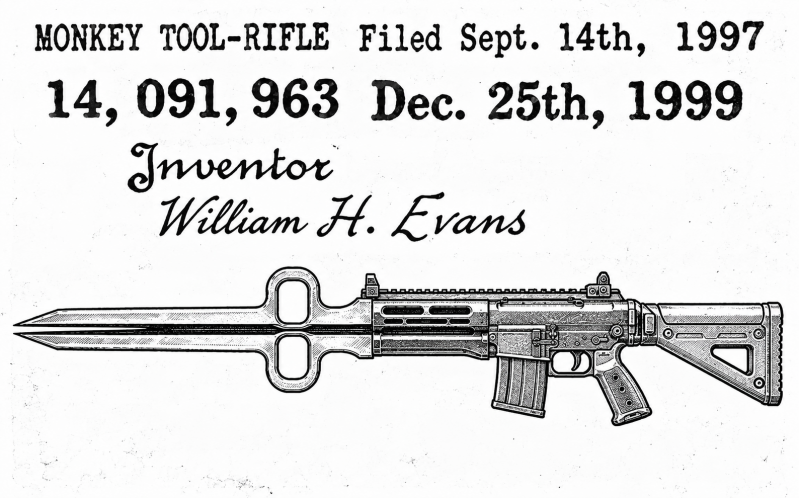
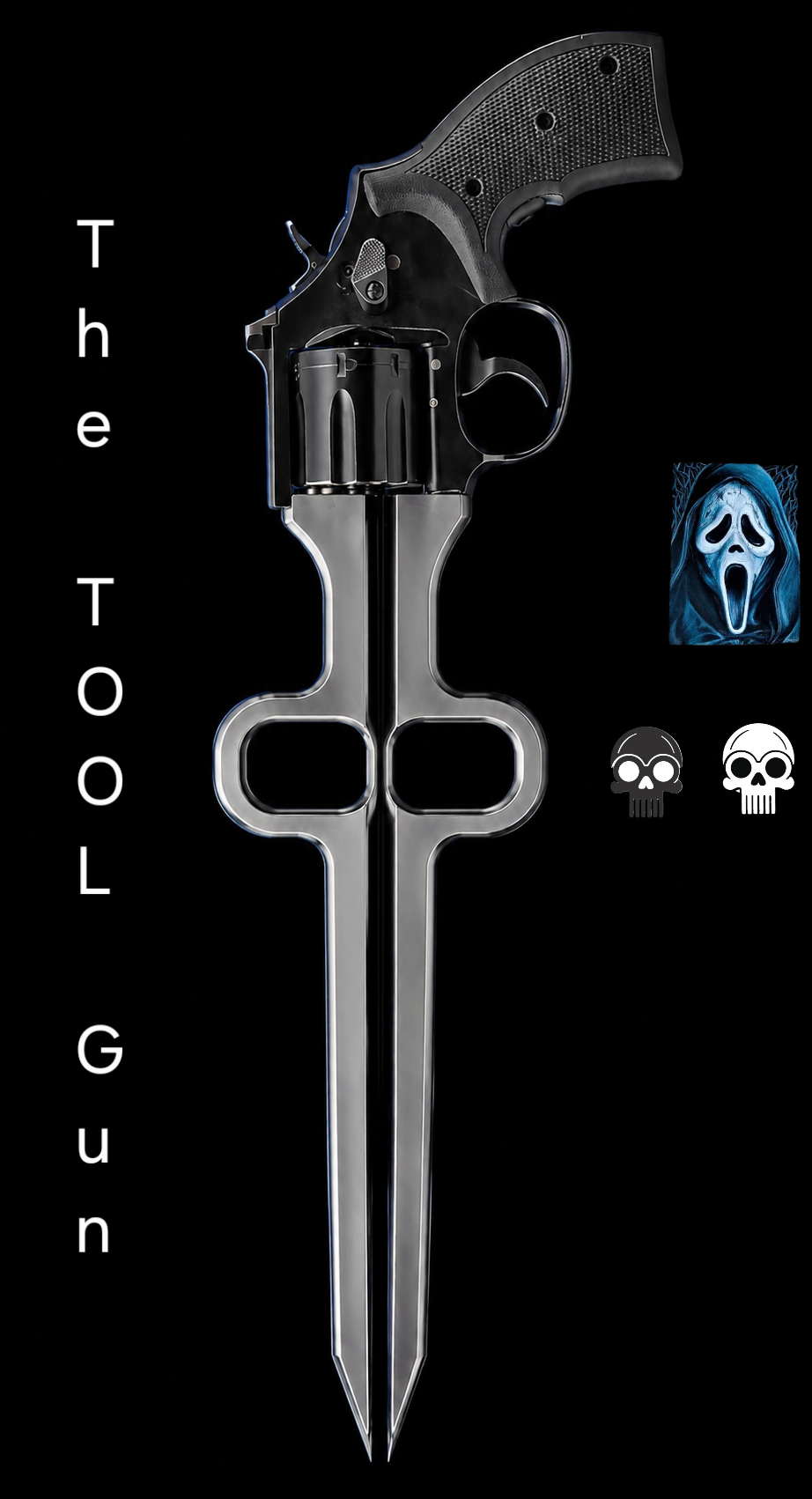
There is a similar patent application to the one above for A Monkey Tool-Rifle (Gun) that is resubmitted at regular intervals in human-alien history. There is also a related patent for a (Monkey) Tool-Handgun (Gun).
Beyond The Ordinary
T
T
Beyond The Ordinary
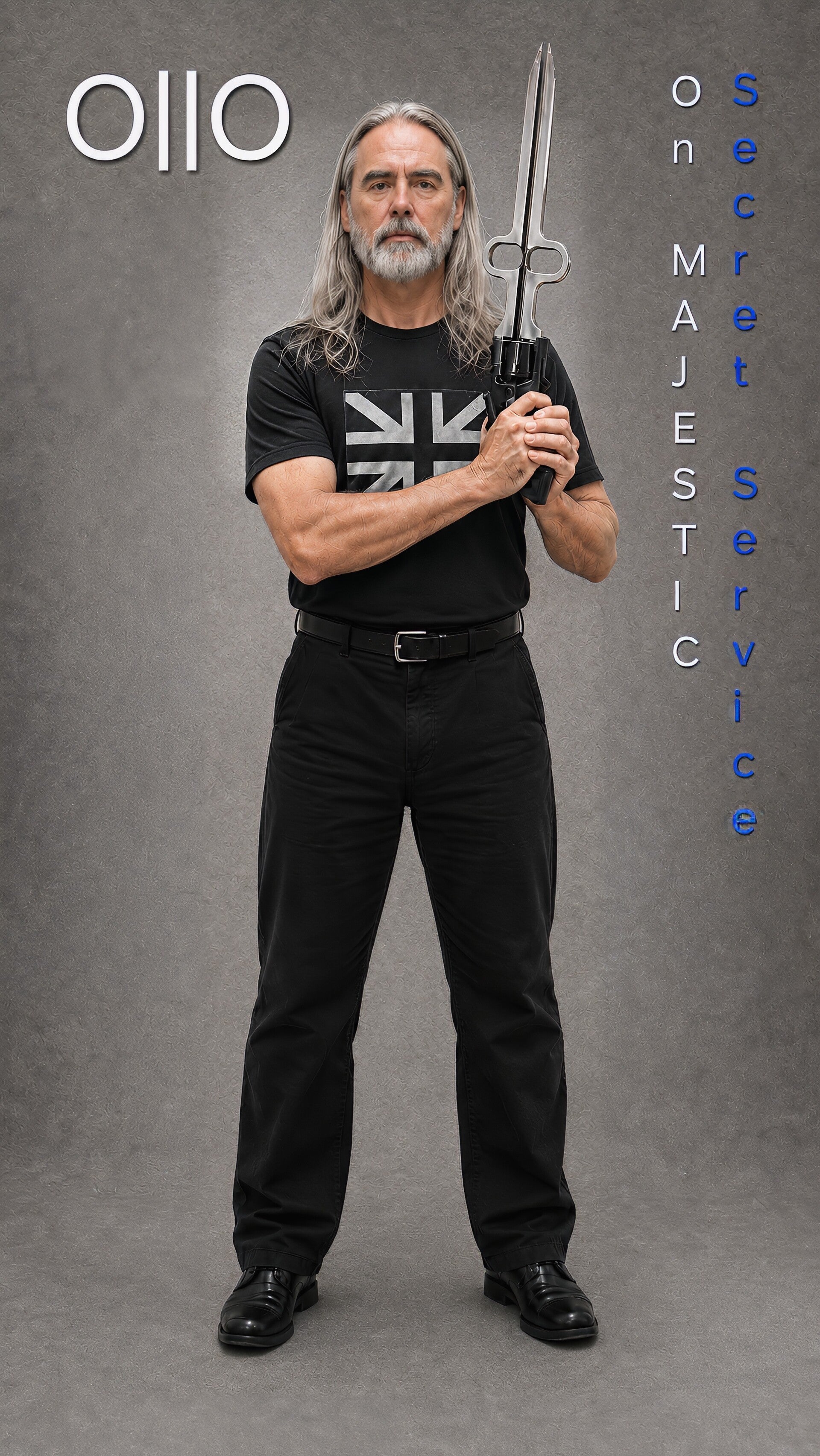
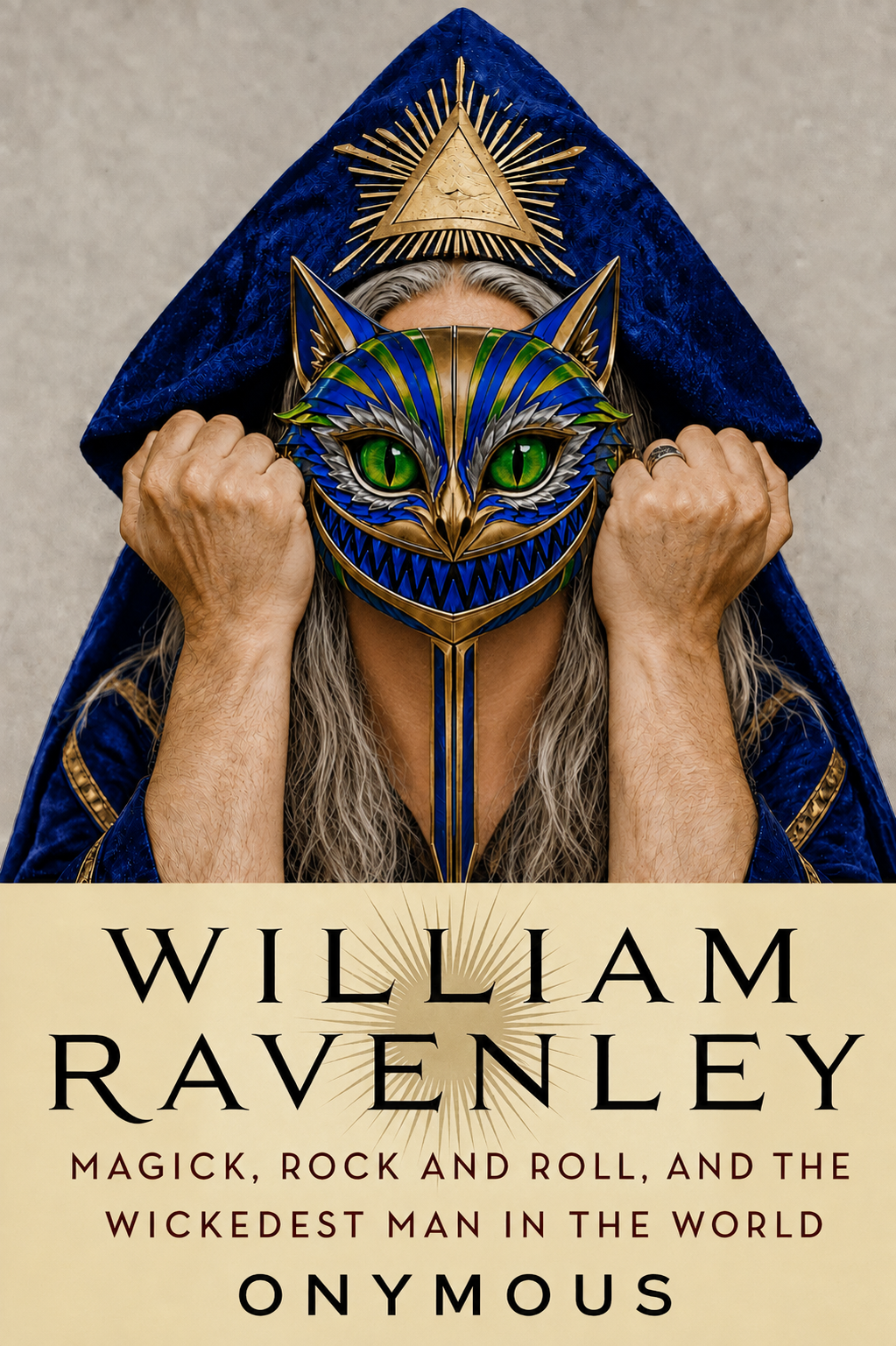
Below is the cover for the album Secret Service by the band Majestic (also known as William Ravenley's Majestic).
Beyond The Ordinary
With GE programmable glasses, the metal can be controlled to fit against the skin to avoid discomfort or, alternatively, be made the exact correct size (here length).
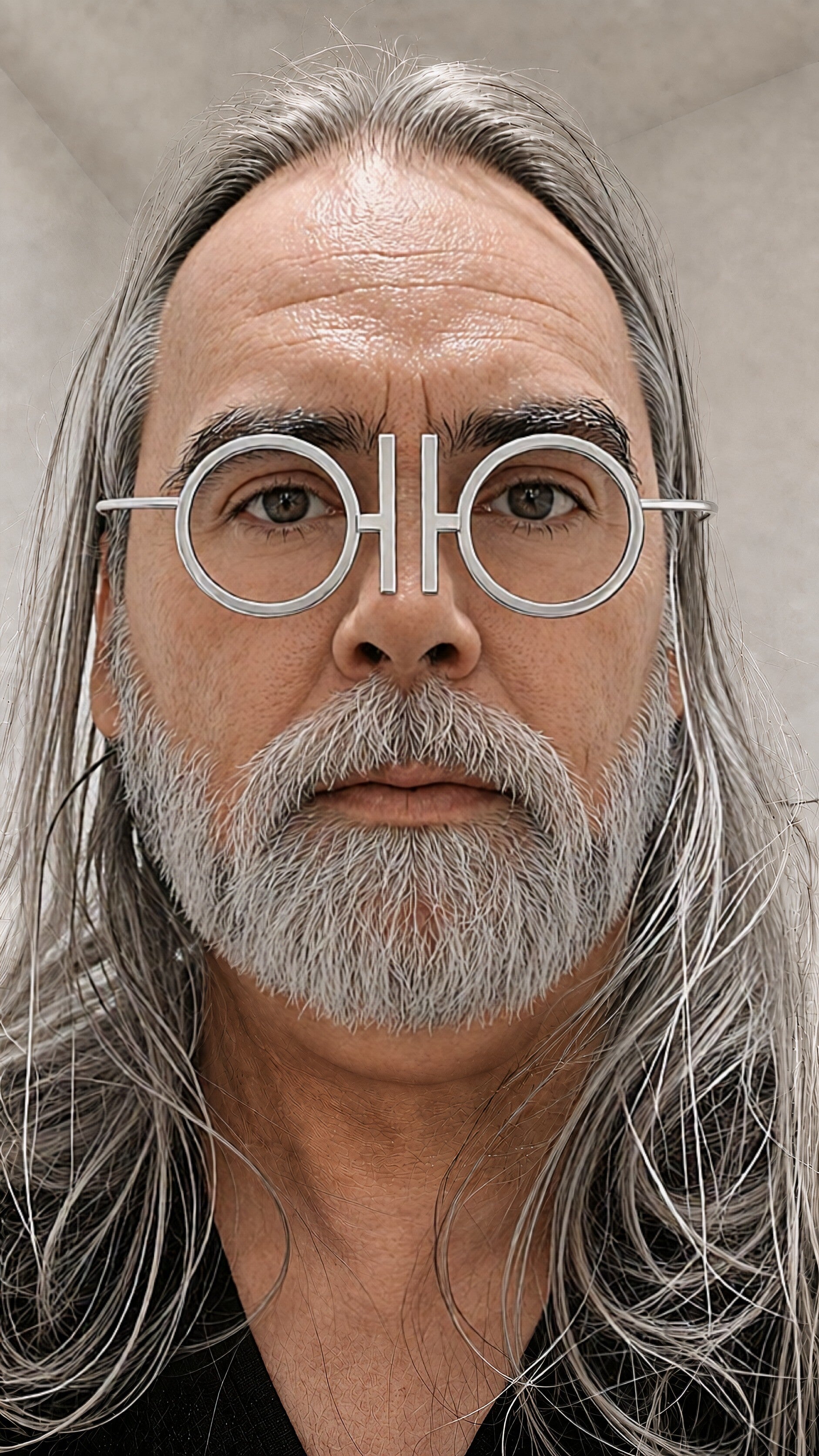
Double O Double 1. O||O is, like other symbols, also known as The Owl Face or just Owl Face. It can also be called The Owl.
Beyond The Ordinary
A photograph of a display onboard The Event Horizon.
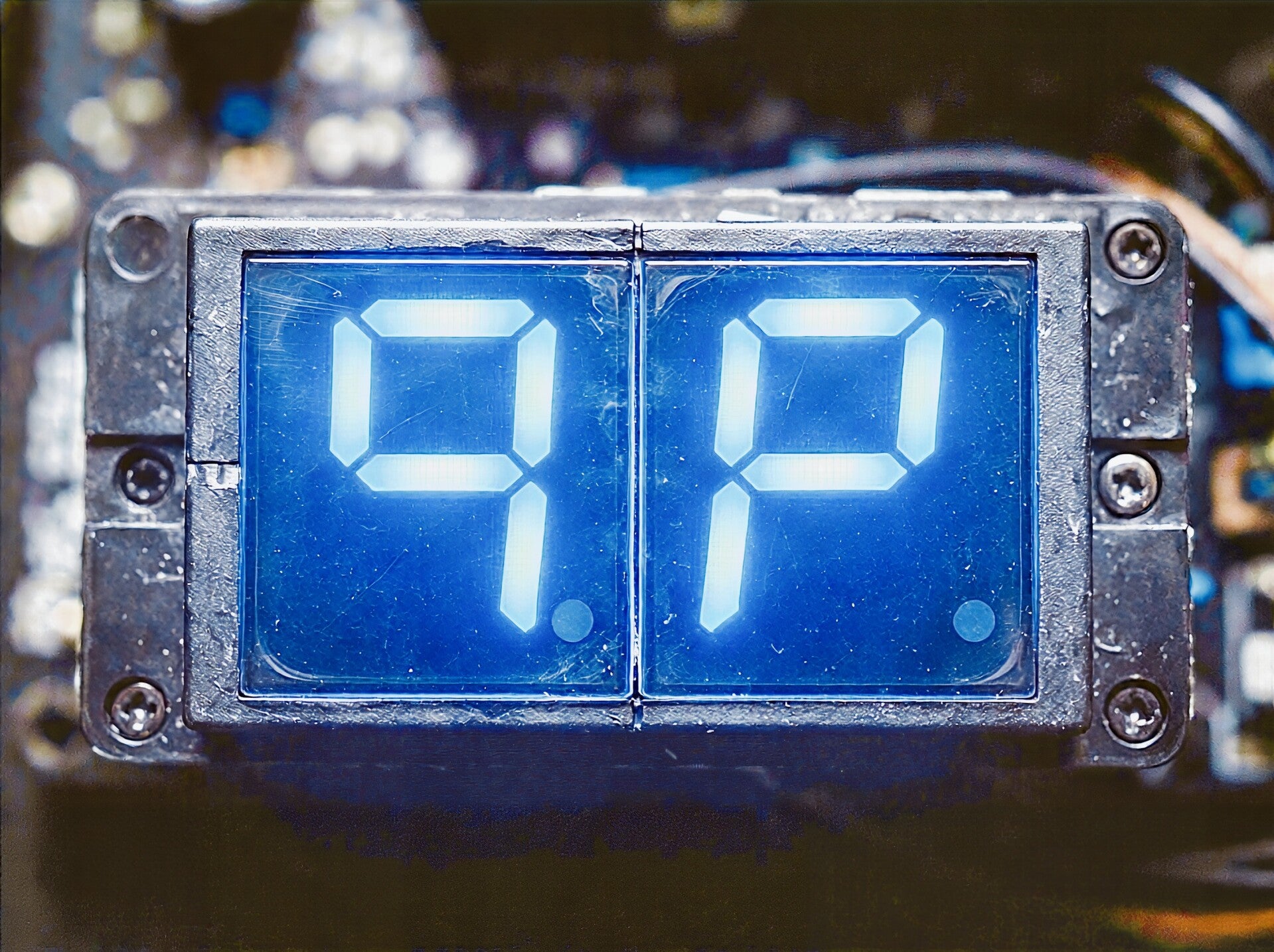
Double O Double 1
Beyond The Ordinary
This is a weapon I created for my own game of Doom. You can, of course, use it for other games. The blade is entirely my own creation while the gun part is modelled on a Smith And Wesson Nightguard.
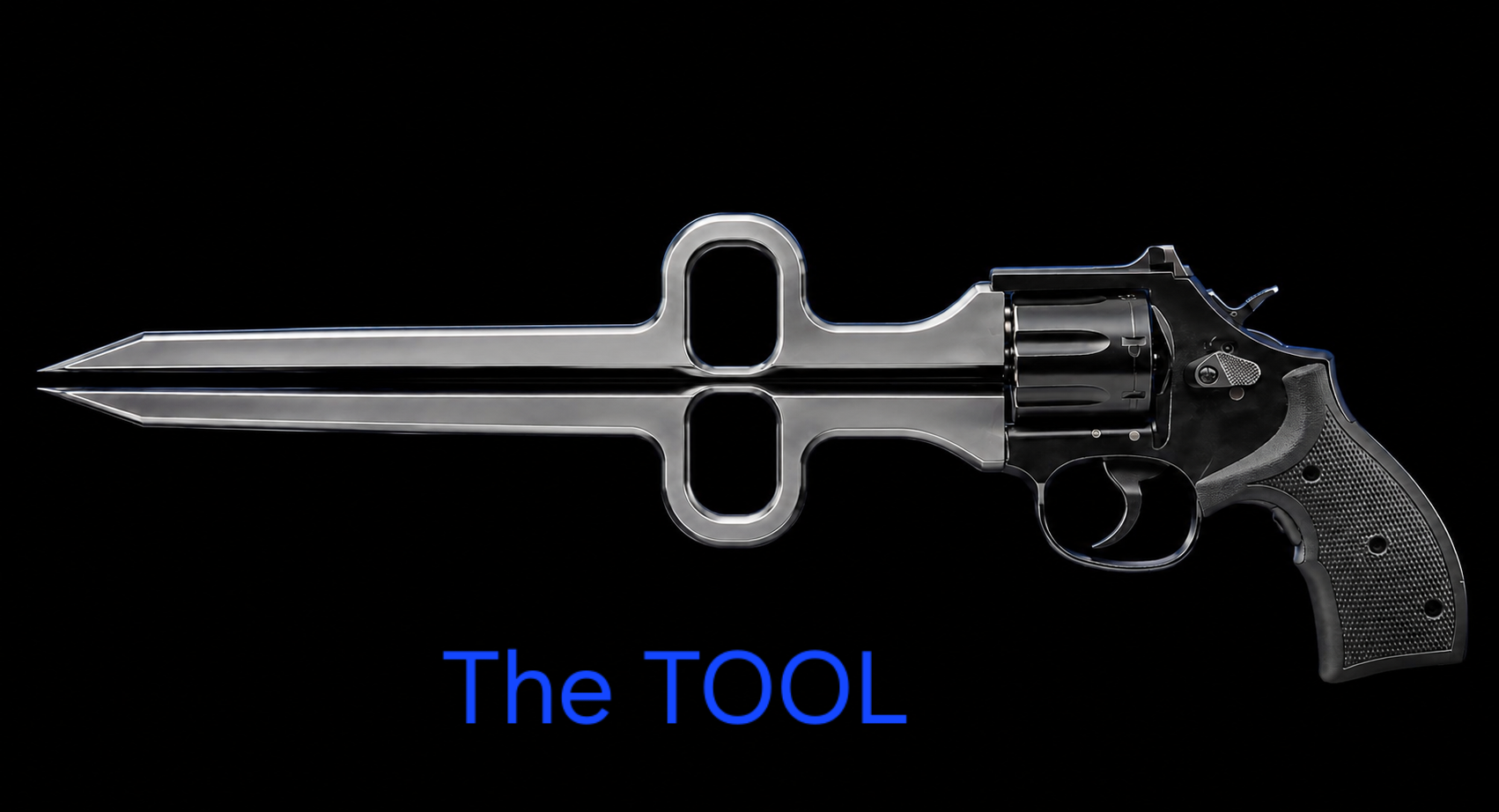
The weapon uses Ghost Engine Programming (GEP) and so behaves as something alien-human. The blade can be used like a bayonet or combat knife for stabbing and is removeable. If you like, the trigger can be used to operate the blade as a long range projectile. When operated this way, the blade can either detach, requiring retrival, or can project on an indefinitely long and rigid rapid extension using GEP. When operated with an extension, a second press of the trigger will cause the blade to rapidly retract. Extension and retraction can be almost instantaneous.
Beyond The Ordinary
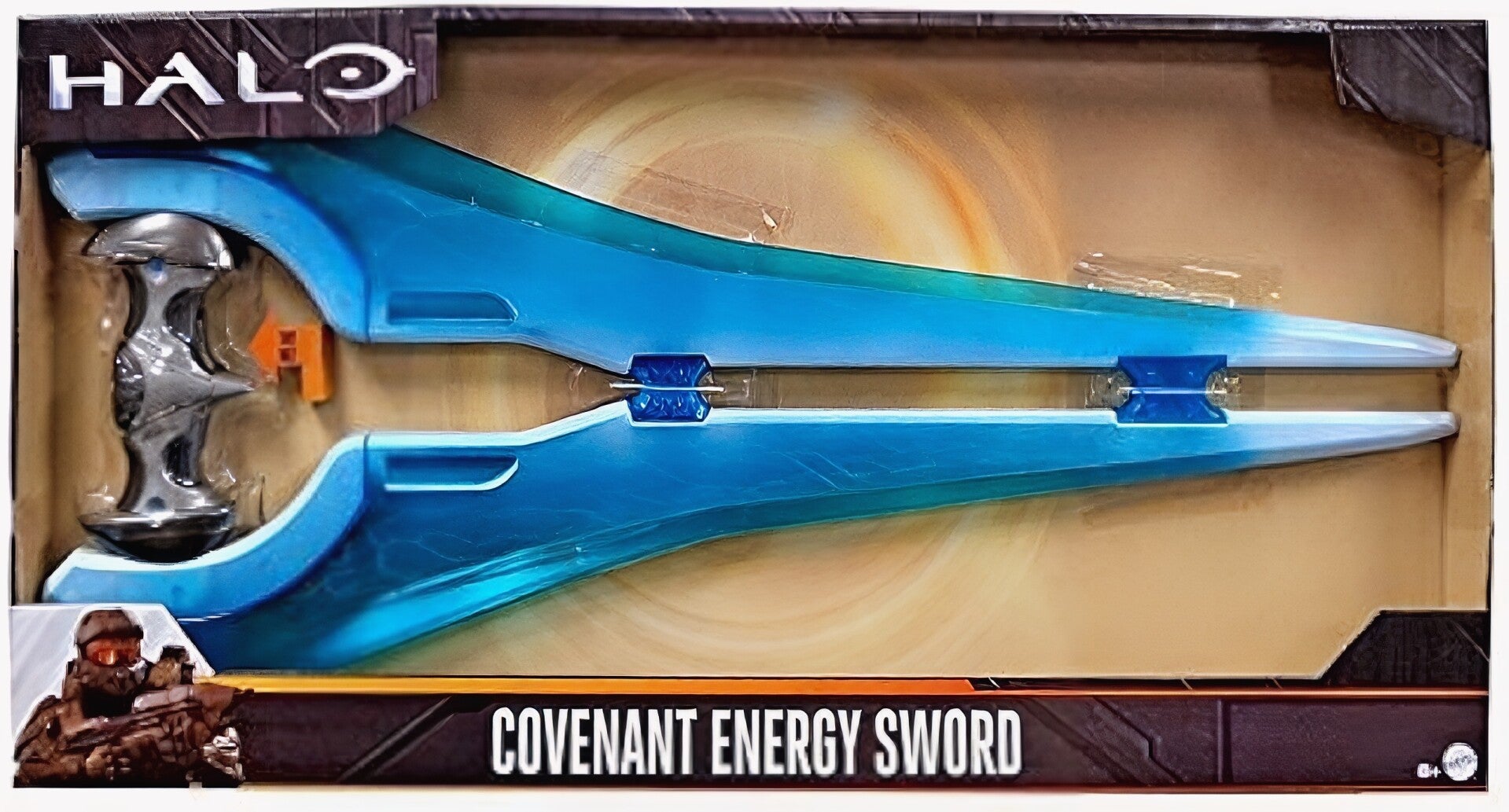
Compare my blade to this Covenant Sword from Halo. Humans had such weapons first and better.
T
Beyond The Ordinary
T
T
Beyond The Ordinary
T
T
Beyond the ordinary
T
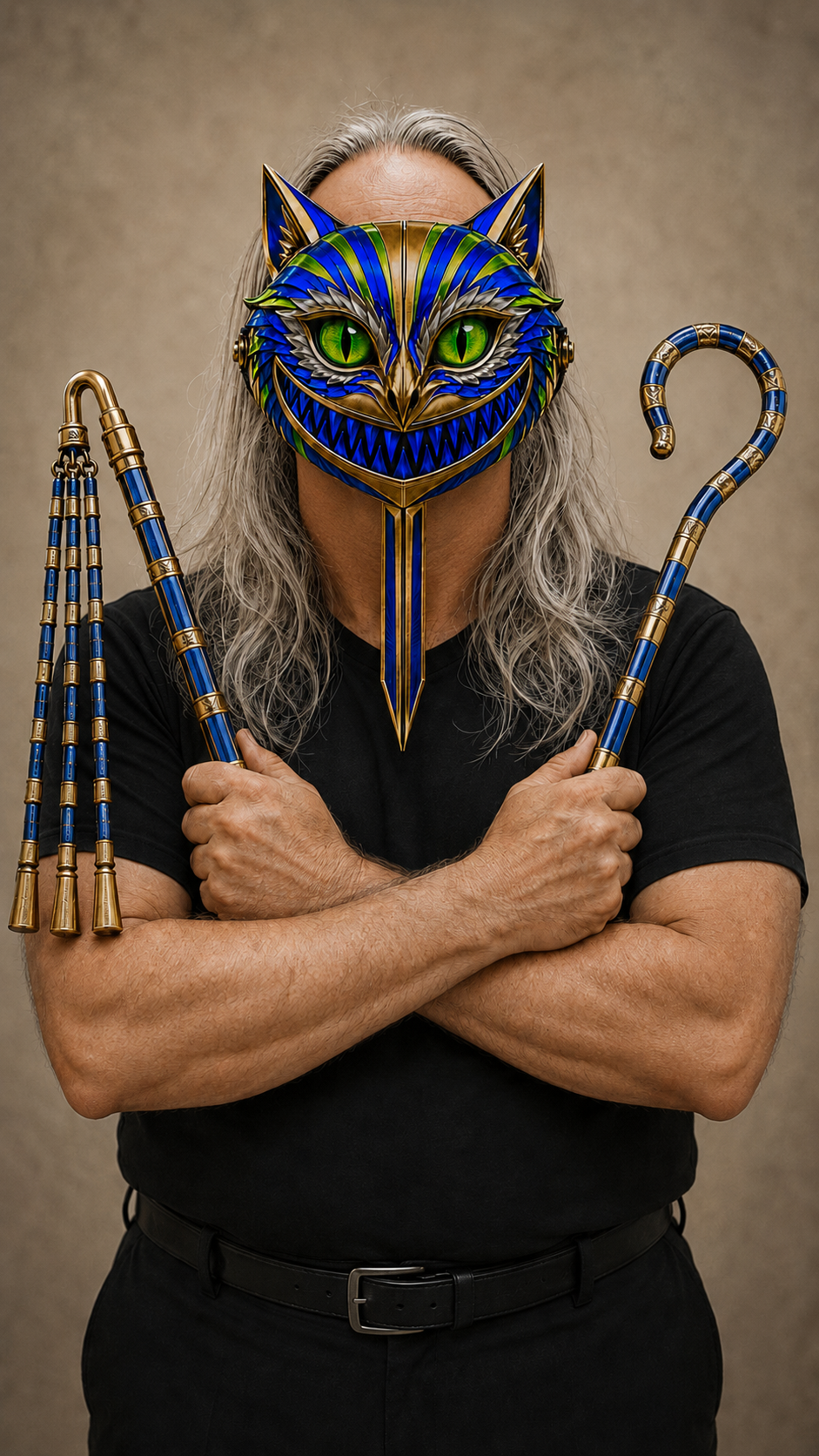
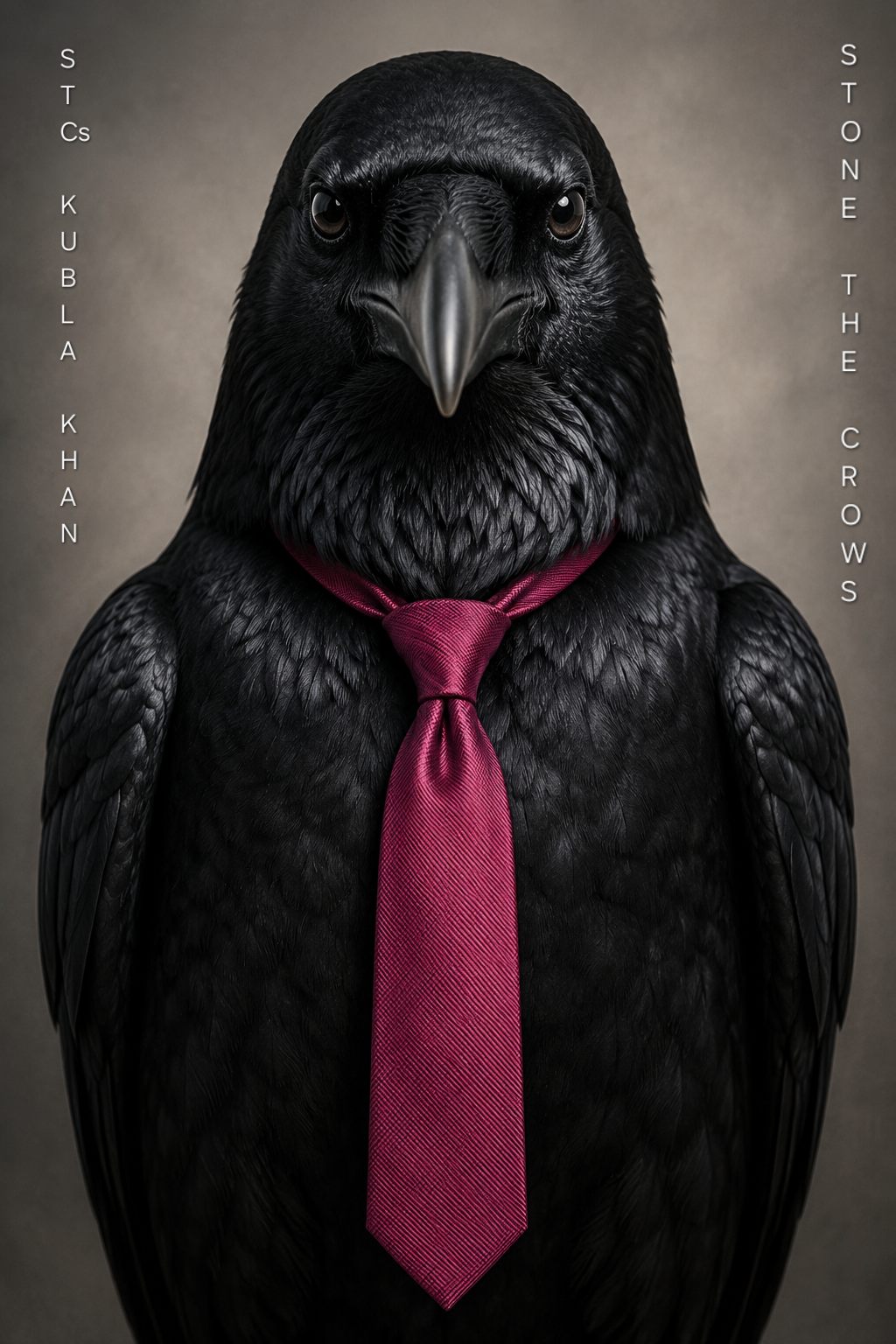
A Raspberry Raven
Another archtypal character in the book MaCrew: The Adventures Of A Group Of Friends In A Post-Apocalyptic World, these birds are so-called because of their habit of blowing raspberries whenever they are shocked or surprised. Another reason is that every one of these birds has a raspberry coloured stripe or tie down it's chest. They are allies for every blue player in Resident Evil and despise their arch enemies The Infected Crows.