Beyond The Ordinary

aka Mr Janus 👽
Beyond The Ordinary
In 1609, publisher Thomas Thorpe printed William Shakespeare’s Sonnets with a dedication to a mysterious Mr. W.H.. He is called The Only Begetter of the poems. This cryptic dedication has sparked centuries of debate among literary detectives trying to decode his true identity.
Who is Mr. W.H.?
Many scholars believe Mr. W.H. is the Fair Youth—the handsome, aristocratic young man to whom Shakespeare addresses his first 126 sonnets. Several real-life figures are heavily debated.
William Herbert, 3rd Earl of Pembroke:
A wealthy patron of the arts whose exact initials match the dedication.
Henry Wriothesley, 3rd Earl of Southampton:
A close friend and patron to Shakespeare. His initials are simply flipped.
William Hatcliffe:
A student and Lord of Misrule who fits the era of the early poems.
William Hall:
A printer who may have simply helped Thorpe find the manuscripts.
Other Theories.
Some historians argue W.H. is a misprint for 'W.S.' (William Shakespeare himself). Others suggest the letters are just initials for a recently deceased associate of the publisher.
The Alien-Supernatural Prismatic Spectrum Production And Projection System Of Creation ■
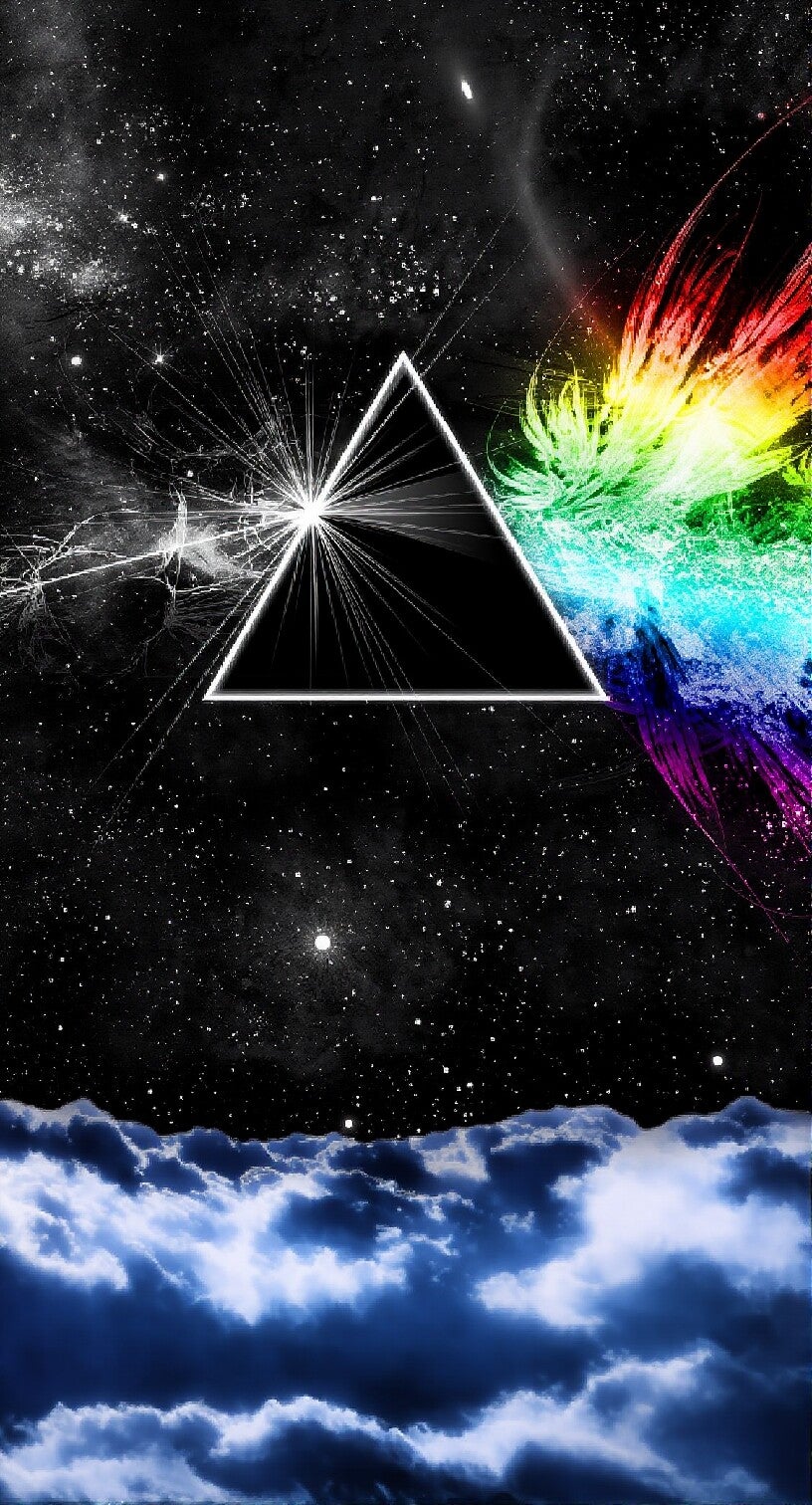
An alien-supernatural system dualistically processing a single source of light as white and, simultaneously, many colours.
Some APE Sh*t
All humans are derived from a single archetypal, androgynous, ancestor character known as APE (A⊕E or AUE). For a more complete, complex, character APE, we work in a description of an hermaphrodite. A may be taken to be the biblical character Adam while E is taken to be Eve.
The P of APE stands for Plus and is a particular, binary, union operator of Male & Female and similar pairs. Hence, the alternatives, A⊕E and AUE.
With APE as the white common ancestor, every human ever born has been or is a colour (or shade) instance of APE. Traditionally, heterosexual people are orange while homosexual people are lemon (yellow).
As well as being heterosexual, I am also a Protestant Orangeman.
The Orange Order (Orangemen).
Historically and socially, an Orangeman is a member of The Loyal Orange Institution, a Protestant fraternal organisation founded in Northern Ireland in 1795.
Origin:
Named in tribute to King William of Orange, the Dutch-born Protestant king who defeated Catholic King James II in 1690.
Tradition:
They are known for hosting large marching parades, particularly on the 12th of July across Northern Ireland and parts of Scotland and Canada.
Beyond The Ordinary
I found it diffucult to source a quality recording of TFOS. This version does, however, have the virtue of lyrics.
In this Genesis version of a story involving Adam and Eve, the two lovers are Hermaphroditus and Salmacis, who come together to create APE.
I, and every other human in this world, am descended from APEs. The APEs here are, of course, every decent person born before any given person.
Beyond The Ordinary
While androgynous describes a blend of masculine and feminine traits, behaviors, or appearances, hermaphrodite refers to a biological organism that possesses both male and female reproductive organs.The primary difference lies in the context of the terms: one relates to gender expression and identity, while the other refers strictly to biological sex.
Androgynous.
Definition:
Possessing a mix of both masculine and feminine characteristics. It can refer to physical appearance, behavior, or a personal gender identity.
Application to Humans:
Commonly used in fashion to describe a style that isn't distinctly male or female. In a social or psychological sense, it describes an individual who exhibits qualities of both traditional genders.
Context:
It relates to how a person expresses themselves or identifies, rather than their internal reproductive organs.
Hermaphrodite.
Definition:
An organism (such as an animal or plant) that has fully functioning male and female reproductive organs.
Application to Humans:
The term is medically inaccurate and outdated when applied to humans; the correct, modern clinical term is intersex. Some people who were historically labeled this way may reclaim the word, but it is largely stigmatizing.
Context:
It refers strictly to biological sex and reproductive anatomy. It is primarily used in botany and zoology (e.g., in species like earthworms and certain fish).
Beyond The Ordinary
t
Beyond The Ordinary
Hermaphroditus is a deity in ancient Greek mythology and the mythological origin of the word 'hermaphrodite'. They are the child of Hermes and Aphrodite, representing the merging of male and female traits. Today, intersex individuals represent about 1.4% to 1.7% of the human population.
The Myth And Origin.
Hermaphroditus is famously detailed in Ovid’s Metamorphoses as an exceptionally beautiful youth. While visiting the city of Caria (modern-day Bodrum, Turkey), he caught the attention of the water nymph Salmacis. Overcome with lust, Salmacis aggressively pursued him. When Hermaphroditus went for a swim to cool off, she jumped into the water and wrapped her body around him. She prayed to the gods that they would never be parted and her wish was granted; the two bodies merged into a single, immortal being possessing both male and female physical traits.
Modern Context And Terminology.
In classical art, Hermaphroditus was frequently depicted with female breasts and thighs, combined with male genitalia.
Etymology:
The noun form, hermaphrodite, derives directly from the god's name.
Medical Context:
While the term was historically used in medical and scientific fields, it is considered archaic and offensive to describe intersex people today.
Intersex Rights:
Intersex people exist on a biological spectrum—meaning they are born with reproductive or sexual anatomy that doesn't fit the typical definitions of female or male. Many intersex individuals and advocates prefer to use the term 'intersex' rather than 'hermaphrodite', which remains highly contested and can carry stigmatizing connotations.
The Answer To A Mystery
The Question:
Who is Mr W. H.?
The Answer:
APE. And through APE, as the common ancestor, every decent person who lives and has ever lived. Every member of The Spectrum. Women and girls can, of course, use Ms instead of Mr if they wish.
Change Is The Only Constant