Beyond The Ordinary
What is the connection between the movie Seven In Heaven and the Duke Nukem game franchise? Read On.


Beyond the ordinary
Li

Beyond the ordinary

Q: What is this? A: A Man Carrying A Surfboard. The board is supplied with an optional hands-free shoulder strap and has adjustable geometry that allows it to look anyway you like and permits usage as other things including wings.
The United States Of Awareness
Some years ago, after The Quickening of 14091997, I discovered The United States Of Awareness (USA) while sailing my STEAM ship.
Beyond The Ordinary
The 1st key takeaway from SIH occurs very early on in the story. Although reviews tend to say otherwise, the movie begins with the character Jude at school. After being criticised for not attending class, Jude gets behind a desk and, in response to being asked to answer a question concerning probability theory, he mentions something known as Benford's Law.
The Law in A Nutshell
Benford's Law describes the relative frequency distribution for leading digits of numbers in datasets. Leading digits with smaller values occur more frequently than larger values. This law states that approximately 30% of numbers start with a 1 while less than 5% start with a 9.
Beyond the ordinary
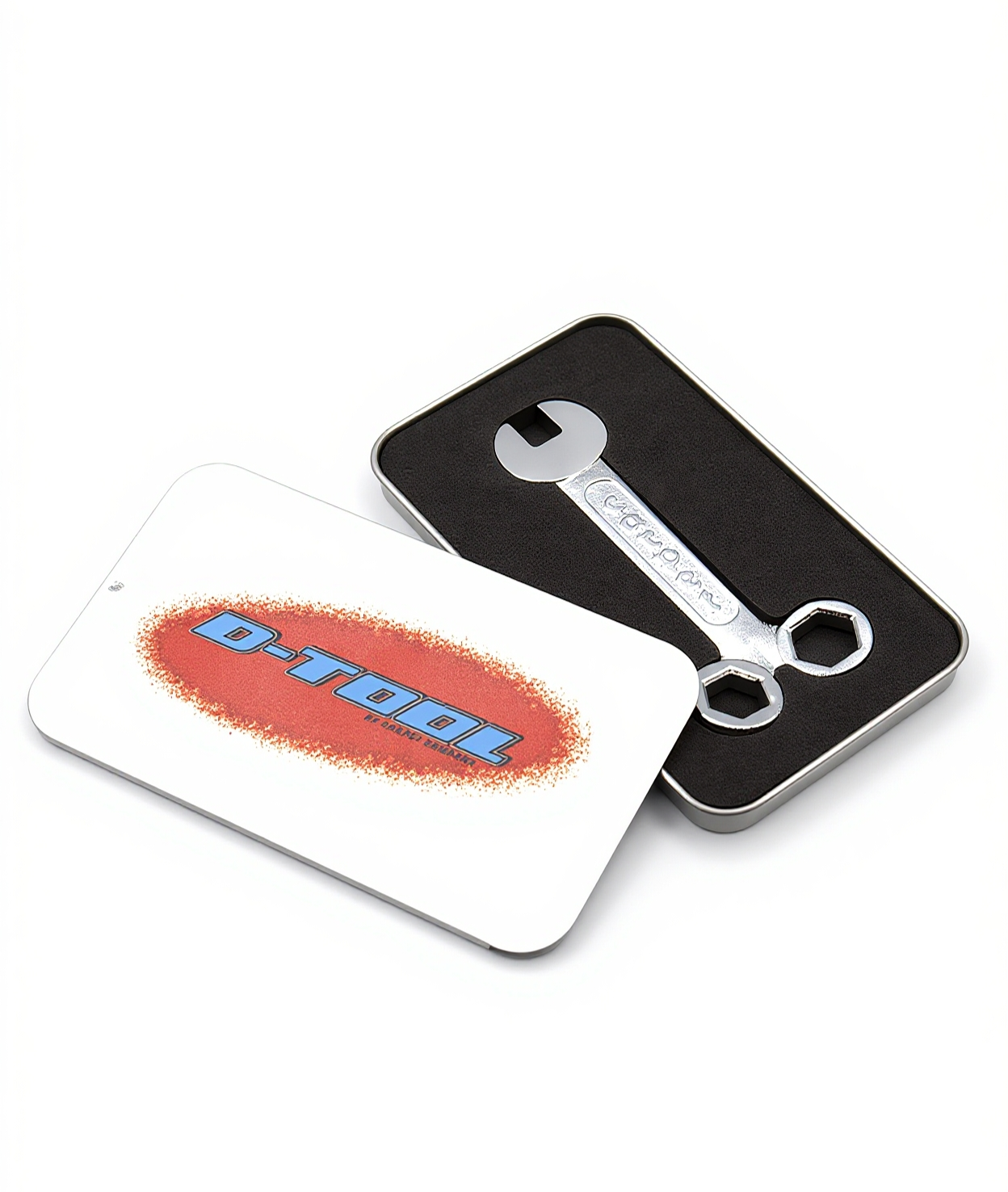
A D-Tool for A D-Tale
The Law in More (D-tale)
Benford’s Law (also called The First-Digit Law) is a mathematical observation that in many real-life datasets, the leading digit is not distributed equally. While you might expect each digit from 1 to 9 to appear about 11% of the time, the digit 1 actually appears as the first digit in about 30% of cases, while 9 appears less than 5% of the time.
Expected Probabilities.
According to the logarithmic formula P(d) = log10(1 + 1/d), the predicted frequency for each starting digit is:
1: 30.1%
2: 17.6%
3: 12.5%
4: 9.7%
5: 7.9%
6: 6.7%
7: 5.8%
8: 5.1%
9: 4.6%
Why It Works.
The law is closely tied to exponential growth and logarithmic scales.
Orders of Magnitude:
For a number to go from a leading digit of 1 to 2 (e.g., 100 to 200), it must grow by 100%. To go from 9 to 1 (e.g., 900 to 1000), it only needs to grow by about 11%.
Scale Invariance:
The law remains true regardless of the units used (e.g., measuring lengths in metres vs. feet or prices in Dollars vs. Euros).
Logarithmic Distribution:
If the logarithms of a dataset are distributed uniformly, the original numbers will follow Benford’s Law.
Where It Applies (and Where It Doesn't).
The law is most accurate for data that spans multiple orders of magnitude (e.g., from 10 to 1,000,000).
Applies To | Does NOT Apply To
Population numbers | Human heights or weights
Stock market prices | Assigned numbers (ZIP codes, phone numbers)
Tax and accounting data | Numbers with a narrow range (IQ scores)
Lengths of rivers and street addresses | Sequential numbers (invoice or check numbers)
Real-World Uses.
Fraud Detection:
Forensic accountants use it to spot "made-up" numbers in tax returns or corporate expenses, as humans rarely distribute fake digits in a logarithmic pattern.
Election Forensics:
It is sometimes used to identify anomalies in election results, though this application is controversial and requires careful context.
Scientific Data:
It has been used to detect potential manipulation in clinical trials and published research data.