Beyond The Ordinary

The Jupiter Number
Some Trivial Results
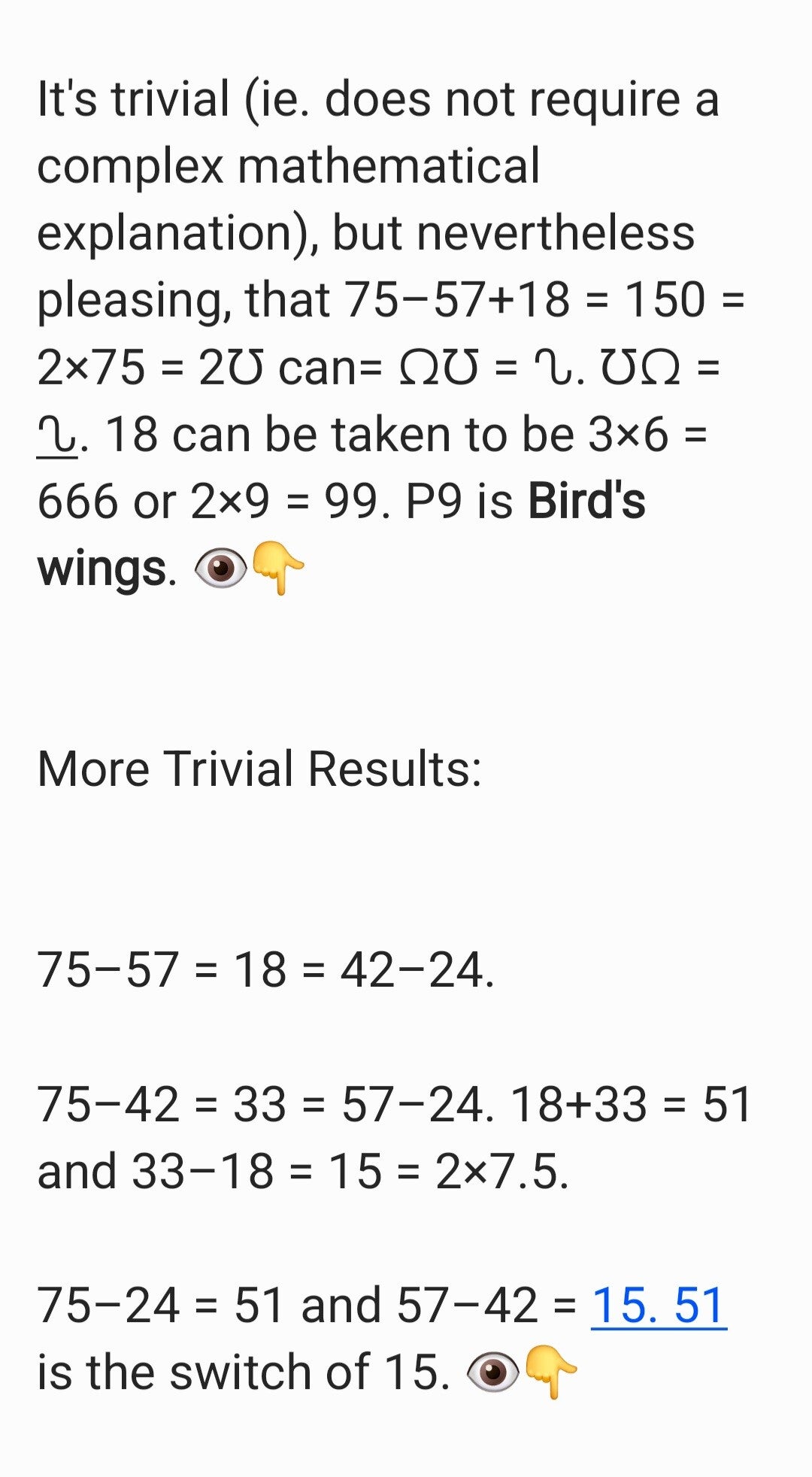
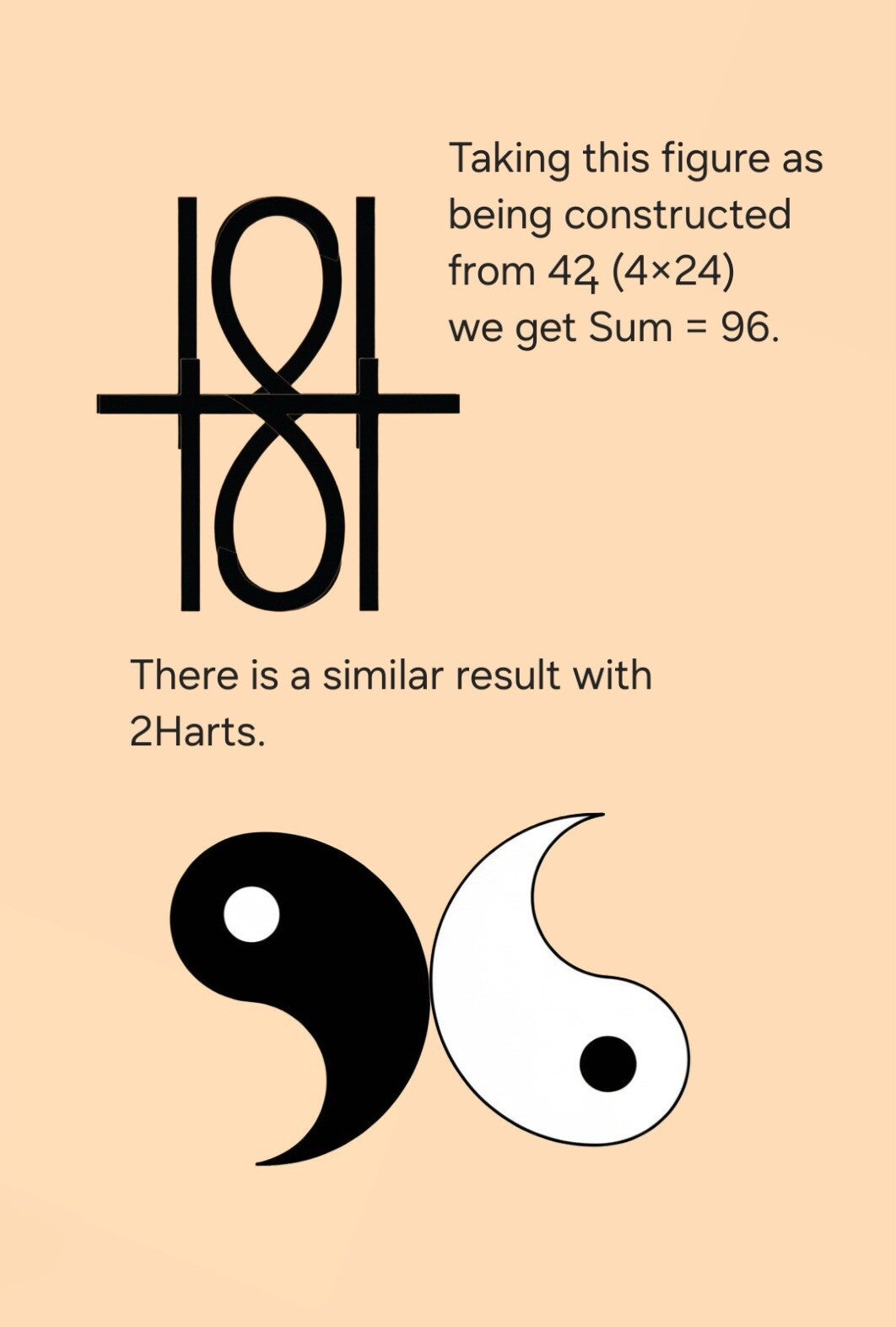
In the preceding video above, the presenter uses the two numbers 33 and 42. The important fact to note here is that 33+42 = 75. And, 33+24 (switch 42) = 57 (switch 75).
Beyond The Ordinary
Beyond The Ordinary
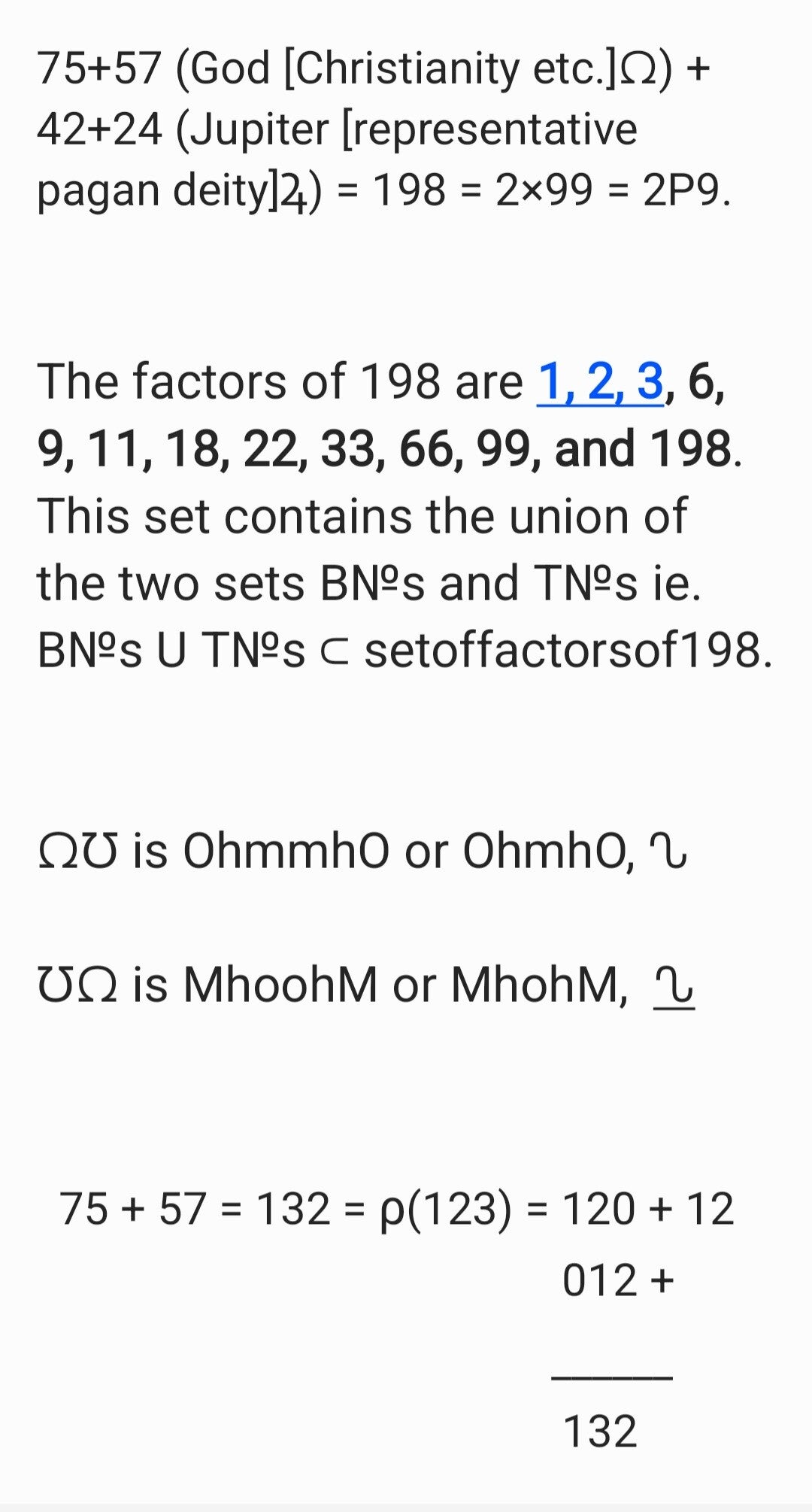
And 2×42 + 2×24 = 132.
Beyond The Ordinary
T
Beyond the ordinary
Beyond The Ordinary
The adjective primal describes something fundamental, instinctive, or related to the earliest origins of life. Deriving from the Latin word primus (first), the term usually refers to deep, essential behaviors (like a primal urge to survive) or ancient, prehistoric periods (like a primal forest 👁 HOME: Something Is Watching).
Common Uses And Meanings.
Instinctual or Raw:
Describes basic, powerful emotions or behaviors deeply rooted in human nature that act similarly to animal instincts.
Example:
A 'primal fear of the dark' or a 'primal urge to protect family'.
Original or Prehistoric:
Refers to the earliest stages of evolution or the beginning of time.
Example:
'Primal hunter-gatherer societies' or a 'primal inferno' marking the start of the universe.
Primary or Fundamental:
First in importance, rank, or essential quality.
Example:
Water is considered a 'primal element' for survival.
If you are thinking about the mathematical prime numbers (like 2, 3, 5, 7), they are not called primal—they are prime. In mathematics, primal usually describes algorithms or properties related to optimisation (like a primal problem vs. a dual problem), not numbers.
The Connection.
Both words share the exact same Latin root (primus, meaning 'first'), making them linguistic cousins.
OTCIs And Primal Distribution
An ordered triple of contiguous intergers (OTCI) is a set of three integers of the form (x, x+1 and x+2), taken in increasing or decreasing order. One of the most important applications of OTCIs involves prime numbers.
It is known that, every prime number greater than 3 belongs to an OTCI of the form (6n–1, 6n and 6n+1), where n is a positive integer. To be specific, any given prime number p is either 6n-1 or 6n+1. For example, 7 is (6×1)+1 and 11 is (6×2)–1.
From the above we see that, numbers that are often thought to grow among the integers like weeds, can be shown to exhibit a surprising order. The numbers of the set bn{b: b = 6n} are binding (or pinning) numbers that exhibit a significant amount of control concerning where prime numbers can appear on the real number line – and where they cannot. The set bn and the expression p = 6n±1 both contain an antidote to mathematical chaos.
The Tesla №s And Other OTCIs
The following grid is associated with the question: Is there any truth in the statement - attributed by some to Nicola Tesla - that the numbers 3, 6 and 9 can be used to extract The Secret Of The Universe?
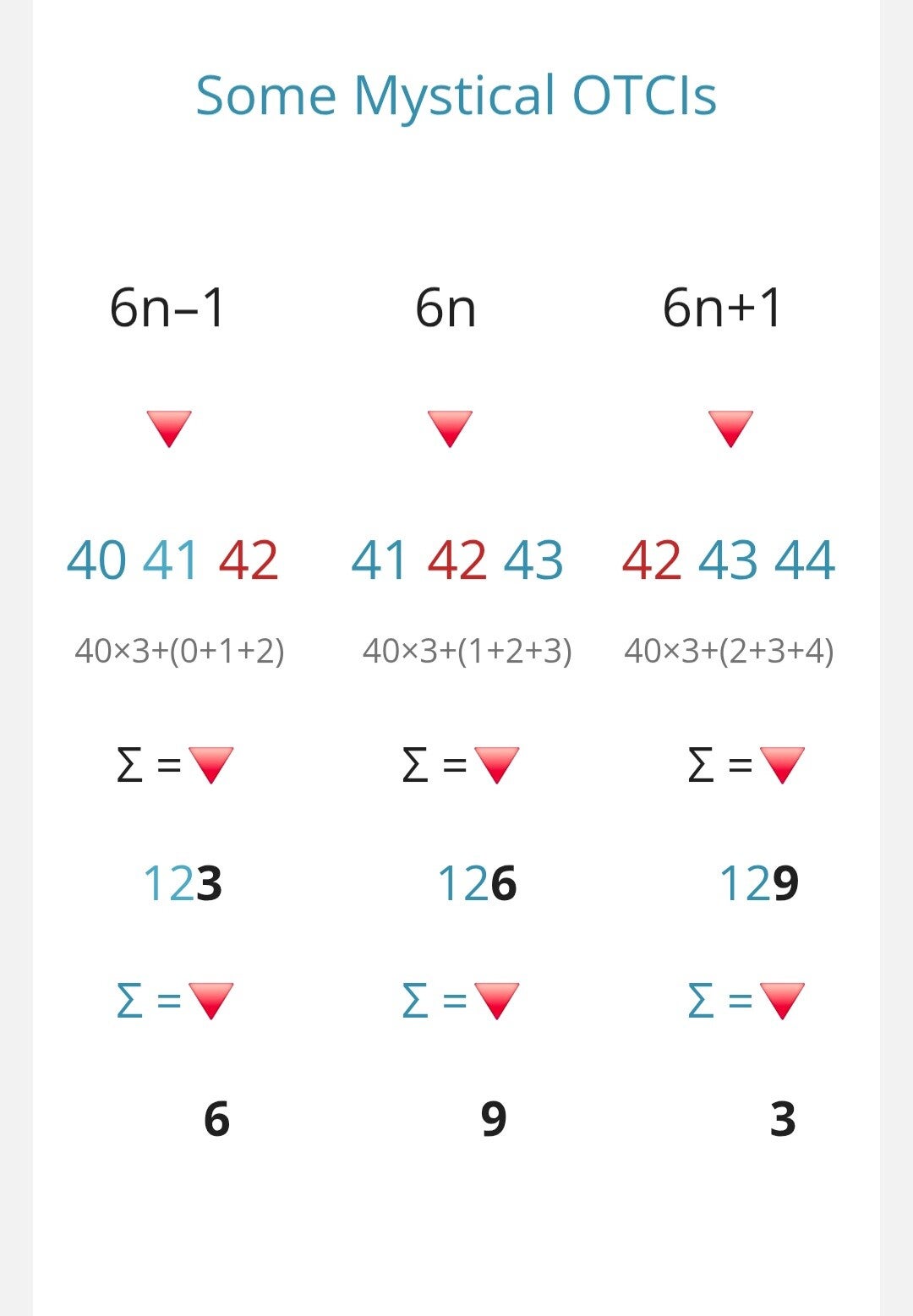
In the above, n equals 7.
Some Mystical OTCIs