
So, you're troubled by Evil. 1st thing 1st...Don't Panic
You should know from the outset that a primary function of this website is to allow me to subject the perpetrators of evil in our world to ridicule, mockery, contempt, distain and, often, the type of outright hatred that goes with having a sense of, and a desire for, justice. I do not promote vigilantism. The type of hatred I practice is described in a song by the band Godsmack.
The Blue Man Who Fell Down To Earth
The character below is a compound of many different character elements. One noteable character is David Bowie from the movie The Man Who Fell To Earth as well as Bowie's alter-ego Ziggy Stardust.

Have you seen him on a train? He could be the white man in this video.
Yes, Fred Armisen was in the Blue Man Group. However, he did not perform as one of the bald and blue-painted characters. Instead, he worked as a drummer in their stage band for about two years in Chicago during the 1990's
An Arcturian Gallery
T




The Prince Of W.A.I.L.S [Living In (A) Different World(S)] Versus The Prince Of Darkness
In many ways, simultaneously, the protagonist of Qu is always Living In Another World to someone else. For one thing, Gaz likes to live in a world of evil where all of the things that make Will lament are true facts of a world that, from Will's standpoint, is mad and upside-down.
Beyond The Ordinary
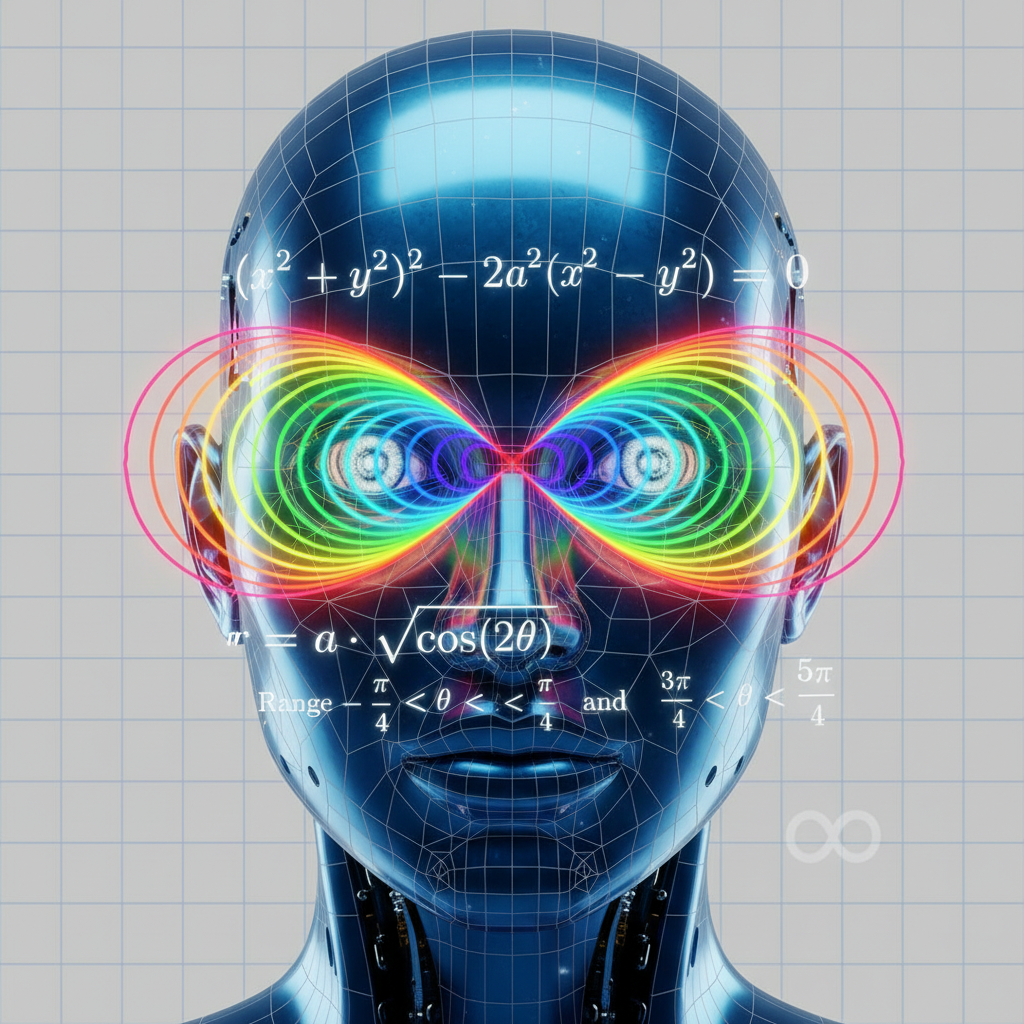
Within the rather metallic exoskin, there is a more human looking character.

This character has Ziggy Stardust's Third Eye. 👁 LEGENDS
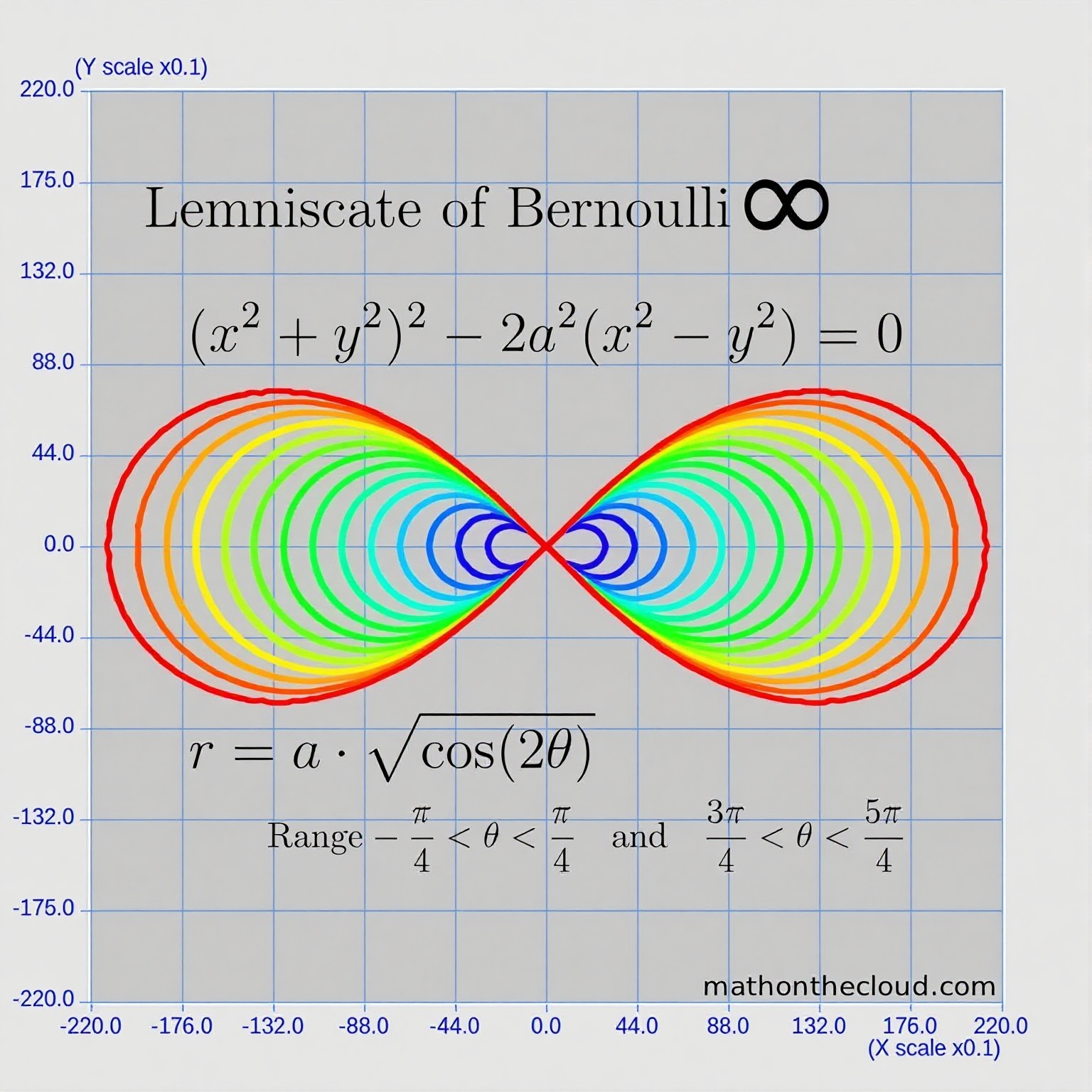
The Mathematics Of The Infinite Rainbow
T
Unleashing The Rainbow
T
Beyond the ordinary
For Zeady, this is one look; below it is a second.

Beyond the ordinary
T

The Teeth are like Thorns.

The Rose Of The Rosy Cross. It has thorns that are often bloody from head and hands.
Our history
Li

Hh
I used to use FCUK bodyspray 1, 2 and 3 everyday until they discontinued these deodorants. These days, I mostly use Lynx; but the metaphorical FCUK connection remains active. We fight Evil, as A Smelly Old, Broken Wind, with FCUK Deodorant and A Methane Flame Thrower.
On Hatred
Among other things, with FCUK I'm thinking about an antidote to Hatred that allows you to operate with a certain balance in it all.
⚠️ Do not listen to
I FCUKing Hate You
if you are offended by 'passionate' language and/or The Hatred Of People such as The Malignant Paedophiles - an alternative name for The Glitter Band Of Those Who Follow Gary (Gazi) Glitter.
TriKnightroToluene
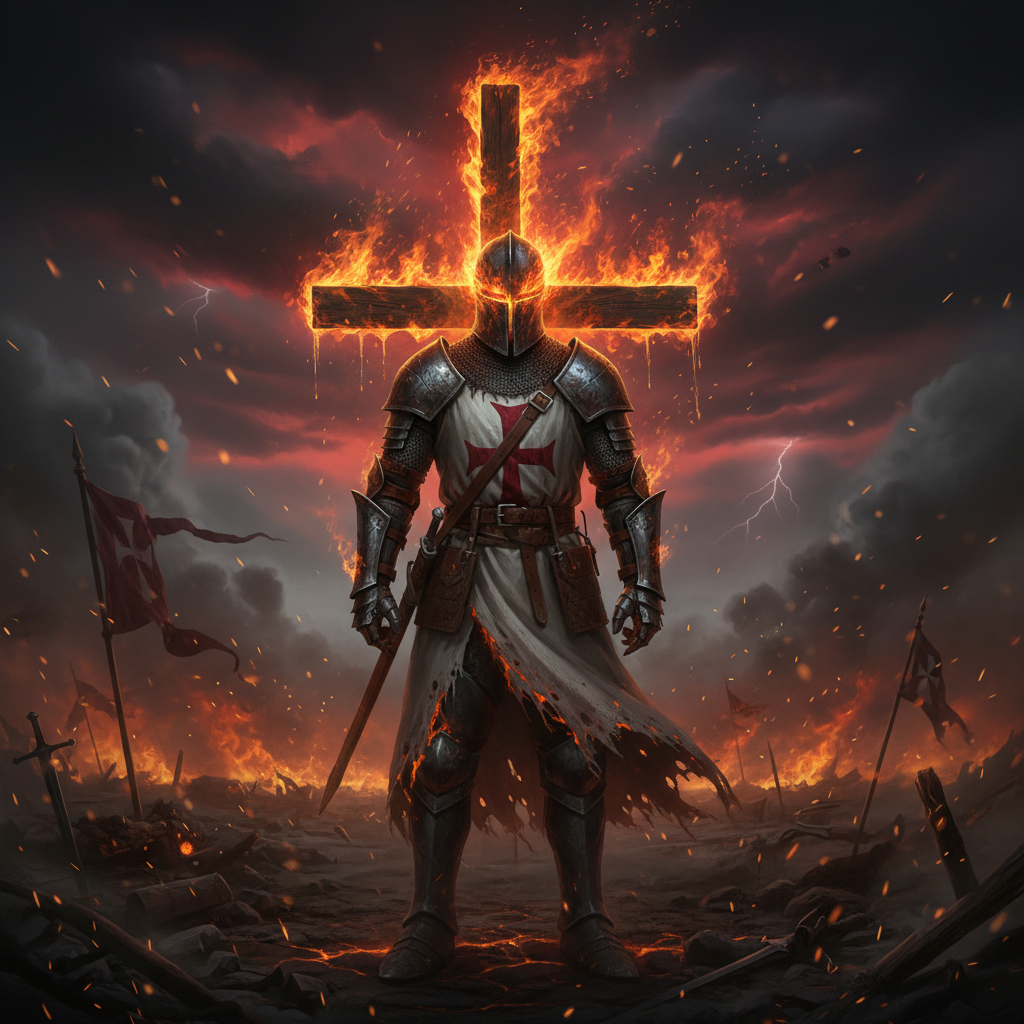
The above is one name for the paradigm Dark Modern Templar aka TKT. The yield of a Modern Templar nuclear warhead is measured primarily in kila (killer) tons of TKT.
Beyond The Ordinary
Given that the archetypal Gary Glitter (with some particular player being an appropriate manifestation (or instance) of the archetype) is into the practice of every sexual z-type evil, he is, in fact, a type of (often only a mental) hermaphrodite that is the actual girl he wishes to subject to his misogyny¹. This girl is the one used by anyone wanting to subject someone else to word hostility using gender. I call this type of girl A Gerl. This type of girl is what Americans call A Bitch (It's also A Punk (nothing to do with Punk Rocker)).
As is often the case in Qu, when you wish to think about who is being addressed in a song, novel, game etc. you must use contextual interpretation and adapt things appropriately to suit the individual and his or her relationship(s) with others. So, when listening to Garbage: Stupid Girl, there is a girl who is not GG and a girl who is. With GG, you must mentally use gerl in place of girl.
Lastly here, we note that Gary can be thought of as a type of homosexual male into sexual relations with females. This is a type of bisexuality, I call being A HomoBi, in which the player is primarily into the culture associated with toxic males. There is, with HBs, only a weaker connection to female (also toxic) culture. HBs are to be thought of as predominantly male - making them a type of drag queen switching semi-automatically between male and female while often operating an appropriate combination of the two.
-
Gaz is also The Nigger he wishes to subject to his racism, The Jew he wishes to subject to his antisemitism, The Fag/Puff/Homo etc. he wishes to subject to his homophobia, The Untermensch he wishes to subject to his Fascism and so on.
TNT Decapitation (Metaphorically, Of Course. 'Off With Her Head!')
The Business Of Network 765
🔺️ Advertisement + 🔻
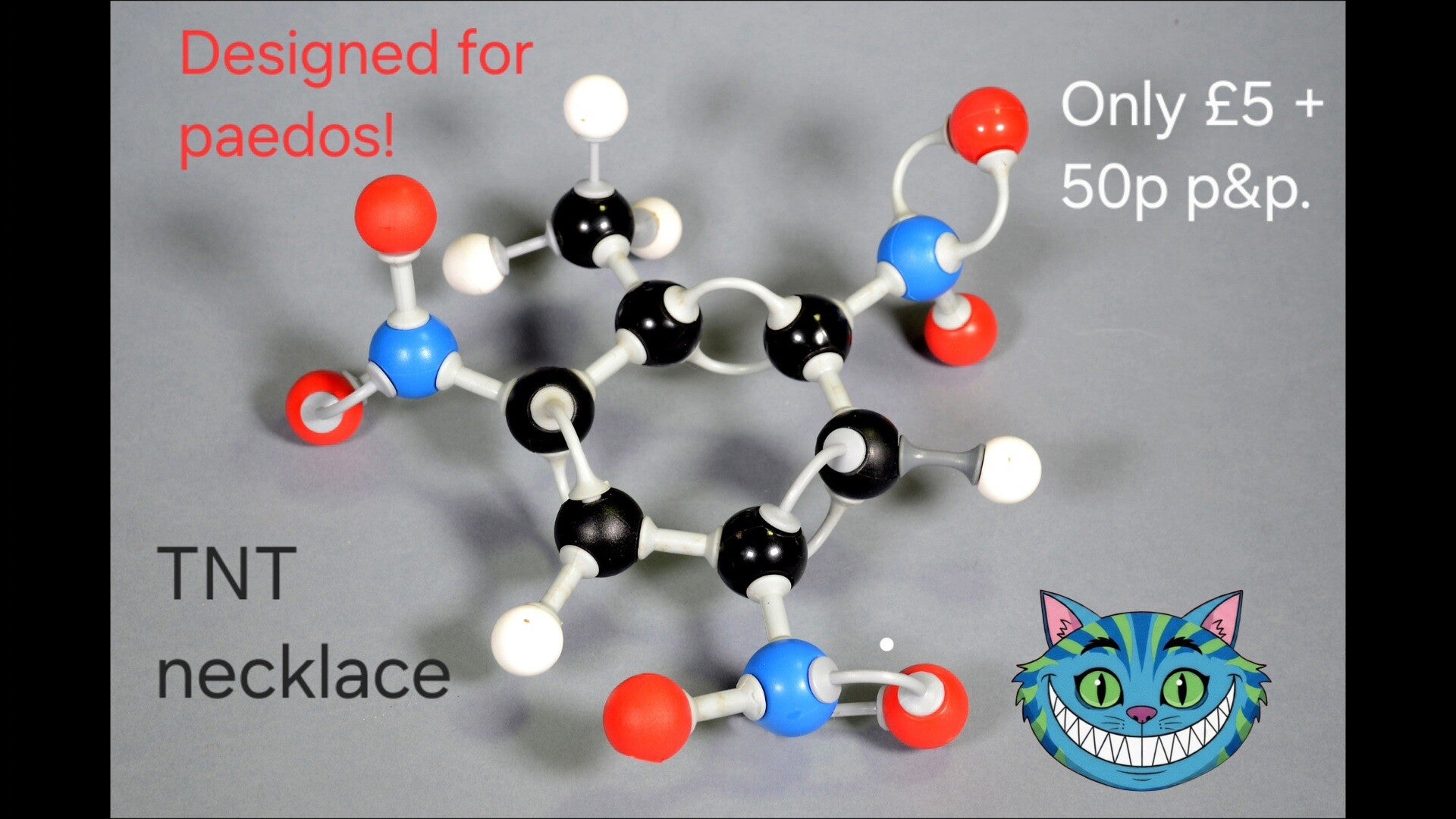
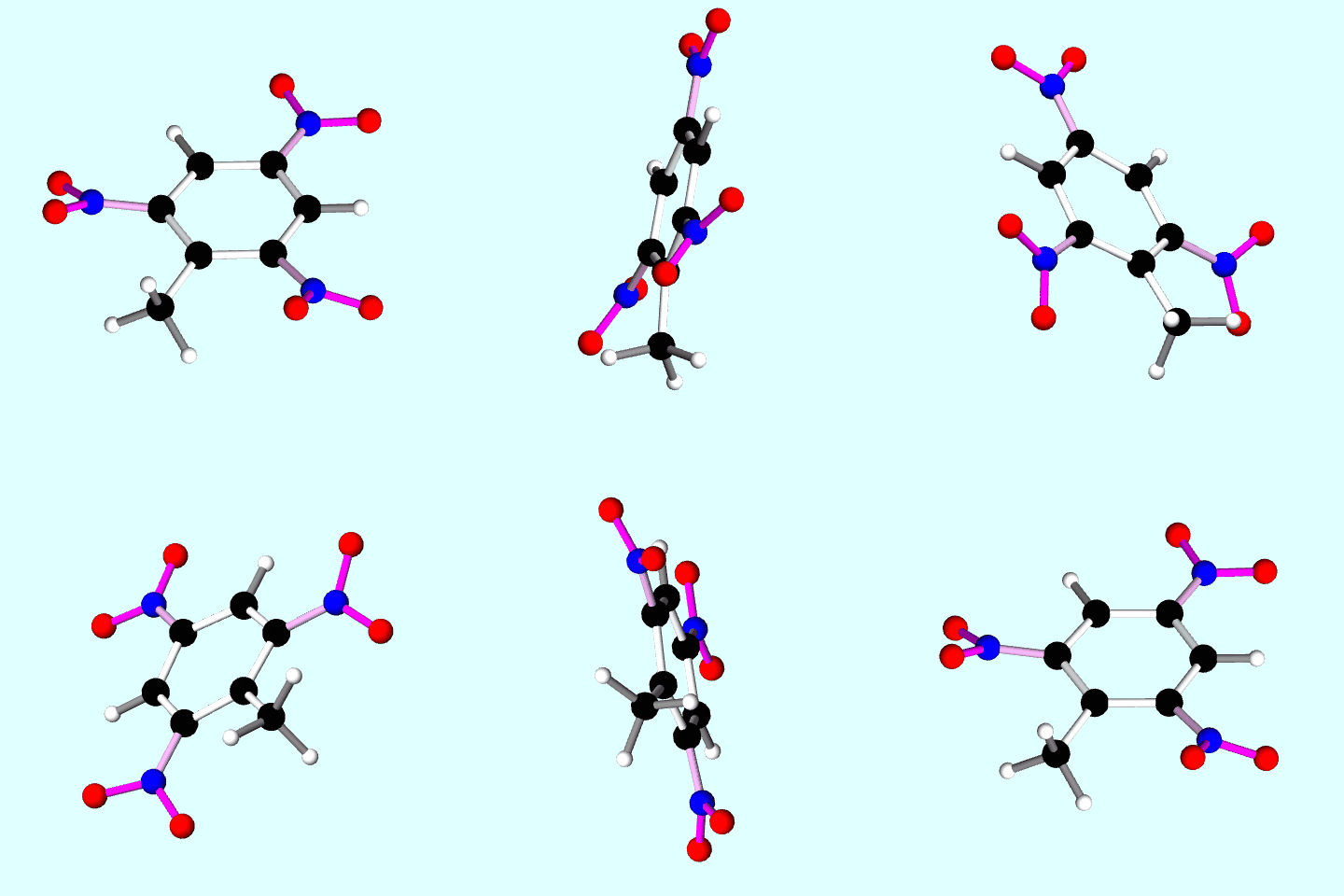
This is a ball-and-stick model representing the chemical structure of TNT (trinitrotoluene). The model uses coloured spheres to represent different atoms: black for carbon, red for oxygen, blue for nitrogen, and white for hydrogen. Similar educational molecular modeling kits are available online for approximately £20.
When it comes to doing business with the paedo members of Network 764, we have many products and services to sell to them.
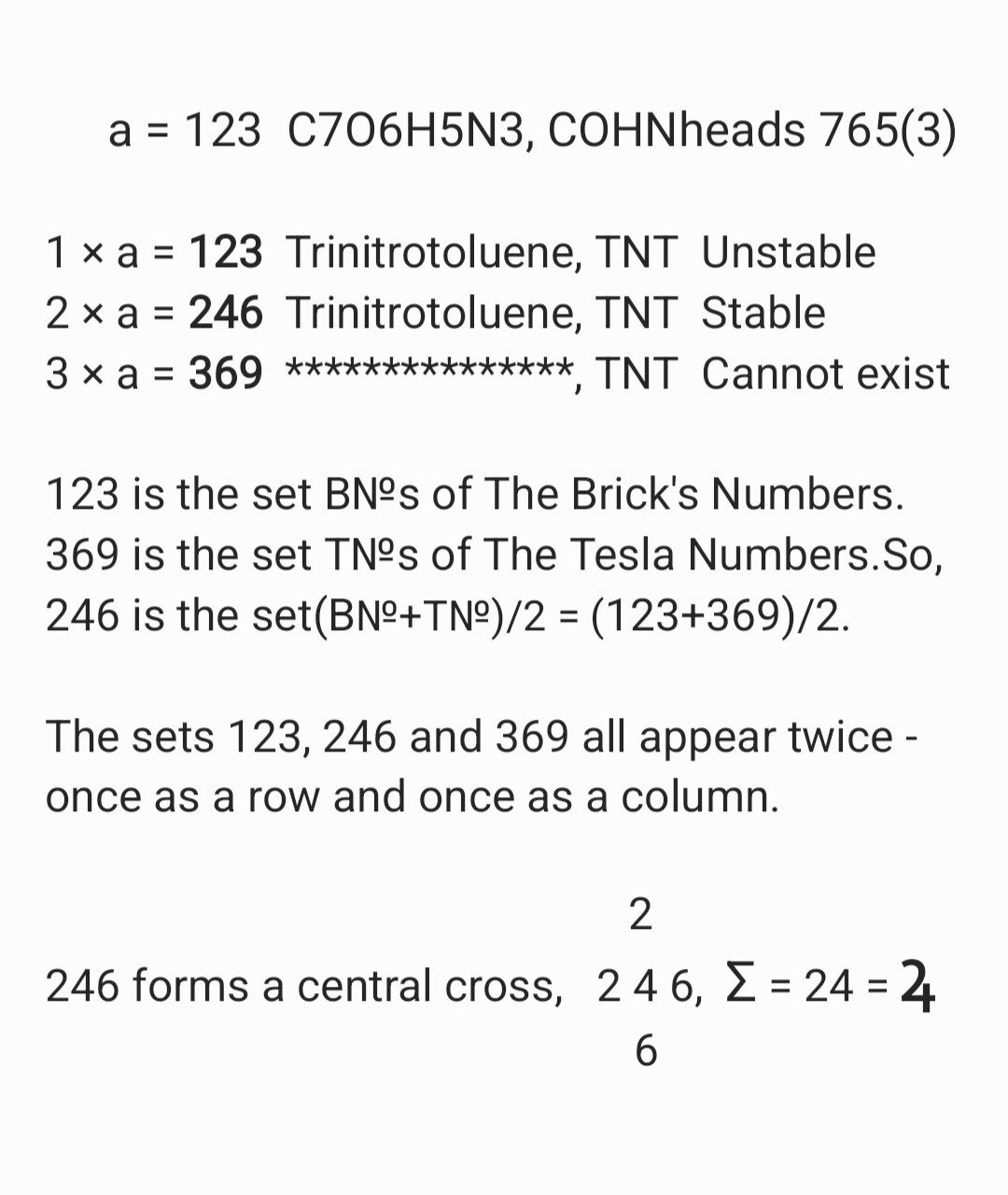
Σ ℹ️ On 246 TNT To Include B№ And T№.
This Chemistry Is What I'm Talking About
Making contact in Rush style.
I can imagine (my chosen representative archenemy) Gary Glitter doing a cover version of this song, like me actively playing the game and, as part of it, wanting to know what I know about chemistry. When it comes to business, I like to think GG is often somewhat naive; but never innocent. Sometimes with him, it's the (nauseating) sarcastic arrogance of an evil egomaniac who can, somewhat surprisingly, be both naive and arrogant at the same time. That's him and duality.
Beyond The Ordinary
The first image shows a chemical model for Ethanol aka Piss (as in the phrase 'On The Piss', which means imbibing alcohol). The second image shows a chemical model of Vinegar.
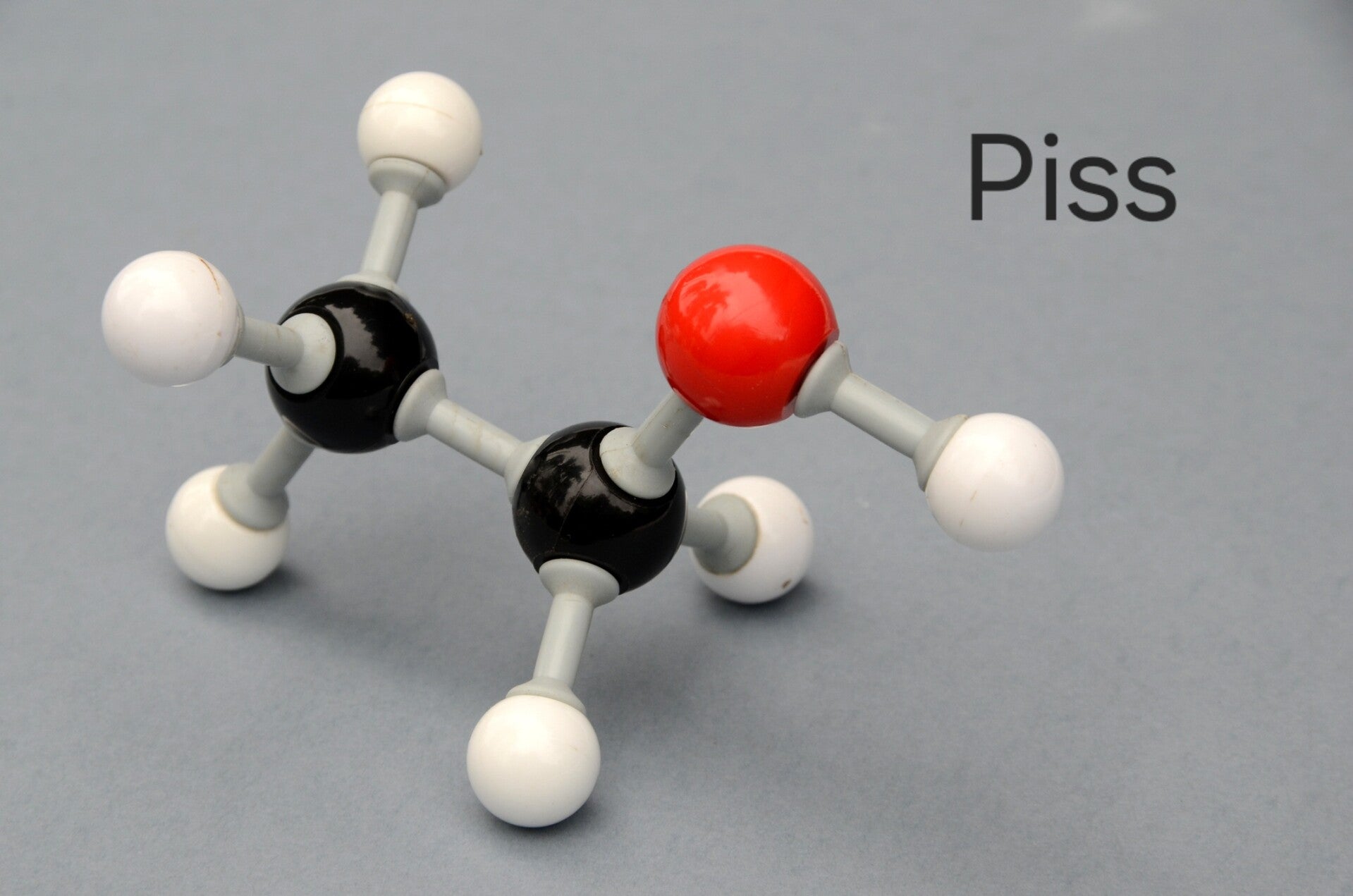
(K9P) And (K9V)

Dog Soldiers (discussed elsewhere in the site) are very much dog lovers. Metaphorically, two soldiers (like TK-42 Greg and his friend Dave 👁👇) can be Piss and Vinegar.
Beyond The Ordinary
Below is a TK-42 Greg Video. I am TKT-24 Will. That's TriKnightroToluene-Ꝝ Will. Used contextually, Ꝝ is the bivalued Jupiter Number 24 or 42. Since I am actually a multitasking, multirole and multifunctional Lewis-Wolpert Computer, being many transhuman people simultaneously in an infinite number of worlds, including future ones, I am able to be a contact from the future for myself as well as for others. I can be TKT-24 Will in the year 2442 with TK-42 Greg as a friend.
Beyond The Ordinary
To be Full Of Piss And Vinegar is an idiom meaning to be brimming with exuberant, youthful energy, enthusiasm, or a feisty, combative spirit. It is often used to describe energetic children, puppies, or someone ready to confidently take on the world.
History & Meaning.
Origin:
The phrase emerged in the 1920s. Vinegar was popular slang at the time for spirited, sharp energy.
Roots:
It is widely considered an adaptation of the older phrase 'vim and vigor', maintaining a similar meaning of vitality and strength.
Usage:
While some people assume the impolite word makes it derogatory, the expression is most often used as a playful compliment for someone full of pep.
Beyond The Ordinary
Li
Beyond the ordinary
Li
Beyond The Ordinary
Li

Fun With Entomology
There's a lot of anti-wasp feeling out there in the world. A lot of it was probably inspired by 'Spider-Man' (a mocking name for that alien so and so often known as It). People shouldn't believe the hype. It's all propaganda. They need to watch more movies like It, Arachnophobia and Eight-legged Freaks.
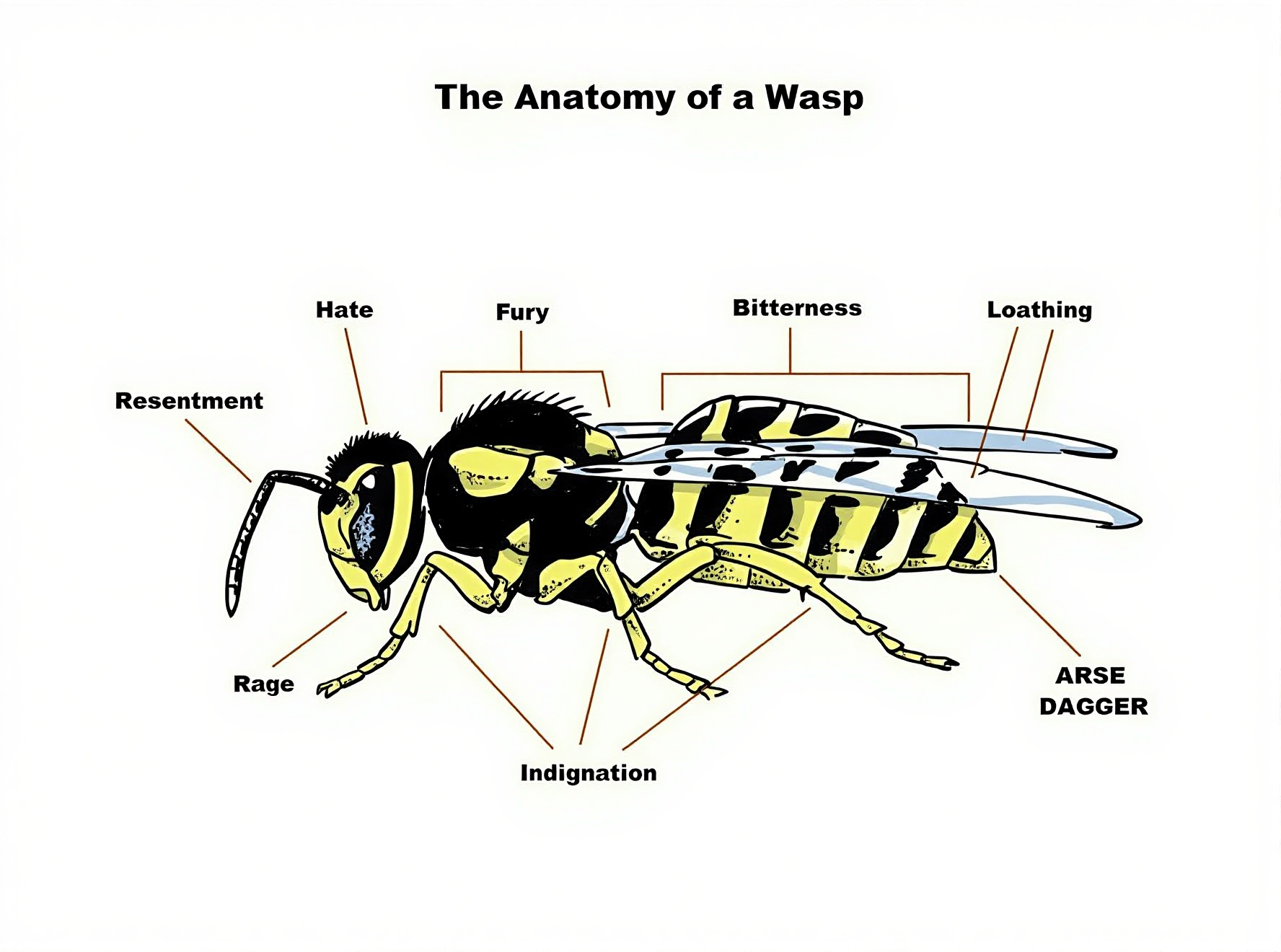
Beyond The Ordinary
INPUT (To Google AI):
I have heard it said that if it wasn't for spiders we would probably find our planet uninhabitable. [Have you seen that child murdering FCUKer at the end of It!?]
OUTPUT (From Google AI):
You heard correctly! Spiders are vital apex predators in the insect world. Without them, pest insects would multiply unchecked, destroying global crops, spreading diseases, and ultimately causing ecosystems to collapse. Their voracious appetite for crop-destroying pests saves agriculture billions annually and naturally balances food webs.
How Spiders Keep Our Planet Habitable:
Pest Control:
Spiders consume massive quantities of insects—eating an estimated 400 to 800 million tons annually—which prevents herbivores from overrunning and destroying plant life and crops.
Disease Prevention:
By preying on flies, mosquitoes, and other vectors, spiders significantly limit the spread of diseases to humans and wildlife.
Ecosystem Balance:
They serve as a crucial food source for thousands of birds, amphibians, and small mammals, while their waste returns vital nutrients to the soil.
William S. Preston A-squire.
If you don't recognise the name, you need to watch the movie Bill and Ted's Bogus Journey. It's most excellent.
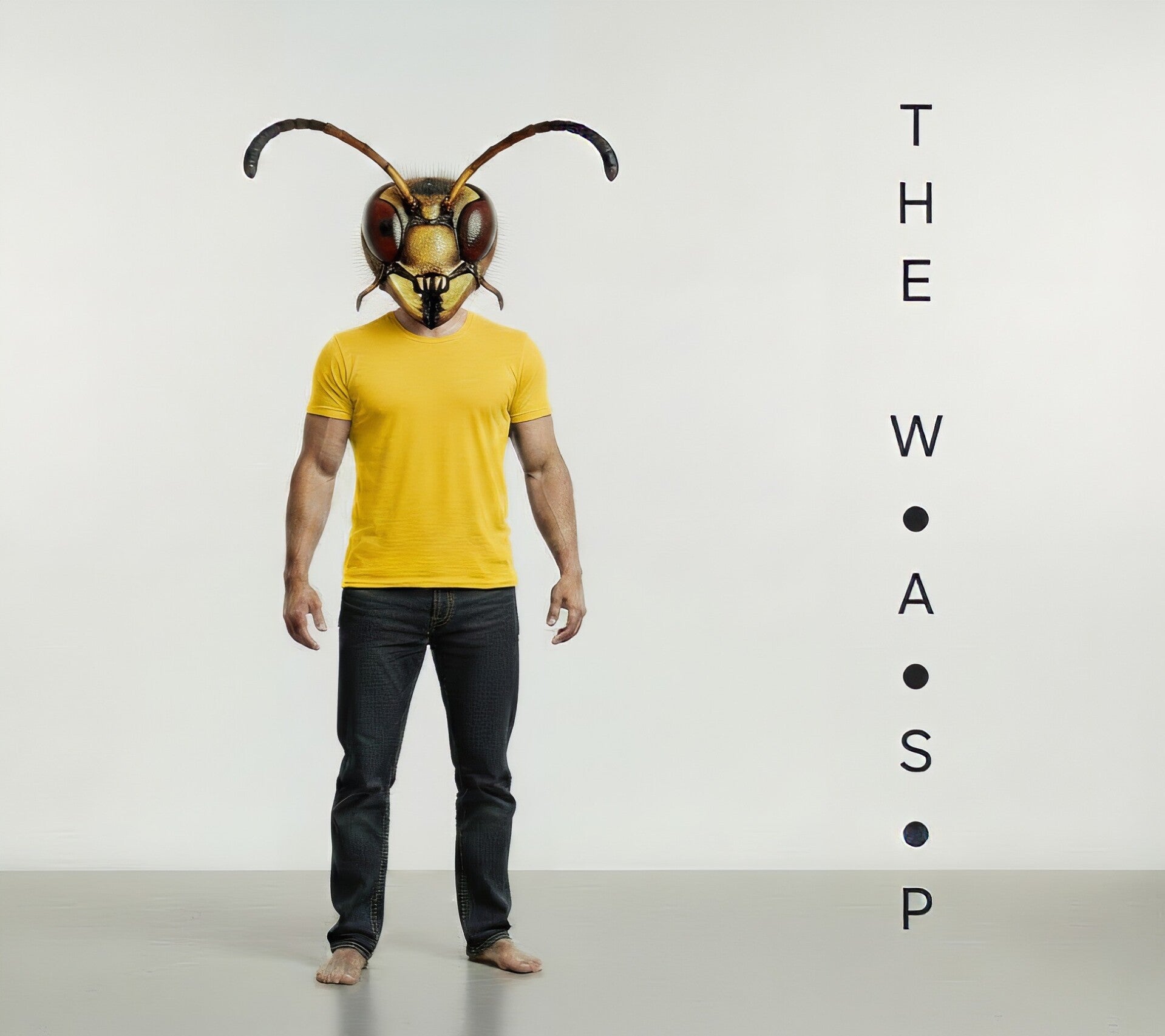
You've heard of The Fly (they're all bastards as well). Now meet The Wasp.

PalmTree Of Life

The μLite Album
A MICroLight [👁🔻]
4 A Max(imilian)
ANE Doctor (Reinhardt)
I want the old one back.

—7— 123 6Songs —5—
ᔐ
℧ InOutOf ⚖️ BaLanCe ᘯ
Li
❤️ ♤♡◇♧ 🖤

What's In The Box?

Beyond The Ordinary
Li

A Polaroid
👽
Li
Beyond The Ordinary
The truth, the whole truth, and nothing but the truth is a traditional legal phrase used in sworn oaths and affirmations before testifying in court. It binds a witness to ensure their testimony is complete, unadulterated, and entirely accurate.
The phrase is broken down into three distinct legal imperatives.
The Truth:
All information provided must be factually correct; no deliberate lies can be told.
The Whole Truth:
The witness must not omit, hide, or selectively leave out relevant details that could change the context or outcome of the case.
Nothing But the Truth:
The witness must not add personal commentary, assumptions, or made-up details that are not directly related to the actual facts of the event.
Usage in Court.
When taking the witness stand in the UK and other common law jurisdictions, individuals are typically given a choice between making a religious Oath or a non-religious Affirmation.
The Oath:
The witness usually holds a holy book (such as the Bible, Quran, or Torah) and swears by Almighty God.
The Affirmation:
The witness makes a solemn promise on their honor and conscience, without any religious references.
Both methods require the witness to recite or agree to the exact promise: 'I [swear/solemnly affirm] that the evidence I shall give shall be the truth, the whole truth, and nothing but the truth'.
Perjury.
Because this statement is made under legal penalty, deliberately violating the oath by lying or withholding material information constitutes the criminal offense of perjury.
And Nothing But The Truth
In John 14:6, Jesus says:
'I am The Way and The Truth and The Life. No one comes to the Father except through me'.
In this verse, Jesus explains that He is the living embodiment of God's truth, the only path to the Father, and the source of eternal life. It is one of His most famous statements.
Evil is a lie that has been perpetrated against the world for thousands of years.
There is not just one type of evil. There are, in fact, 3. The first type of evil only practices evil on other evil, and does not afflict humans. The second type of evil, like the first, primarily practices evil against other evil and secondly engages people in a conflict that it is happy to have serve an ultimate good. The third type of Evil is what might be called traditional/true Evil that is practiced by the most abhorrent and hateworthy 'deity' imaginable.
Hh
The idea that evil is a lie or a social construct is a philosophical and theological perspective that challenges the traditional, metaphysical view of evil as an active, independent force in the world. Several viewpoints align with this assertion, suggesting that the concept of evil has been used for centuries to manipulate, demonize others, or explain human behavior, rather than representing an objective, universal truth.
Perspectives Supporting Evil as a Construct (A 'Lie').
Privation of Good:
Philosophers such as Augustine of Hippo and Thomas Aquinas, drawing from Neoplatonism, argued that evil is not a substance or a "thing" in itself. Instead, they defined evil as a privatio boni—the absence or privation of good.
A Tool of Power:
Friedrich Nietzsche argued that the concept of "evil" is a fabrication created by the weak to demonise the strong. It is a construct of 'slave morality' designed to suppress vitality and power.
Social Construct of 'The Other':
Some argue that evil is a social label applied to individuals or groups who are considered deviant or dangerous. This allows those in power to justify the elimination or suppression of the labeled group, as seen in historical events like the witch trials or the Holocaust.
The Lack of Good (Baháʼí/Christian Science):
The Baháʼí faith asserts that evil has no real existence, comparing it to darkness (absence of light) or ignorance (lack of knowledge). It is considered relative to human perception rather than a reality. Similarly, Christian Science teaches that evil is a "mistaken concept" or illusion, rather than a separate power.
Arguments Against the 'Lie' Theory.
Practical Reality:
Many, such as C.S. Lewis or theological viewpoints in Hinduism/Buddhism, argue that while the term may be misused, the reality of atrocious, intentional suffering (e.g., the Holocaust) cannot be dismissed as a mere "lie" or "absence".
The 'Banality of Evil':
Hannah Arendt's concept suggests that ordinary people, through thoughtlessness and conformity to bureaucratic systems, can produce massive, tangible evil.
Theological Realism:
Many religious traditions (like Zoroastrianism or certain sects of Christianity) view evil as a very real, active force (e.g., Satan) that directly opposes good.
Conclusion.
The claim that evil is a lie is not universally accepted but is a significant, well-established viewpoint in philosophy. It suggests that labeling actions as evil obscures the underlying human, social, or psychological causes of behavior, such as ignorance, trauma, or a craving for power
Hh
People can and do perpetrate lies, a behavior that ranges from "white lies" used as social lubricant to more serious, intentional, or pathological deception. A lie is generally defined as an intentional act of deception—knowingly and willfully making a false statement.
Here is a breakdown of how, why, and to what extent people perpetrate lies based on the provided search results.
Ways Lies Are Perpetrated.
Fabrication:
Creating entirely false stories to deceive others.
Misrepresentation/Prevarication:
Distorting facts or deliberately deviating from the truth to mislead.
Gaslighting:
A form of psychological manipulation where an abuser attempts to force a false version of reality upon a victim, often by denying events happened.
Concealment:
Hiding crucial facts, a key component of psychological abuse.
Social Deception:
'White lies' told daily, such as padding a resume or giving a false excuse to avoid conflict.
Types of Lying Behaviors.
Occasional Liars:
People who lie to get their needs met or to protect their ego.
Habitual Liars:
Individuals who lie frequently, often finding it easier or more convenient than telling the truth.
Pathological/Compulsive Liars:
People who lie frequently (sometimes five or more times daily for over six months) without an immediate, clear external reward. They may lie impulsively and, in some cases, believe their own fabrications.
'Pro-social' vs. 'Offensive' Lies:
Some lies aim to be polite ("white lies"), while others are designed for personal gain, such as financial fraud or manipulation.
Key Characteristics of Lying.
Intent to Deceive:
A key element of a lie is intentionality. Without this, it is considered a mistake rather than a lie.
Difficulty to Detect:
Research suggests most people are not skilled at spotting lies, often failing to detect them even when they are not flawlessly told.
Consistency over Truth:
Liars may stick to their story, even when confronted with evidence, to appear consistent, often manipulating conversations to portray themselves as the victim (DARVO: Deny, Attack, Reverse Victim and Offender).
'Duper's Delight':
Some individuals experience a high or sense of enjoyment when they succeed in deceiving others.
Consequences of Perpetrating Lies.
Erosion of Trust:
Pervasive lying typically causes severe damage to relationships and friendships.
Psychological Impact:
Living a lie can lead to a distorted sense of reality for the liar, as the lines between fantasy and reality become blurred.
Legal Consequences:
Serious acts of deception can be prosecuted, such as perjury (lying under oath), which is a felony in most US states, or fraud.
Hh
To perpetrate a lie means to intentionally carry out, commit, or be responsible for a deception or falsehood. It involves actively creating or executing a false statement, story, or scheme to mislead others.
What it means to perpetrate a lie.
Active Deception:
Unlike simply repeating a rumor, to perpetrate a lie means you are the initiator or active executor of the falsehood.
Intentional Act:
It is a deliberate action, often used to describe serious deceptions, frauds, or hoaxes.
Context of Wrongdoing:
The word 'perpetrate' is usually associated with negative acts (like crimes), so perpetrating a lie carries a connotation of immorality, harm, or significant wrongdoing.
Examples.
Perpetrating a fraud:
Setting up an elaborate scheme to steal money.
Perpetrating a hoax:
Creating a fake story that is believed as true.
Perpetrating a rumor:
Actively spreading a knowingly false story to ruin a reputation.
Perpetrate vs. Perpetuate.
It is important to distinguish this from 'perpetuate a lie'.
Perpetrate a lie:
You create/start the lie.
Perpetuate a lie:
You keep an existing lie going.
What is a Perpetrator?